 Admin
Admin Let me be honest with you for a second.
Summer places to visit in India often bring the same destinations to mind every year around March. Travel content floods your Instagram and Google feed with familiar names like Shimla, Manali, Nainital, and Ooty. And yes — they are beautiful. That’s not what I’m claiming, but when you’ve already been on those trips or just feel like something slightly less than a crowded parking lot in May, this is what to hit instead.
I have tried to be genuine here. No padding, no “top 10 tips” boxes, no destination that made the cut just because it is famous. Just places that are actually worth booking a flight or train for — and a few honest warnings along the way.
First, Let’s Talk About Timing
Summer in India technically starts in March and the heat peaks around May–June. The good news is that most hill destinations are at their best from April to early June — before the monsoon hits and before the June holiday crowd descends like a flash mob.
If you are travelling in July specifically, check out this guide on Places to Visit in July — because not every place on this list behaves the same way once the rains arrive.
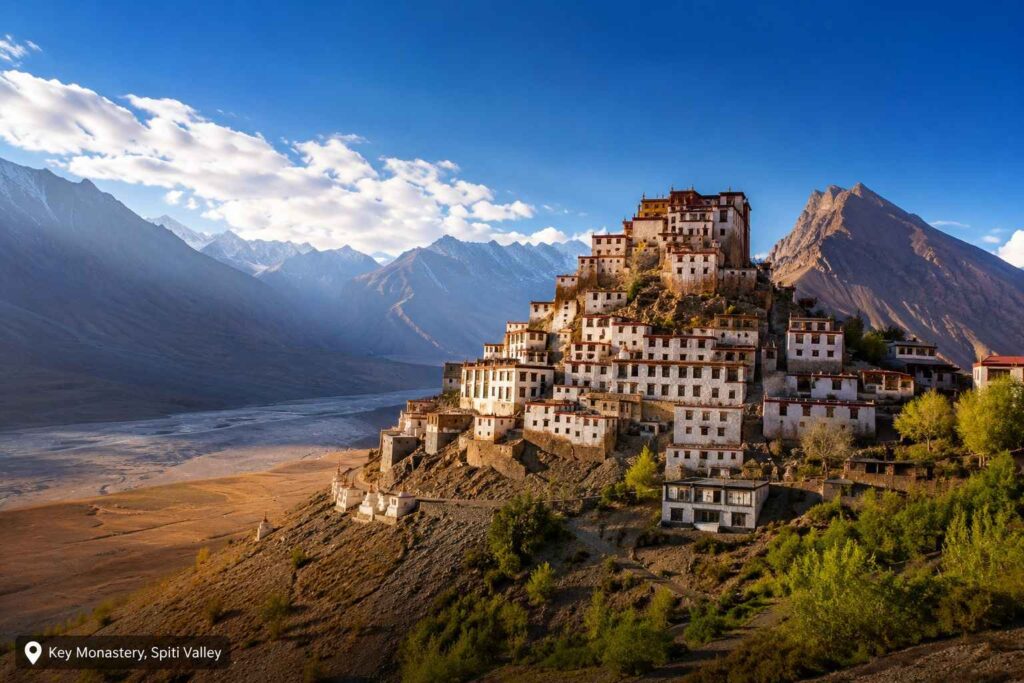
1.Spiti Valley, Himachal Pradesh – One of the Best Summer Places to Visit in India
There is no gentle way to prepare you for Spiti. You drive for hours through mountains that look increasingly barren and severe, and just when you start wondering if you have made a wrong turn, the valley opens up — wide, ancient, and completely quiet in a way that most Indians have never experienced.
It is a cold desert. Monsoon rarely brings much rainfall to Spiti. The topography is predominantly brown and grey; the peaks are blinding white where the snow hasn’t melted. Yet against this extreme backdrop you find these beautiful little villages of green with mud-brick homes and prayer flags flying and monks going about their routine lives with the entire rest of the world irrelevant.
Key Monastery has been sitting on that hilltop for over a thousand years. Chandratal Lake is genuinely one of the most beautiful things I have seen in India — a crescent of water at 4,300 metres that reflects the sky in a colour that should not be possible. And the villages of Langza, Hikkim, and Kibber feel like they belong to a different century.
Kaza is your base. It is small but has decent homestays, a couple of good cafés, and people who are used to travellers showing up in various states of altitude confusion. Before you plan your route, read up on the Spiti Valley to Kaza Distance — distances here are deceptive because mountain roads take three times longer than flat roads, and getting the timing wrong means driving switchbacks in the dark.
One non-negotiable: carry enough cash. The ATM in Kaza is not reliable and the nearest bank that definitely works is hours behind you.
Ideal visit window: Late May to mid-September
Daytime temp: 15–25°C, cold after sunset
2. Tirthan Valley, Himachal Pradesh
Most people who end up in Tirthan got there because Kasol was full or Manali felt too commercial. And then they stayed longer than planned. That is basically the Tirthan origin story for most visitors.
It is in the Kullu district, inside the buffer zone of the Great Himalayan National Park. The river — the Tirthan — is the clearest water you will see in a North Indian hill area. No construction noise, no DJ sets coming from a nearby resort, no taxi horns. The main activity here is genuinely just being outside.
Trout fishing in the river is a real thing people do here and not in a touristy way — local guides take you out early morning and you actually learn something. The Jalori Pass is a 30-minute drive from most homestays and from there you can walk to Serolsar Lake, a forest-wrapped alpine lake that takes about two hours each way.
The homestays here are wooden, old-style Himachali construction, and most meals are home-cooked. Rajma-chawal has never tasted better than after a full day of walking at altitude.
It also features on our Top 10 Places to Visit in July because the valley stays protected from heavy monsoon rain — the surrounding peaks absorb most of it.
Ideal visit window: April to June, September to October
Daytime temp: 12–28°C
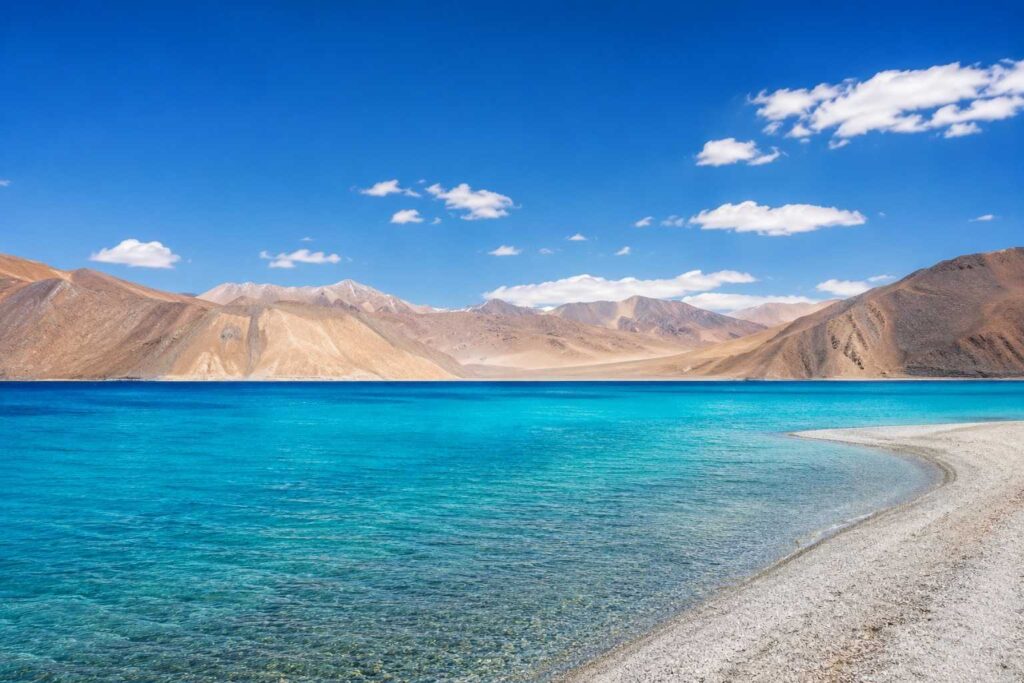
3. Leh-Ladakh, Jammu & Kashmir
Ladakh earns its reputation every single time. The landscape is so different from the rest of India that people who have visited often describe it as feeling like another country — which is both a cliché and completely accurate.
Pangong Tso at sunrise when it changes from silver to deep blue to green. Nubra valley with the sand dunes and the Bactrian camels with the peaks 6,000m high at the back. The monasteries of Thiksey and Diskit and Hemis where the walls are painted with murals which have existed for hundreds of years and the butter lamps have been burning for hundreds of years.
The one thing everyone underestimates each year is altitude sickness. Leh is at 3,500m high and if you are flying direct, and do Khardung La the next day, you will feel unwell. Stay in Leh for a few days first.
Walk slowly. Drink water. Skip the alcohol. Let your body catch up.
Ideal visit window: May to September
Daytime temp: 15–30°C (nights drop sharply — carry a warm layer)
4. Darjeeling, West Bengal
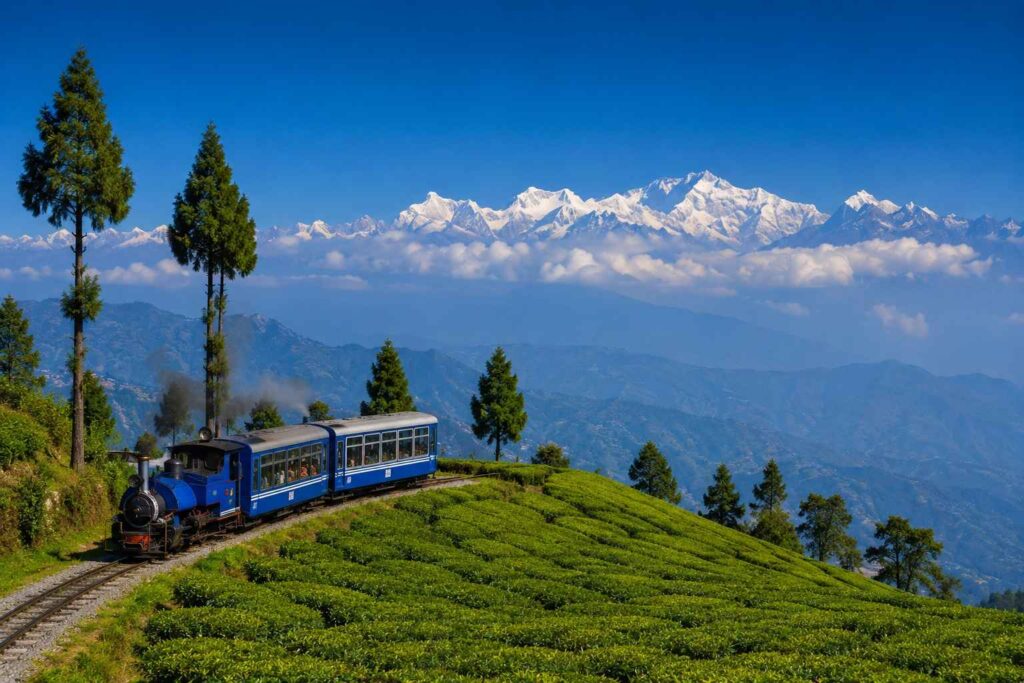
Darjeeling caters to the traveler willing to set an alarm for 4 am.
The Tiger Hill sunrise, where the mist recedes and the peaks of Kanchenjunga are awash with pinks and orange in the new dawn, sounds like the kind of thing one reads in a tourist leaflet until it’s actually happening in front of you and you understand why travelers keep returning.
The pace of the day slows considerably after the sunrise. The Toy Train journey to Ghum takes an hour and a half and involves winding through tea plantations and past small towns which only seem to exist so the train has an excuse to stop.
The Happy Valley Tea Estate shows you exactly how First Flush Darjeeling tea goes from leaf to cup — worth an hour of your time.
What makes Darjeeling different from most hill stations is that it is actually walkable. You can cover most of what matters on foot. The market near Chowk Bazaar, the Ghoom Monastery, the Batasia Loop — none of it requires a hired taxi or a complicated itinerary.
Ideal visit window: March to May (clearest skies, best Kanchenjunga views)
Daytime temp: 12–20°C
5. Gangtok, Sikkim
If you’re heading to Darjeeling anyway, adding a day in Gangtok can be achieved fairly easily, an added 4 hours on a shared cab and the change in atmosphere from the previous location is stark. Gangtok is probably the cleanest Indian city in the country, and not “clean for a hill station”, just genuinely clean.MG Marg is the main lifeline of town, it is a pedestrian street which has good restaurants and shops of local items, and is good to view Himalayan peaks.
The most important Kagyu Buddhist centre in the world is 24km outside of the city: Rumtek monastery. This is no tourist attraction but a living monastery and the sense that one feels upon arriving here cannot fail but convince you of this.
Sample some of the local dishes. A bowl of thukpa (noodle broth), a bowl of gundruk soup (fermented greens) or a bowl of tongba (warm millet beer served in a bamboo receptacle) is what traveling food is all about.
Ideal visit window: March to May, October to November
Daytime temp: 15–22°C
6. Kasol + Kheerganga, Himachal Pradesh
Kasol has been a backpacker staple for 15 years now and it still works. The Parvati River walk between Kasol and Chalal village is 30 minutes of riverbank trail that somehow always looks better than you expect. The cafs genuinely serve up delicious Israeli style food – falafel, shakshuka, good strong coffee – because the community that started them has been refining them over ten years.
The Kheerganga trek is 12km each way, through pine forest and terraced villages and finishes at the natural hot springs at almost 3,000m. Relaxing in that water after a day’s uphill walking looking at the stars begin to pop out above the mountains is the sort of memory that has you planning the next trip before this one is finished.
Manikaran Sahib – a mere 4km from Kasol – is holy to both Sikhs and Hindus, andhot spring water runs throughout the entire site, the langar feeds all indiscriminately, and even when busy there’s a strangely peaceful atmosphere.
Ideal visit window: March to June
Daytime temp: 15–30°C
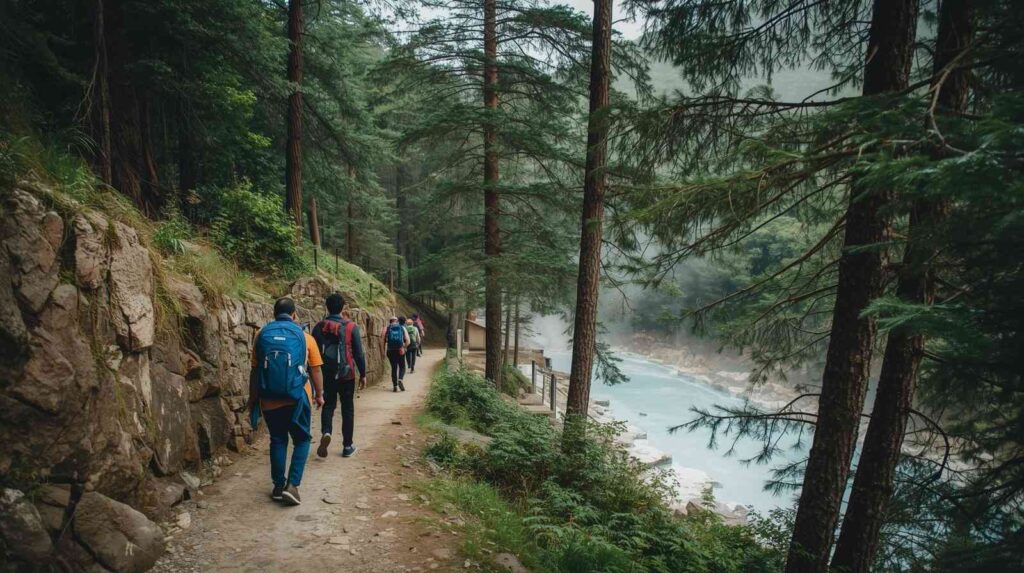
7. Munnar, Kerala
Munnar is what happens when you combine altitude with agriculture and get lucky. The tea estates here cover 80,000 acres of hillside and they turn every drive into something that looks better than it has any right to.
Eravikulam National Park is the star nature spot here-this is a sanctuary for the Nilgiri Tahr, an unidentifiable mountain ungulate. Inside the park the walks are among the most scenic short walks of any in Southern India. The Tea Museum located close to the KDHP estate, has 1 hour worth of really good reading about the machines, original photographs and the whole process from picking to packaging.
Drive to Top station on a clear day. Located on the border of Tamil Nadu and Kerala States, at an altitude of 1,868 mts this gives a stunning view of the western Ghats on either side (East & West). It is the type of view that makes you forget that you have to travel for 2 hours to get here.
Ideal visit window: September to May
Daytime temp: 10–25°C
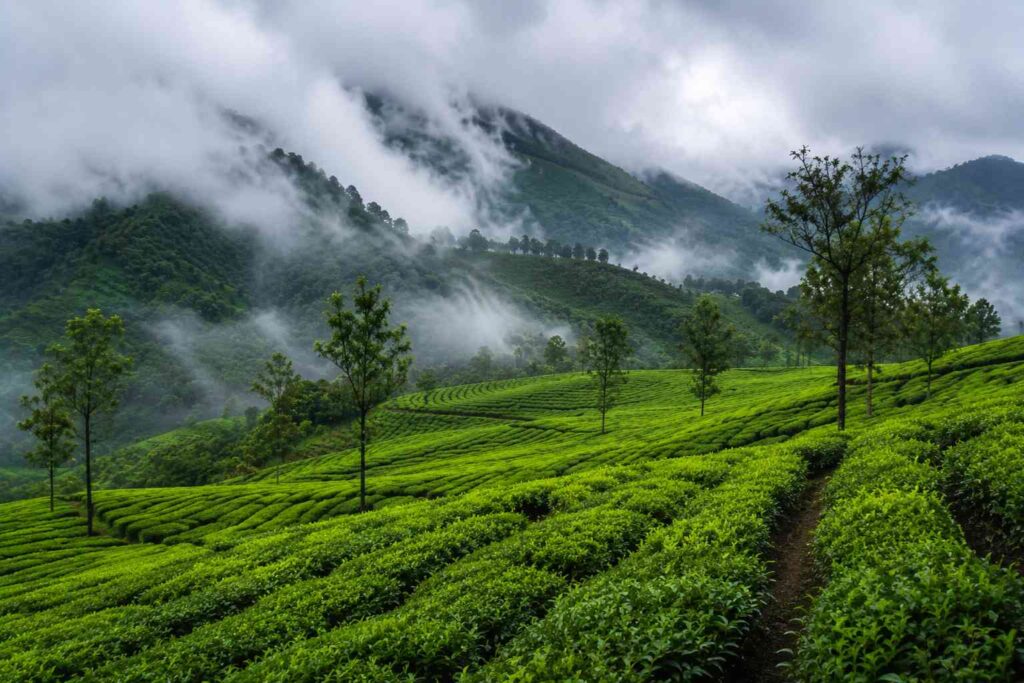
8. Coorg, Karnataka
Coorg is a slower destination than most people expect, and that is entirely the point.
The district — properly called Kodagu — smells like coffee and rain and damp earth. The Abbey Falls near Madikeri is beautiful, but the coffee estate roads between villages are honestly more memorable — winding, quiet, with cardamom growing on both sides and occasional elephants if you go towards Nagarhole.
Staying at a plantation homestay changes the whole experience. Waking up when the estate is still wrapped in mist, having filter coffee made from beans grown 50 metres away, and eating Kodava pandi curry (pork cooked with Kodampuli — a local vine vinegar) for dinner — that is what people mean when they say Coorg stays with you.
The Nagarhole National Park to the east of the district, is a serious wild life area; there are frequent tiger and elephant sightings and there is a density and mystique in the forest that some of the more famous parks miss.
Ideal visit window: October to May
Daytime temp: 15–25°C
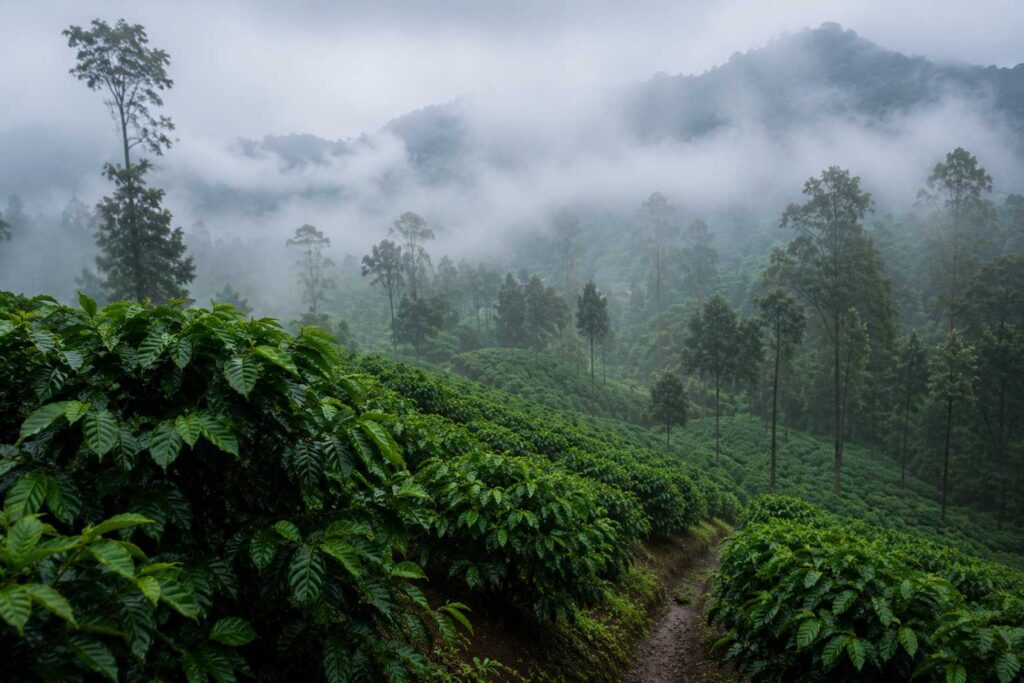
9. Andaman Islands
The Andaman Islands are one of those places that India genuinely undersells to its own citizens.Radhanagar Beach in Havelock Island is one of Asia’s top beaches, having received this ranking for several years in a row now. The water there is that certain color that your phone camera appears to be running through a filter when taking a picture; although there actually isn’t one on..
The snorkelling around Elephant Beach is accessible to complete beginners and the coral here is in better shape than almost anywhere on the Indian coastline. Neil Island (Shaheed Dweep) is smaller and quieter than Havelock and has a laid-back quality that rewards a day or two of doing very little.
The Cellular Jail in Port Blair is not cheerful, but it is important. The British used it to exile Indian freedom fighters — far enough from the mainland that most never returned. The evening light-and-sound show covers that history without sensationalising it.
One timing note: the monsoon hits the Andamans hard from June through September and inter-island boat services become genuinely unreliable. Plan before June or after September.
Ideal visit window: October to May
Daytime temp: 25–32°C
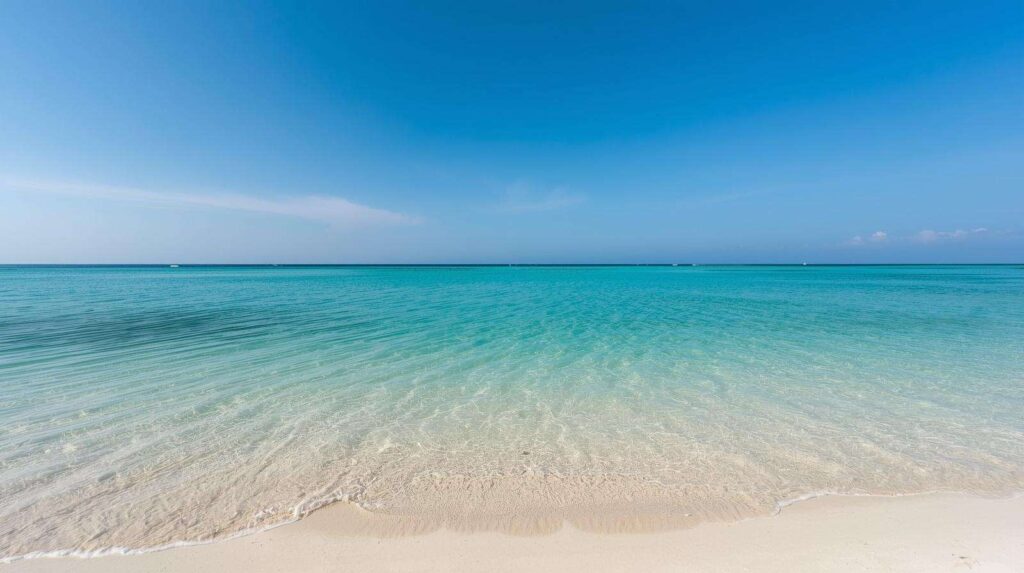
10. Rishikesh, Uttarakhand
Rishikesh has been such a multitude of things to a multitude of people – yoga hotspot, the Beatles place, white-water rafting mecca, and cafe hopping capital of India – the extraordinary part is it is all of those without being disjointed.
The Ganges rafting runs from Grade II to Grade V depending on how far up the river you start. Even if adventure is not your thing, the riverside ghats at sunset — particularly the Triveni Ghat aarti — are worth the trip on their own.
The Laxman Jhula suspension bridge was closed for repairs for a while but the surrounding area has the best cafés in town, most of them hanging over the river with views that make it difficult to leave.
Ideal visit window: February to May
Daytime temp: 20–35°C
11. Nainital, Uttarakhand
Nainital is a place where the setting does most of the heavy lifting. The Naini Lake at the centre of town, the hills curving around it, the cable car up to Snow View Point, the boats at dusk — it is genuinely pleasing and has been for generations.
The hidden value is the area around Nainital. Bhimtal (22 km) has a larger lake and a fraction of the crowd. Sattal (23 km) is seven interconnected lakes in a forest — almost no commercial development, very peaceful. These two make Nainital worth the trip even for people who have already been once.
Ideal visit window: March to June
Daytime temp: 12–25°C
12. Mussoorie, Uttarakhand
Mussoorie is 35 km from Dehradun and that accessibility is both its biggest asset and its biggest problem. The asset is that it is easy to reach from Delhi — a 6-hour drive or overnight train to Dehradun then a taxi up. The problem is that half of Delhi has the same idea every May weekend.
Go mid-week. Seriously. The same Mussoorie on a Tuesday feels like a different destination from Mussoorie on a Saturday.
Landour, the older neighbourhood behind the main town, is worth the extra 20 minutes. Quieter fstreets, a good bakery, and the kind of slow hill-town energy that Mall Road mostly lost a decade ago.
Kempty Falls is busy but legitimately beautiful. Lal Tibba, the highest point in Mussoorie, gives views of Kedarnath and Badrinath ranges on a clear morning — get there before 9 AM before the haze builds up.
Ideal visit window: April to June
Daytime temp: 15–25°C
Places to Visit in Summer In India
Before You Book — A Few Honest Notes
Mountain roads are longer than Google Maps suggests. Always add 40–50% to any driving time estimate in Himachal, Uttarakhand, or Ladakh.
May and June are peak school holiday months. If you have flexibility, April travel to the same destinations costs less and crowds significantly less.
For Spiti and Ladakh specifically — do not arrive at altitude and immediately try to do everything. Two slower days at the start saves you from three miserable days in the middle.
And if you are still deciding, the Spiti Valley to Kaza Distance guide will help you figure out whether Spiti is logistically realistic for your trip length before you commit.
India has good summers. You just have to know where to find them.

 Admin
Admin