 Admin
Admin Planning a trip in India without the right apps is like driving to Manali without checking the road status — technically possible, but unnecessarily painful. Whether you’re mapping out the best beach resorts in North Goa, figuring out the zipline in Rishikesh price before you book, or hunting for stays near the best tourist places in Shimla, a handful of smart apps can save you hours of confusion and hundreds in wasted bookings.
I’ve tested most of these on actual trips. Here’s what actually works in 2026.
Why Travel Apps Matter More for Indian Travellers in 2026
Budget planning in India is a different game now. AI-powered itinerary tools have started replacing basic spreadsheet planning. UPI-linked travel wallets make instant bookings seamless. And with domestic tourism hitting record numbers post-2025, popular destinations like Goa, Rishikesh, and Shimla sell out faster than ever — sometimes weeks in advance.
The best travel apps for planning in 2026 solve real problems: they show you the actual price, not the inflated tourist rate, they book your Tatkal ticket before the quota empties, and they alert you when airfares drop overnight.
1. Google Maps — Still Irreplaceable, Now Smarter
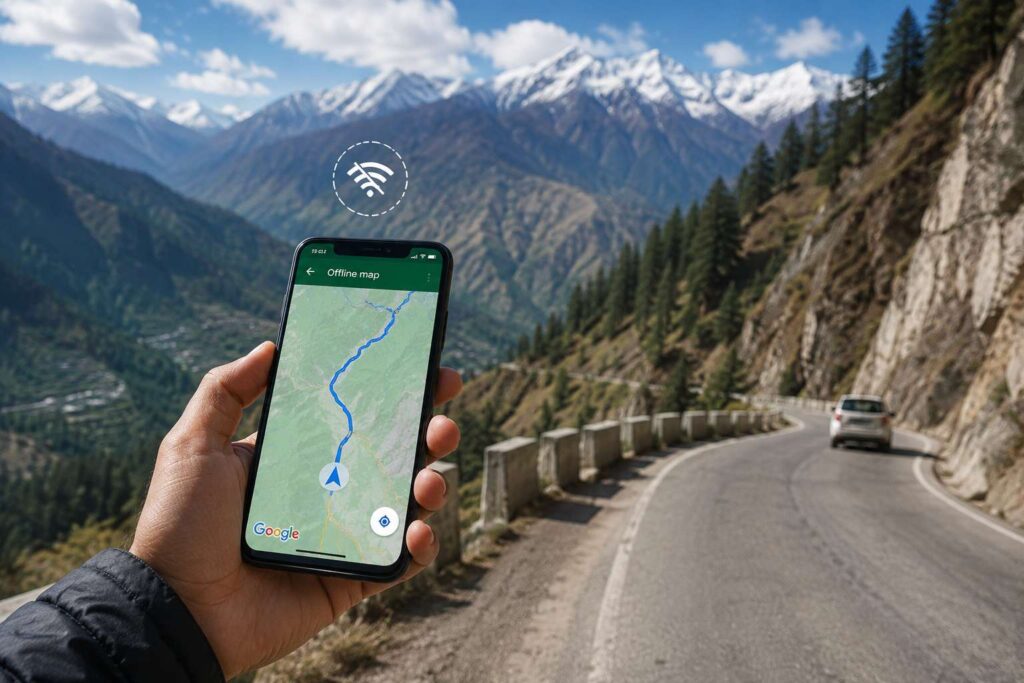
2026 and India Google Maps has improved a lot for people travelling through the country. You can use AI feature ‘Explore Nearby’, where it supports understanding of language: Type ‘cheap veg food open after 10 pm near me’ for real useful responses. However, one of the major uses that remains untouched is the offline map support even in locations with no-signal-zone areas like Spiti or upper Kinnaur.
Tier-2 and tier-3 cities are not left out, Street View now covers them as well, so pre-trip scouting actually comes useful.
Best for: Route planning, offline navigation, hyperlocal food and activity discovery.
2. IRCTC Rail Connect — Still the Only Option, Still Frustrating
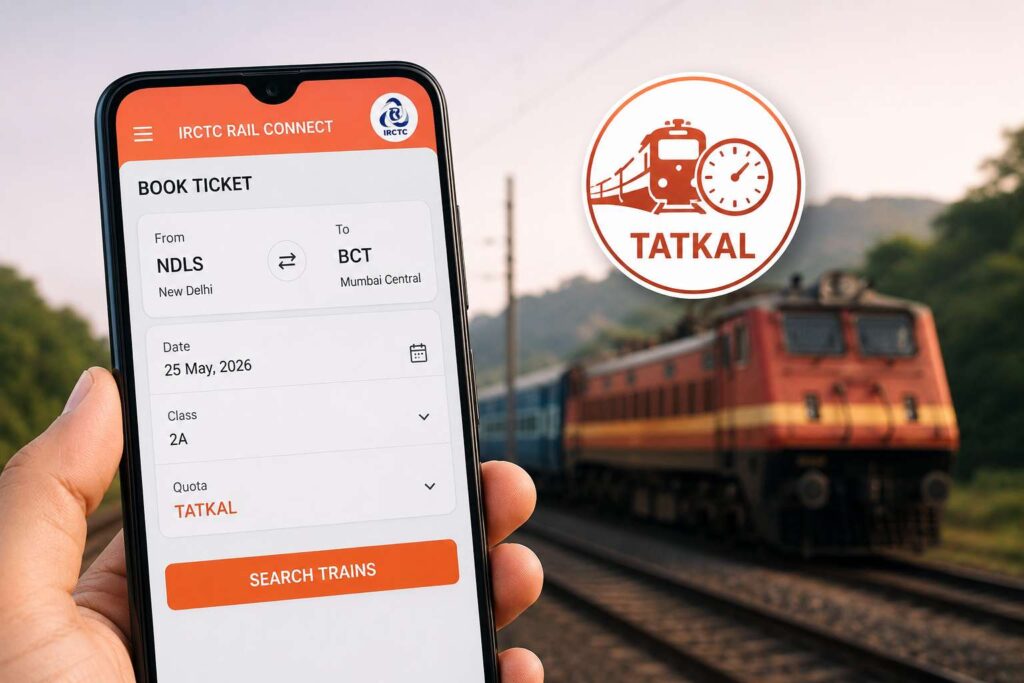
The app has had a few UI updates since 2024 but the core experience is unchanged — necessary, reliable when it works, and maddening during Tatkal hours. In 2026, the new “AI Waitlist Predictor” feature actually tells you the probability of your waitlist ticket getting confirmed based on historical data for that route and date. That alone makes it worth using over the website.
Set up your master list, save passenger profiles, and have your UPI PIN ready at 10am sharp for Tatkal.
Best for: Reserved train tickets, PNR tracking, waitlist probability checks.
3. MakeMyTrip — Best Travel App for Planning Full Packages
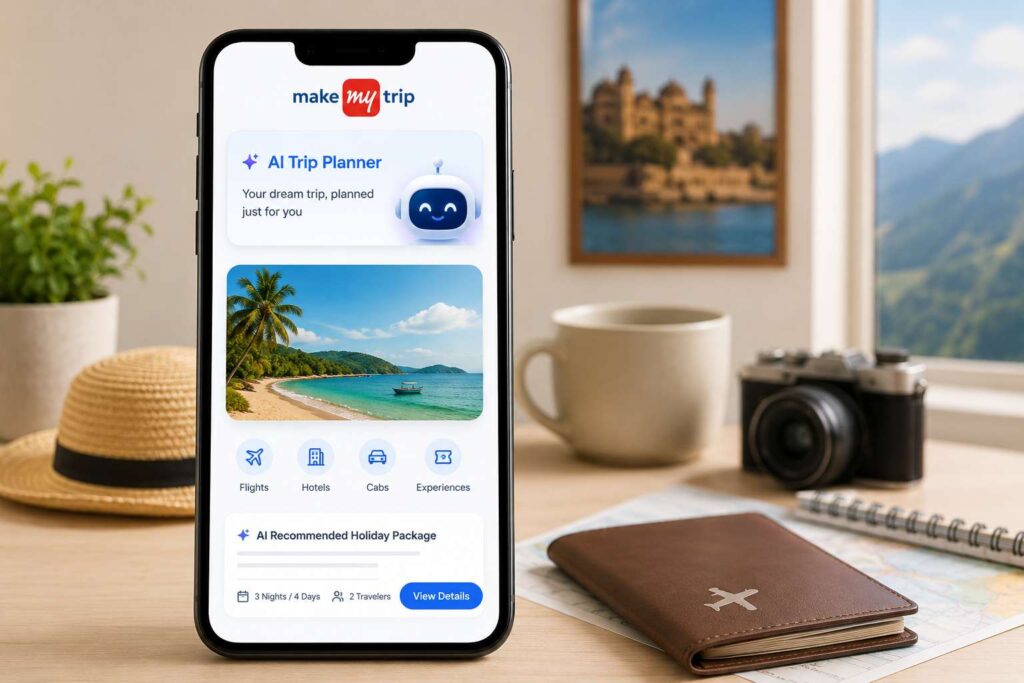
How To Plan a Vacation With AI-Like the One on MakeMyTrip The 2026 version of MakeMyTrip’s “AI Trip Planner” basically has you say a trip’s destination, budget, dates, and your trip style, and it’ll churn out a detailed itinerary with hotel and flight options “categorized by value.” Not quite a perfect trip plan, but the itinerary served as a great starter-and then I tweaked it.
Your Holi package Holidays to Goa, Shimla, Rishikesh are still worth considering and if you’re booking 3+ items. Price shown at search is almost always price at checkout — still one of their strongest points.
Best for: AI itinerary drafts, flight + hotel bundles, package holidays.
4. Goibibo — Smart for Price Comparison
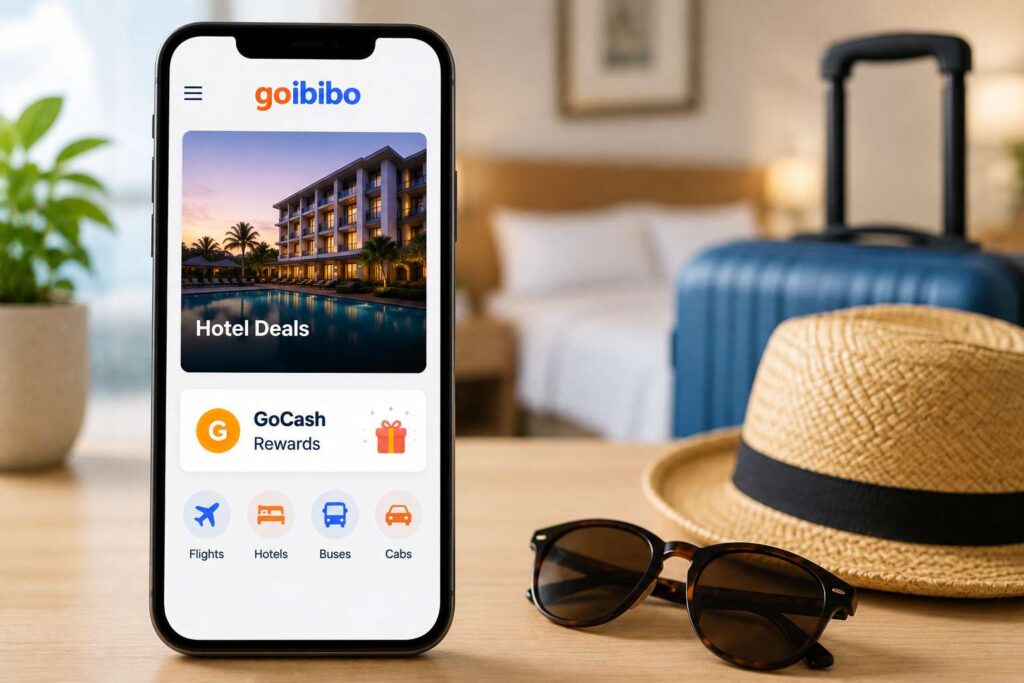
Goibibo’s GoCash rewards system has expanded — you now earn credits on bus and cab bookings too, not just flights and hotels. The credits stack up meaningfully if you’re a regular traveller. In 2026, their “Price Drop Alert” feature has become more accurate, often catching fare dips 48–72 hours before travel dates.
Their hotel search UI is faster and cleaner than it used to be.
Best for: Price comparison, GoCash rewards, domestic flight and hotel deals.
5. Airbnb — Underrated for Group and Hill Station Trips
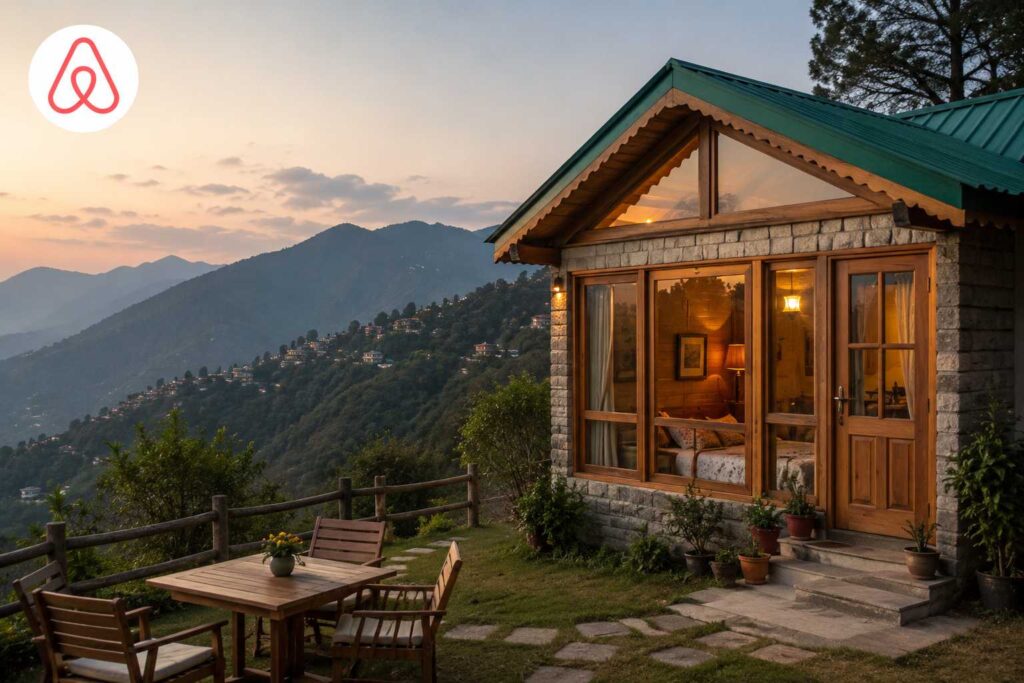
Most Indian travellers still underestimate Airbnb. More local hosts are opening their doors in relatively under-covered destinations in 2026. You’ll get real homestays in Mashobra near Shimla, private cottages away from the buzz of Kasol, and beach-facing villas in South Goa that don’t feature elsewhere.
For groups of four or more, the per-head cost usually beats standard hotel rooms significantly. If you’re exploring stays near the best tourist places in Shimla and want character over cookie-cutter comfort, Airbnb’s Himachal listings have grown noticeably since 2024.
Best for: Group trips, unique hill station stays, long-duration bookings.
6. Tripadvisor — Still the Best for Pre-Trip Research
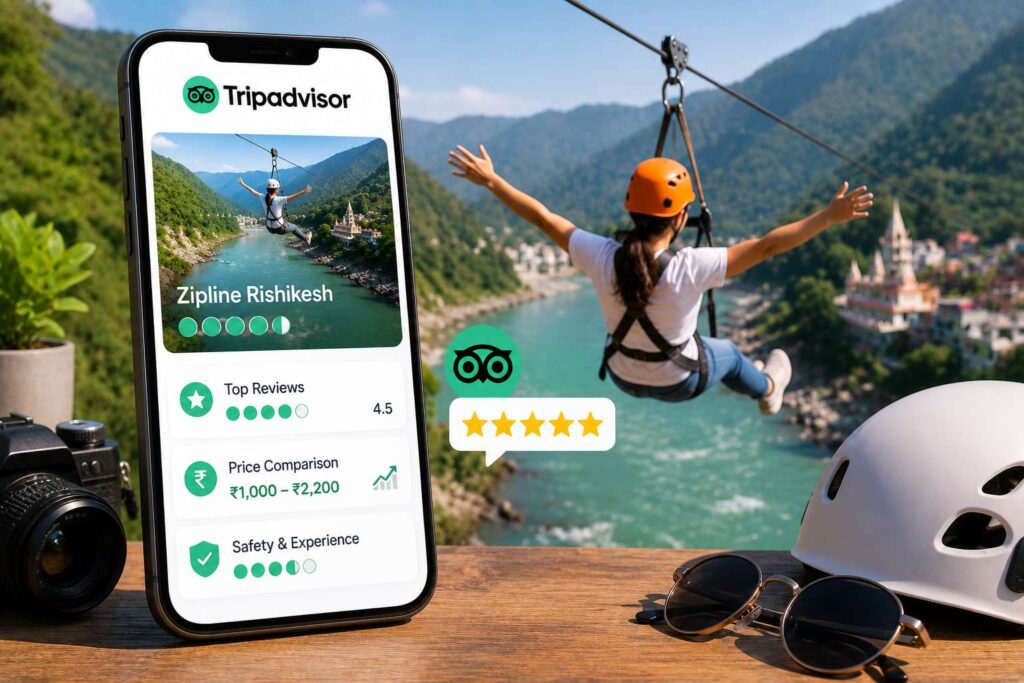
Don’t book on Tripadvisor. Research on it. The reviews remain harder to game than Google’s, and the “Experiences” section gives you real price ranges for activities across operators. Before booking any zipline in Rishikesh, check Tripadvisor first — you’ll see current pricing across multiple operators (Rs. 1,000–2,200 in 2026 depending on platform height and zipline length), recent safety feedback, and which operators have consistent repeat recommendations.
This kind of multi-operator comparison isn’t available cleanly anywhere else.
Best for: Activity research, honest hotel reviews, operator price comparison.
7. Ola / Uber — Essential, With Intercity Now More Viable
Both apps have expanded intercity services significantly. Ola’s outstation booking now covers most hill station routes from Delhi — Manali, Shimla, Mussoorie, Nainital — with upfront fixed pricing and driver ratings. In 2026, surge pricing on airport routes has been capped in several cities following regulatory pressure, making them more predictable.
For city transit, they’re still the cleanest option over bargained autos in tourist-heavy areas.
Best for: City transfers, airport rides, outstation cabs to hill destinations.
8. Skyscanner — Best Travel App for Planning Flexible Flights
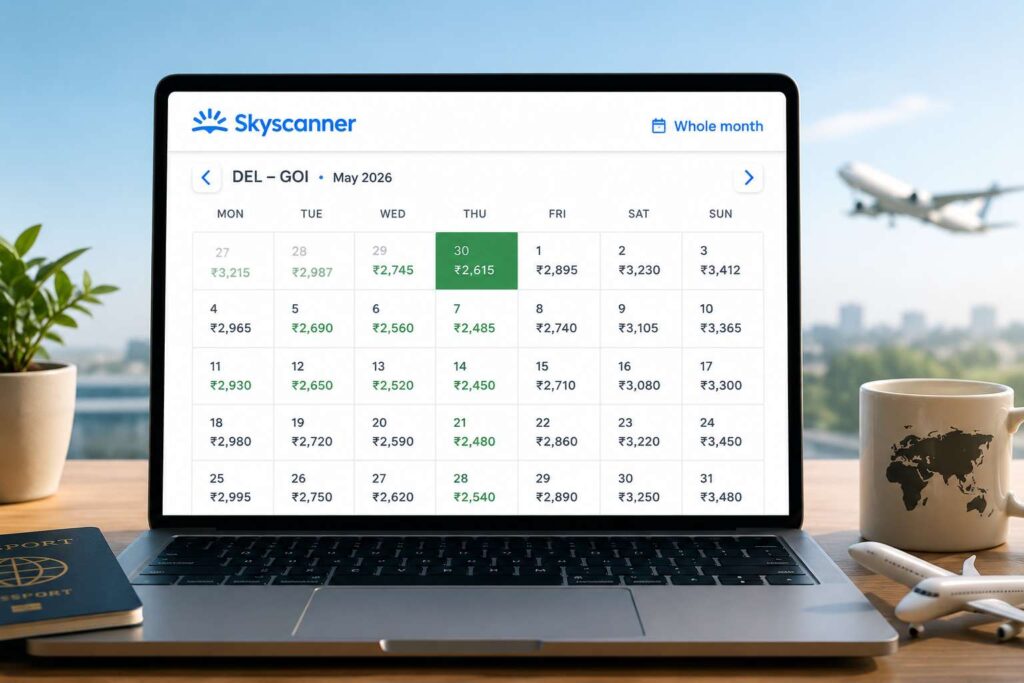
Skyscanner’s “Whole Month” calendar is still its superpower; check the price for dates across your entire month. The Skyscanner price forecast (which says the fare is likely to increase or drop in the next week) appears more accurate than usual this year for a range of routes. Smart price alerts will no longer beep for every insignificant Rs. 50 jump..
For beach trips where your dates are flexible by even 2–3 days, this app pays for the few minutes it takes to set up.
Best for: Flexible date flight search, price alerts, multi-airline comparison.
9. Splitwise — For Group Travel Expense Tracking
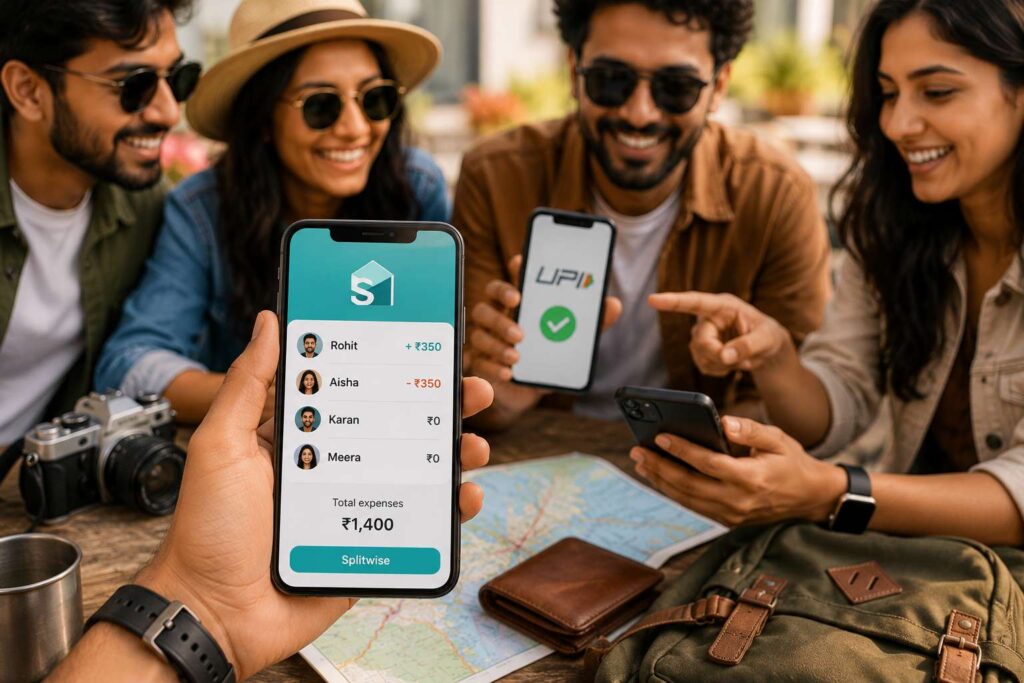
iSaveTrip has faded in popularity; Splitwise has emerged as the dominant group expense app among Indian travellers in 2026. It handles multi-currency splits, UPI settlement links, and running balances — all without anyone needing to do mental math mid-trip. Particularly useful when six people are splitting a rented villa, shared cabs, and alternating who pays for dinner.
Best for: Group trips, expense splitting, UPI-linked settlement.
10. Google Translate — Now Handles More Indian Languages
The camera-based translation in Google Translate has improved substantially. It accurately translates into Hindi, Tamil, Telugu, Malayalam, Kannada, Bengali, Gujarati, Marathi, and Odia, when used from within the app-and it’ll work just fine in camera mode in 2026. Use it in camera mode (on menus, for temple notices, to translate local bus routes as you read them in your camera app), it transcribes into your language almost in real-time and doesn’t require data (assuming you use offline packs, anyway).
Genuinely useful in South India and Northeast states where English signage is limited.
Best for: Regional language menus, signboards, local transport schedules.
11. Zostel App — Best for Solo Travellers and Backpackers
Zostel has expanded its India footprint considerably since 2024 — they now have properties in some genuinely off-beat locations beyond the usual Rishikesh–Goa–Kasol circuit. Direct booking through their app gives you 10–15% off versus third-party rates, and their community board helps you find travel companions for treks or day trips.
If you’re exploring the best beach resorts in North Goa on a backpacker budget, Zostel’s Vagator and Arambol properties are worth comparing to standard hotel rates.
Best for: Solo travel, budget hostels, backpacker community features.
12. IndiHikes App — For Any Trip Involving Trekking
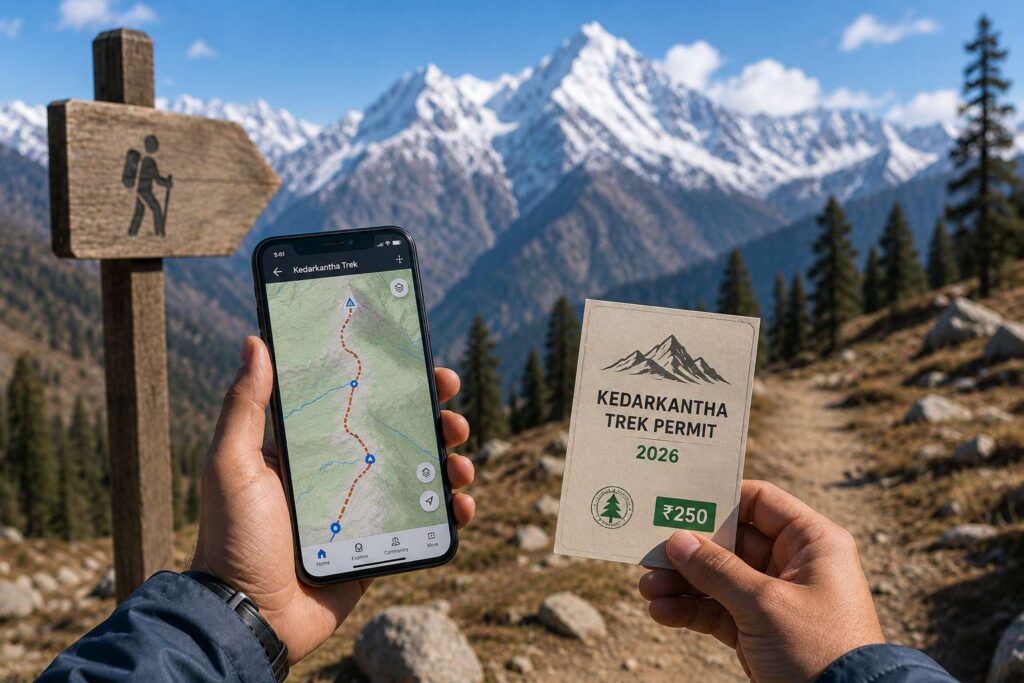
Still the most complete trekking resource in India. In 2026, IndiHikes has added real-time trail condition updates submitted by recent trekkers — snow depth, trail closures, landslide alerts — which is far more useful than static route descriptions. Permit costs are now updated in-app too: Kedarkantha sits around Rs. 250–300 per person for the forest permit in 2026, while several Himachal routes charge Rs. 100–200 per trekking day.
Offline trail maps work reliably even without signal.
Best for: Trek research, live trail conditions, permit costs, offline maps.
Quick Comparison: Best Travel Apps for Planning (2026)
| Use Case | Best App |
| Train booking | IRCTC Rail Connect |
| Flight search | Skyscanner |
| Full trip packages | MakeMyTrip |
| Hotel deals | Goibibo |
| Unique stays | Airbnb |
| Activity research | Tripadvisor |
| Group expense tracking | Splitwise |
| City + outstation cabs | Ola / Uber |
| Trekking | IndiHikes |
| Navigation | Google Maps |
| Solo / hostel travel | Zostel |
FAQ: Best Travel Apps for Planning a Trip in India
Q: Which is the best travel app for planning a budget trip in India in 2026? Start with Skyscanner for flights and IRCTC for trains — these two cover your biggest costs. Use Goibibo or MakeMyTrip for accommodation deals. Tripadvisor for activity research before committing to any bookings.
Q: Has AI changed travel planning apps in 2026? Yes, meaningfully. MakeMyTrip’s AI Trip Planner and IRCTC’s waitlist predictor are the standout examples for Indian travellers. Google Maps’ natural language search has also improved local discovery substantially.
Q: Do these apps work in remote Himalayan areas without internet? Download offline maps on Google Maps and trail data on IndiHikes before leaving network range. All booking transactions require internet — complete those before entering no-signal zones.
Q: Is Airbnb worth using in India over traditional hotels? For groups of 4 or more, almost always yes. For solo travellers, Zostel hostels are better value. For couples at hill stations specifically, Airbnb’s homestay options regularly beat hotel pricing on both cost and experience.
Q: Which app gives the most accurate prices for adventure activities? Tripadvisor. For something like the zipline in Rishikesh, you get current pricing from multiple operators, safety reviews from recent visitors, and a realistic sense of what you’ll actually pay — not the inflated rate quoted at the counter.
Final Thought
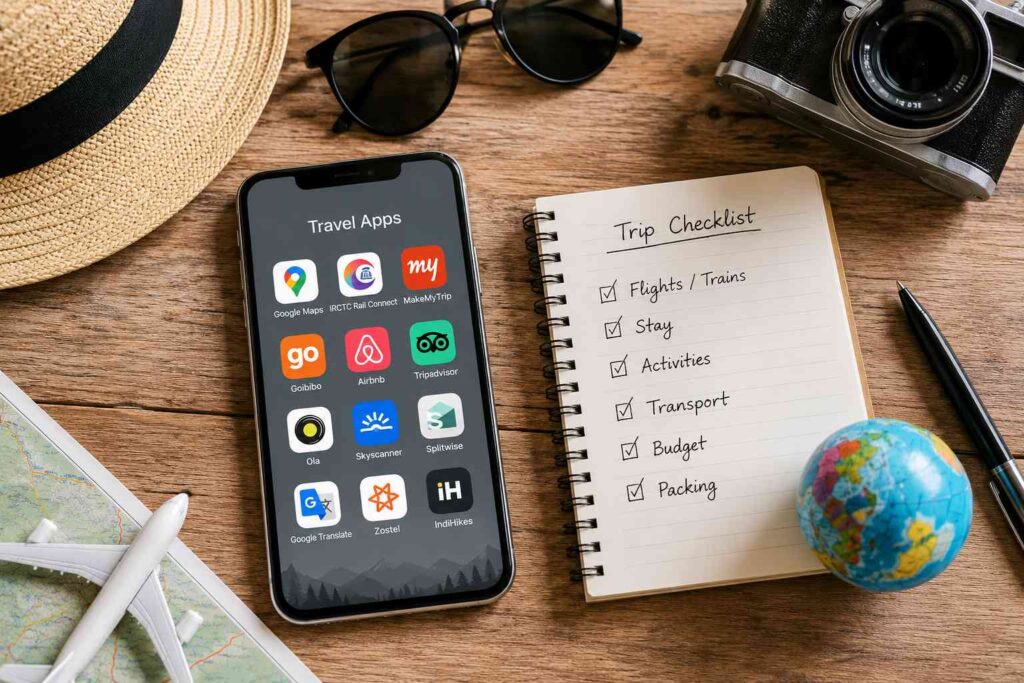
Your best travel apps for planning in 2026 won’t be an all-in-one, but rather a select-and-intentional stack. The perfect travel stack looks something like: IRCTC for train tickets; Skyscanner for flights; MakeMyTrip/Goibibo for hotels; Google Maps in all-time mode; Tripadvisor to peruse destination options; if your trip includes trekking, add IndiHikes; for traveling with friends, include Splitwise; and finally, Zostel for budget solo travel.
Build the stack before you pack. Figuring out how Tatkal booking works while standing at a station at 8am is not the morning anyone wants.

 Admin
Admin