
 Admin
Admin Let me be honest with you — most travel blogs will tell you that places to visit in july in India are not worth it. Too much rain, roads closed, too humid. I thought that way too until I was stranded in Coorg last July when my flight got cancelled and I was trapped for four unplanned days, wandering through the coffee plantations in the monsoon showers, feasting on the hot Kodava pandi curry and observing the Cauvery swelling with water. I don’t think the way I think of July travel would ever change.
The thing nobody tells you is this: the places worth visiting in July are not just beautiful despite the rain — they are beautiful because of it. The crowds vanish, prices fall, and India shows you a side of itself that winter tourists never get to see.
Here are 10 places I genuinely recommend for a July trip. Not a copied list — places I have either visited personally or researched in serious depth for this guide.
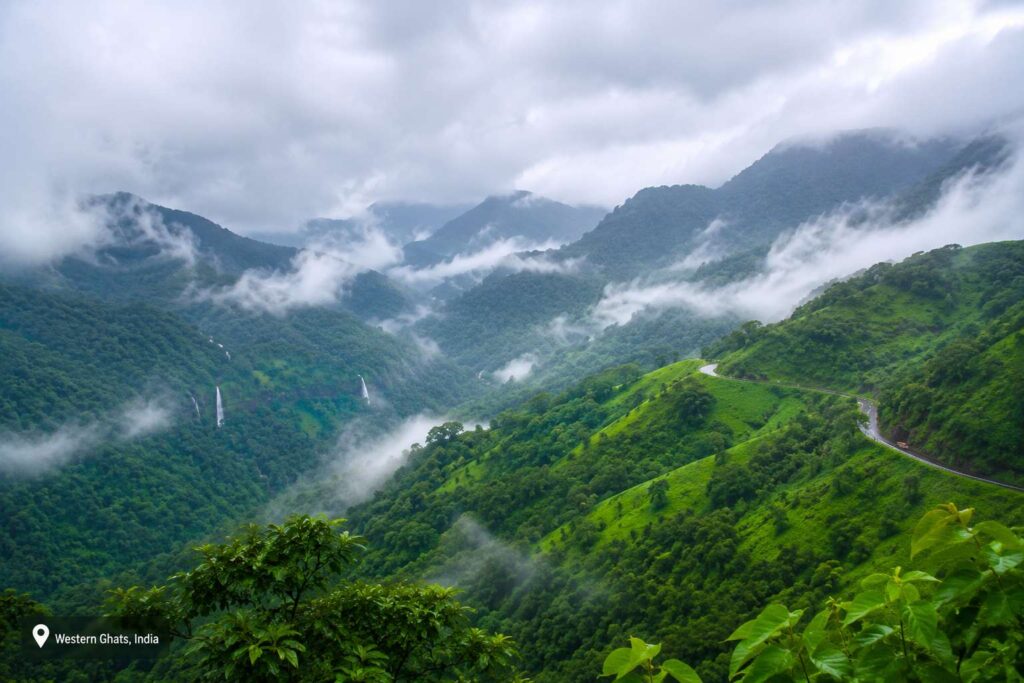
1. Coorg, Karnataka — Where Every Coffee Leaf Has a Raindrop on It
Coorg does not need monsoon marketing. It sells itself the moment you step off the Mysore road and start climbing those ghats with the windows down. In July, the estate roads between Madikeri and Virajpet are flooded with the kind of green that photographers chase for months.
Abbey Falls is the obvious stop — and yes, it is worth the hype in July. The water volume is five times what it is in March. Where most people get this wrong is a brief walk through a producing pepper or coffee plantation, while it’s lightly raining. The scent is reason enough to come.
Where to stay: Give all the main road resorts a miss and seek out plantation homestays run by Kodava families near Siddapura or Napoklu. You will eat better, pay less and get the correct view on waking up!
Best places to visit in Coorg in July: Mandalpatti (ensure jeep road is motorable as it may be washed out at times) Namdroling monastery in Bylakuppe Raja Seat in the evening Iruppu falls near the Kerala border.
Temperature in July: 16°C to 23°C. Carry a light jacket for evenings.
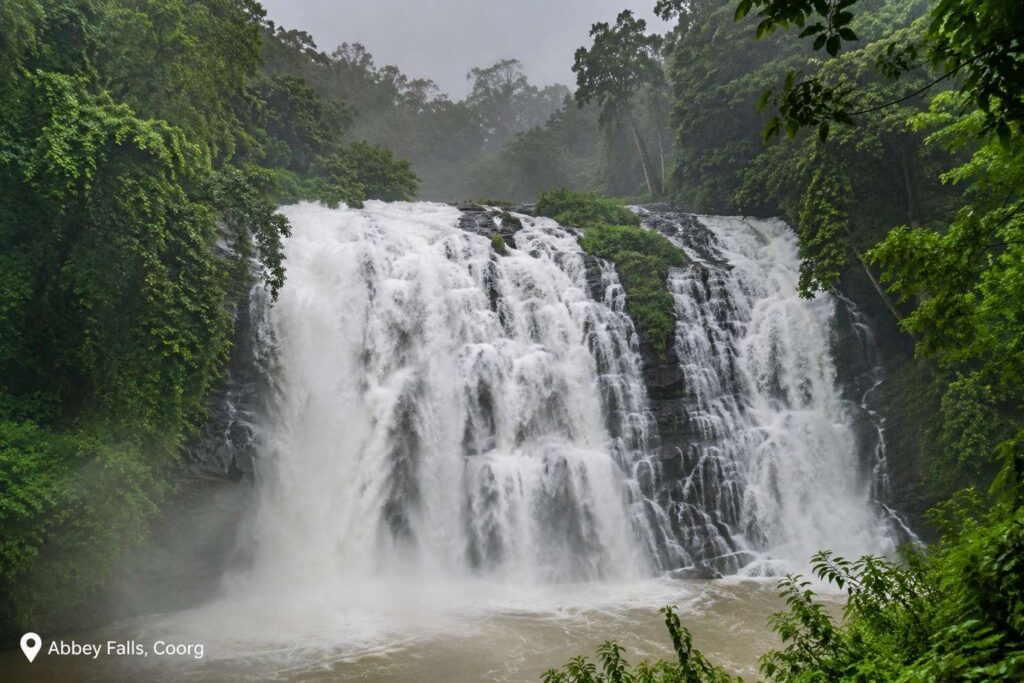
2. Munnar, Kerala — The Tea Gardens Are Greener Than Your Screen
People visit Munnar in December and say it is beautiful. Those people have not seen Munnar in July.
The high-range tea estates around Mattupetty turn a shade of green in the monsoon that genuinely looks unreal against the grey sky. The mist does not just sit at the peaks — it rolls through the estates like fog on a film set. And the waterfalls. Attukal Falls, Lakkam Falls, Power House Falls — every one of them is at full volume in July.
Eravikulam National Park is the habitat of Nilgiri Tahr (mountain goats found exclusively in the Western Ghats, India) and a very beautiful place to visit in July. The place looks wonderful with all the rains and is enjoyable by road trip.
Practical note for budget travelers: Munnar in July is off-season.Same room at January will cost 4,500. Where it cost 1,800-2,200 in July. Instead of main town, homestays at Pallivasal or Chinnakanal is a very good option.
One thing to avoid: Do not drive up the Munnar–Top Station road on a bad rain day. It is narrow, prone to small slides, and genuinely risky. Go only in the morning window when visibility is decent.
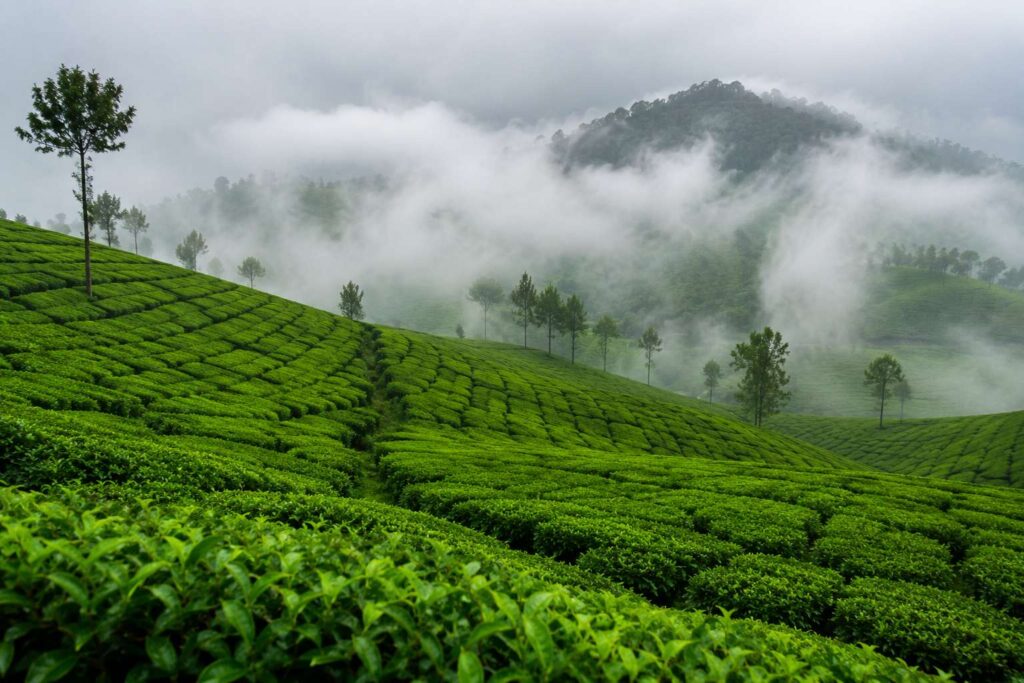
3. Rishikesh, Uttarakhand — The Ganges Goes Wild and the Town Slows Down
Rishikesh in peak summer (April–May) is packed. In July, it breathes again. River rafting is generally suspended when the Ganga is running high, but that is not why most people are going to Rishikesh in July anyway.
The thing that actually draws adventurers here in the monsoon is the Zipline in Rishikesh at Shivpuri — 750 meters of cable stretched 70 meters above the roaring Ganga. This zipline runs from high up on one side and drops you at the other and reaches speeds that’ll definitely take your mind off whatever it was you were worried about last week. It’s 1800 per person for adults, 1600 for children (10 to 17) and is open 9.30 am- 3.30 pm. The operation is at Shivpuri village, 16 km up stream from Tapovan. Even through July, this operates most days.
Neer Garh Waterfall Trek, other thanzipline,is one of the good short walks to do in the month of July. It is barely 1.5 KMs from the road and water falls when the forest all around is drenched in water and sound is amplified twofold.
The Beatles Ashram (the former Chaurasi Kutia of Maharishi Mahesh Yogi) is incredibly eerie on a rainy day. The murals, the jungle, the Ganga view from the cliffs — it all gets amplified when clouds are sitting over the river.
Who should go to Rishikesh in July: Solo travelers, yoga retreaters and those in the mood for an adventure, though not the chaos of high season.
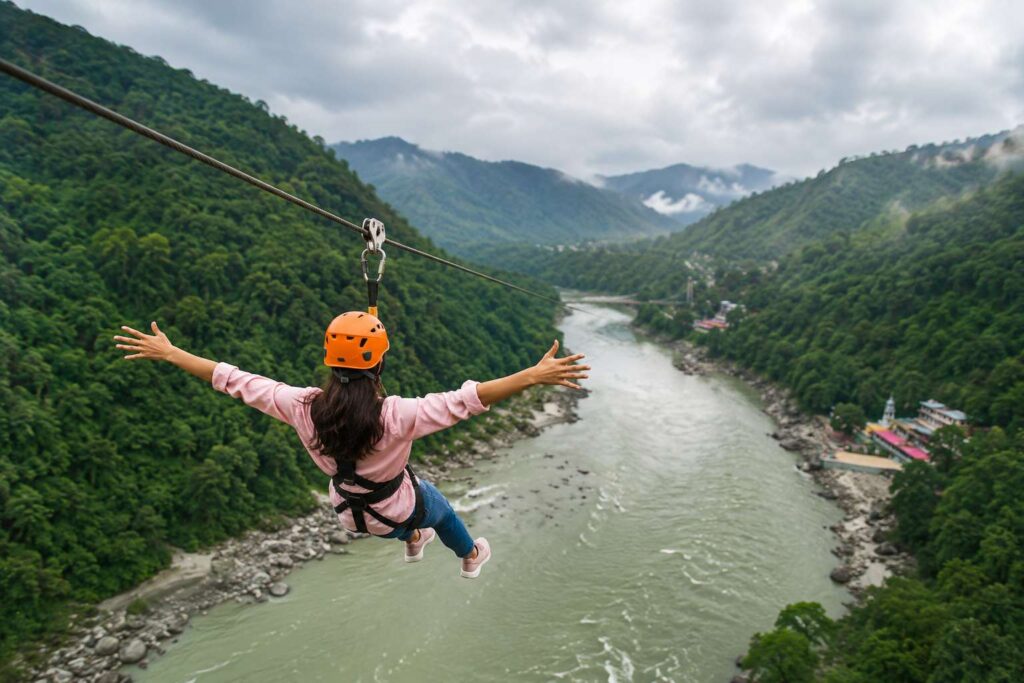
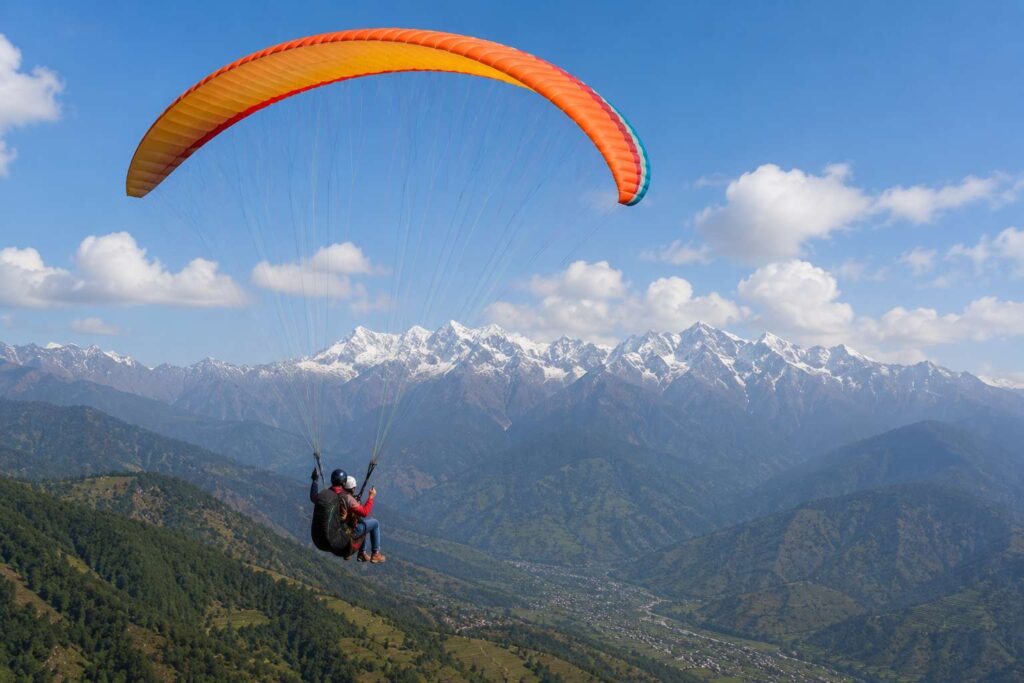
4. Bir Billing, Himachal Pradesh — The Paragliding Capital Looks Different in the Rain
Majority of people comes to Bir Billing with the intension to do paragliding and the most appropriate months to do that are October-November and March-May.But July has its own quiet charm in Bir. The valley receives a little rain, the Tibetan cafs are warm and unhurried, and the Dhauladhar range that looms over the town is obscured or appears in the mist for the entire day.
If you are planning around flying windows (early July before heavy rains set in), you need to know the Bir Billing Paragliding Price 2026 before you commit to operators on the ground. A standard tandem flight (15–20 minutes, flying with a certified instructor from the Billing launch site to the Bir landing zone) costs between ₹2,500 and ₹3,500. If you want a longer flight — roughly 25–35 minutes with higher altitude — operators charge ₹3,500 to ₹4,500. The jeep to the Billing launch site is 14 km of uphill mountain road and costs an extra ₹200–₹400 if not included in your package — confirm this before you pay.
Always book through operators certified under the Paragliding Association of India. Do not go by whoever approaches you first at the Bir bus stand.
Beyond paragliding in July: The Rajgundha Valley trek (2–3 days) starts from Billing and passes through dense forest that is otherworldly in the rain. The Deer Park Institute in Bir hosts meditation and philosophy programmes that make this town worth a few extra days. Great Tibetan food at Bir Bazaar – thukpa is wonderful here on a rainy evening.
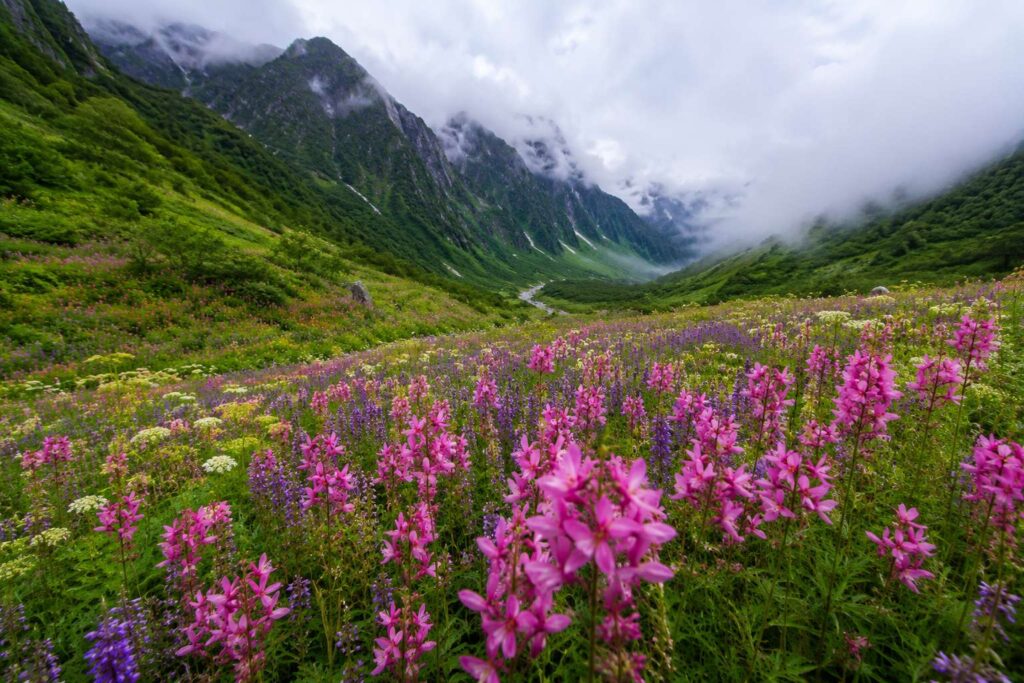
5. Valley of Flowers, Uttarakhand — Opens in June and Peaks in July
This is not an opinion. UNESCO World Heritage site, Valley of Flowers National Park officially opens on June 1st each year and is open until October. The optimum time to visit to see full bloom (over 500 species of wild flowers carpet the valley floor between 3352-3658 m) is between mid July and early August.
The trek is initiated from Govindghat which is a good 20kms from Joshimath (well connected to Haridwar/Rishikesh by road). From Govindghat you walk to Ghangaria (13kms) from where Valley is just 4kms further. Most people finish in two days- One day upto Ghangaria one full day Valley trip.
The Hemkund Sahib Gurudwara is a bonus detour from Ghangaria, another 6 km uphill to a glacial lake at 4,329 meters.Even if the trek isn’t something you are looking forward to, the effort of climbing up is totally worth it for simply being in Ghangaria in July-surrounded by snow capped Himalayas with flowers all around.
Permit note: You require an entry permit from the Forest Dept checkpoint at Govindghat. Lodging at Ghangaria consists of simple guesthouses; you have to book in advance if traveling in July- it really is peak season then.
6. Dharamshala and McLeod Ganj, Himachal Pradesh — Slow Rain, Tibetan Food, and Mountains You Can Hear
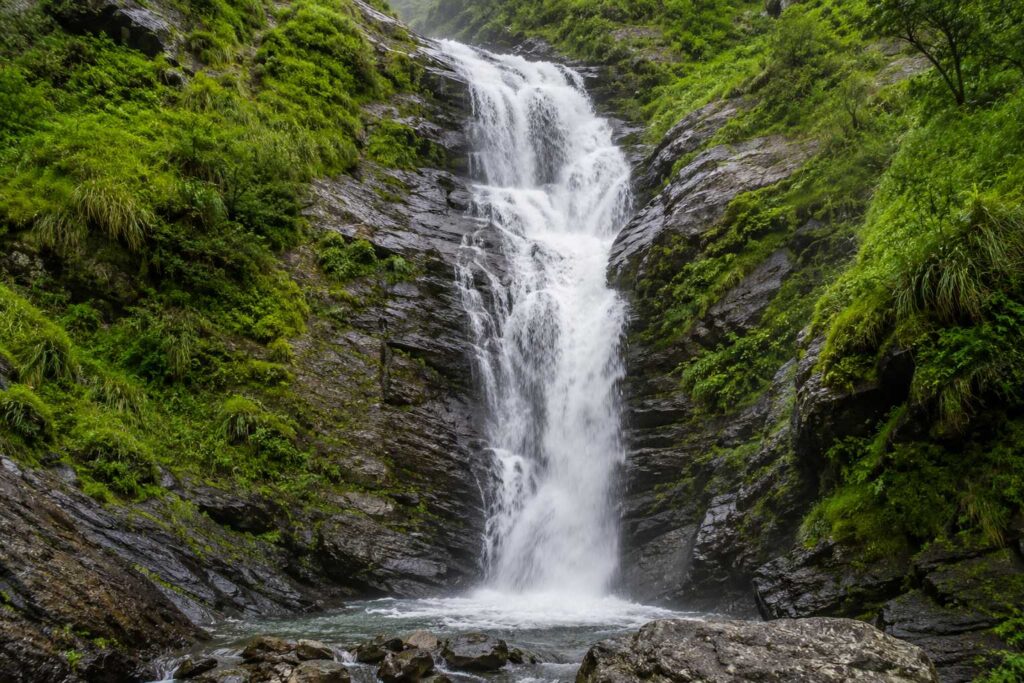
McLeod Ganj in July is a more sedate affair than you will have been seeing in the Instagram feeds. Less Israelis thronging the town, cafes with hushed voices and Dhauladhar range in and out of clouds all day. Unbelievable views if it’s clear after rain the next morning at Triund (if accessible).
Bhagsunag Waterfall is about 20 min. Walk from McLeod Ganj, and in July it is in its full glory. The walk through the village up the rocky path is a trip in itself.
It is important for the more adventurous type looking to add a flying component to their Dharamshala experience to know of the extensive local paragliding scene. Most of the trips operate out of Bir (about 70km away from Dharamshala), with a few local operations flying from Dharamshala during good weather. Before booking anything, go through the Dharamshala Paragliding Cost 2026 guide — it covers current certified operator prices, what is included, and what to watch out for so you are not overpaying or compromising on safety.
What makes July special here: The Dal Lake near McLeod Ganj is surrounded by deodar forest. In July, the trees drip quietly and the lake surface picks up every ripple of rain. Evening momos at Nick’s Italian Kitchen or Moonpeak Espresso with a view of the valley in clouds — this is what Dharamshala in July actually feels like.
7. Cherrapunji (Sohra), Meghalaya — Go Where It Actually Rains Properly
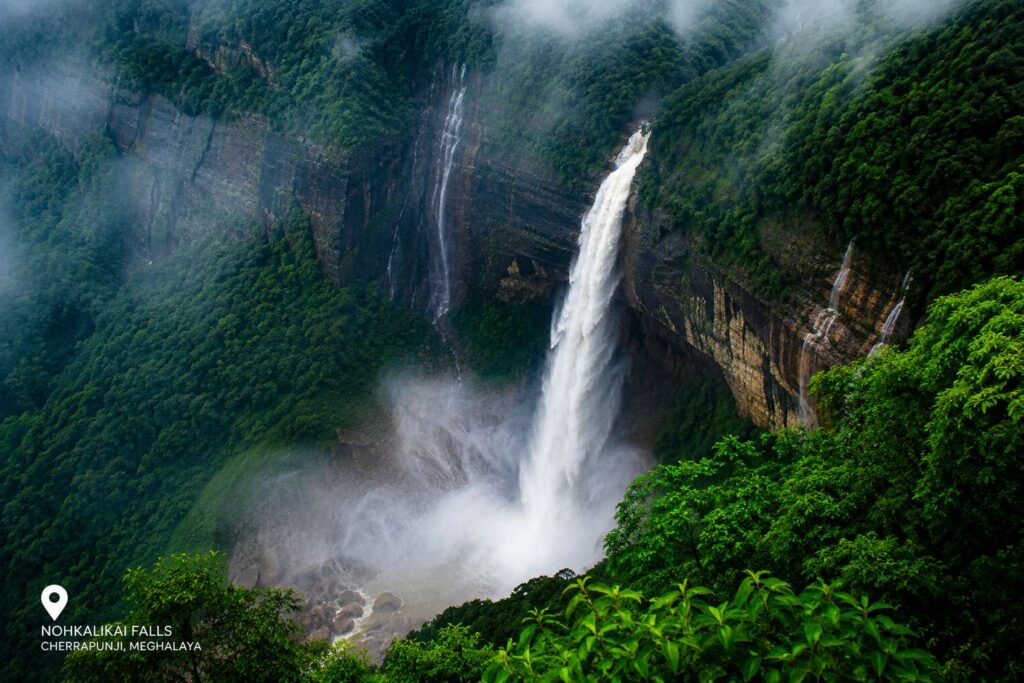
Do it wholeheartedly-if you intend to take on a monsoon trip. Cherrapunji recorded highest rainfall on the earth ever in its history (26,470 mm in a year). It is raining in July, truly raining. And it is one of the most wonderful places on this earth you will ever stand at.
The Nohkalikai Falls-India’s highest plunge waterfall (340 m)- in July is another thing all together from the picture you see. You hear the roar even 0.5km away and even if it is not raining, the spray drench you completely.
It will involve the infamous, nearly 3000 step hike down and then back up and it is likely to take you around 3 hours return, from the top to see both the double-decker bridge, which is the popular one, and the path to it through the jungle is arguably as memorable as the bridge itself. Appropriate footwear is essential-in July, with slick and wet stones, the path really can be treacherous.
From Shillong: Cherrapunji is 54 km from Shillong which is the closest big city to be reached by flight. So you should plan your Meghalaya tour as a 4-5 days trip covering Shillong, Cherrapunji and Asia’s Cleanest village Mawlynnong (which is 90km from Shillong).
8. Lonavala, Maharashtra — The Closest Monsoon Escape for Mumbai and Pune
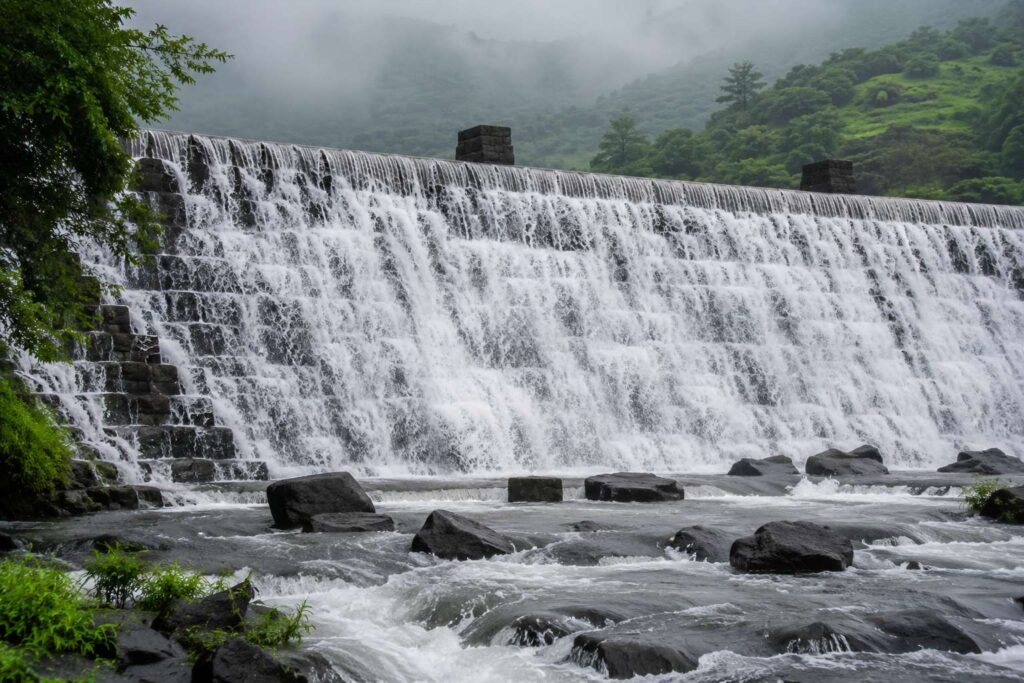
July is the season for Lonavala the most popular hill station of Maharashtra and yet it does not disappoint to entertain you and make you have your money’s worth. Bhushi Dam overflow resembles a festive party where tourists as well as locals gather at the foot of the dam allowing themselves to get washed under the overflow. It looks like utter chaos and it really is; however, it’s also exclusively Lonavala.
That the hike to the Lohagad fort is where it really comes alive. Walls that vanish in cloud cover at the top and views of the Pawna valley beneath (when you are lucky enough to glimpse through it briefly) is a view where one can comprehend why every peak of the Sahyadris had to have a fort by the Marathas.
Skip if: You are going on a Sunday in July. The Mumbai weekend crowd turns every road into a parking lot. Weekday visits are a completely different and better experience.
Do not miss: The old Lonavala market for chikki (peanut brittle) — it is the original purpose of coming to this town and it is still very much worth it.
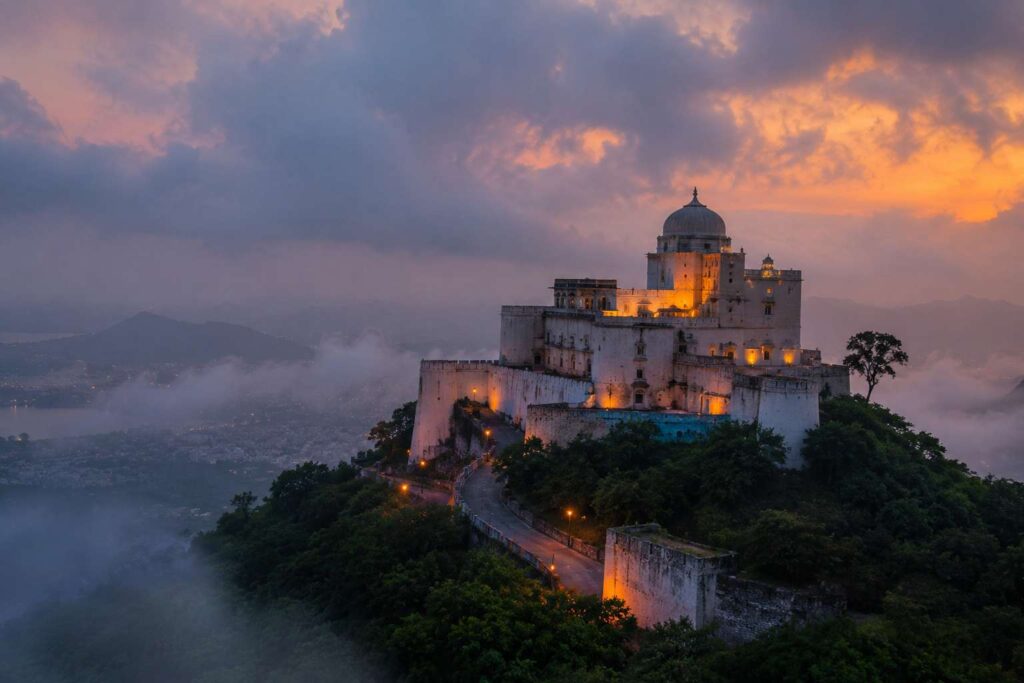
9. Udaipur, Rajasthan — A Desert City That Actually Looks Good in Rain
Rajasthan and the monsoon – seems like a mismatch, however, the only place it makes sense in Rajasthan in July is in Udaipur. The hills of Aravalli surrounding the city receive rain and transform into a temporary green landscape. Lake Pichola fills up. The City Palace against a monsoon sky is a photography dream.
The Sajjan Garh Palace-popularly referred to as the Monsoon Palace-stands at a height of 944 mts over a hill overlooking the city. It was built by the Maharana Sajjan Singh in 1880s for watching the monsoon clouds drifting over the hills.That is the entire design brief of the building. Standing there in July evening when the clouds are moving across the valley is exactly what it was built for.
Budget reality in July: Hotel prices in Udaipur drop significantly in monsoon.Where it’s 8,000 / night in December it’s 3-3.5 in July.The boats on lake Pichola are running (check with the drivers on the day) and the old city alley ways near Jagdish Temple really are quite pleasant to amble along when the rain is not too heavy.
10. Alleppey (Alappuzha), Kerala — Float Through the Backwaters While It Rains
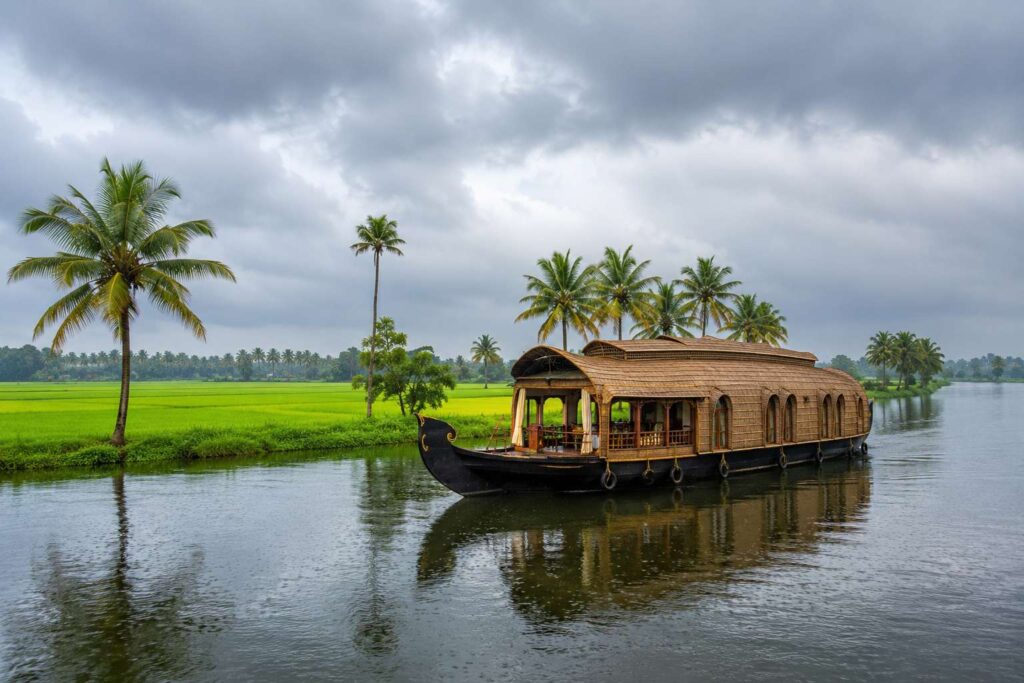
Alleppey had found its way onto everyone’s holiday lists for ever and ever but there’s a difference during July. The paddies lining the sides of the canals are that shade of green which you have to just sit and look at for a while. Rain drops onto the surface of the canal in the midst of which rings spread out slowly with a cormorant perched immobile on a pole beside it.
By choosing the houseboats at Alleppey in July you would spend between 30 to 40% less than the peak season months which are from October to March. A standard overnight houseboat for two, with all meals included, runs between ₹6,000 and ₹9,000 in the monsoon off-season. Book through local operators in Alleppey town rather than large travel aggregators — you will get a better boat for less money and the negotiation is easier in person.
While the Nehru Trophy Boat Race itself (which is one of Kerala’s largest annual events) is in August (2nd Saturday) the preparatory races and general excitement within the community of backwaters and surrounding towns leading up to it give July in Alleppey a distinct feeling.
Things to Carry for Places to Visit in July on Any of These Trips
Before I wrap this up — a few practical things that actually matter:
Waterproof everything twice. Your phone case is not enough. Put your phone inside a ziplock, then inside the case. Electronics die in monsoon bag situations.
Footwear matters more than you think. Flip-flops in Meghalaya on a root bridge will send you home early with a twisted ankle. Carry one pair of grip shoes and one pair of something that dries fast.
Check landslide alerts before driving in hill states.NDMA releases daily warning. Himachal, Uttarakhand and Meghalaya road – do consult it in the morning before you start. Google Maps will not tell you about a slide that happened four hours ago.
Book refundable where possible. July weather can cancel plans with zero notice. A small premium for a flexible booking is always worth it.
Travel insurance is not optional in July. Medical evacuation from a Himalayan trail, a flight cancelled due to weather, a hotel room you cannot reach because the road is flooded — these things happen in July specifically. Cover yourself.
Best Places To Visit in July in India For The Perfect Monsoon Getaway
July destinations in India aren’t destinations you plan for in January. You need to travel differently, with a looser itinerary, good rain-gear and a healthy respect for whatever the monsoons feel like revealing to you. But get that right, and India in July is really one of a kind.
Pack accordingly. Go.

 Admin
Admin 
[…] you’re still deciding where to travel during the monsoon, explore our guide to the places to visit in July in India for more seasonal […]
[…] also features on our Top 10 Places to Visit in July because the valley stays protected from heavy monsoon rain — the surrounding peaks absorb most of […]
[…] note: If you’re also looking at Places to Visit in July, Munnar during the rains is stunning — the tea gardens go a darker shade of green, waterfalls […]
[…] is one of the most worthwhile Places to Visit in July in the entire country. Full […]
[…] read: Places to Visit in July — for more offbeat options across South India during the monsoon […]