 Admin
Admin There’s a two-week window every year when a barren Himalayan basin turns into what looks like someone spilled every paint colour across a mountainside at once. That’s the Valley of Flowers, and if you’ve been putting off this trek for “someday,” 2026 is shaping up to be a genuinely good year to stop waiting — heavy winter snowfall means strong snowmelt feeding the valley this season, which trekkers who’ve done this before will tell you usually means a richer bloom.
What is the Valley of Flowers Trek 2026?
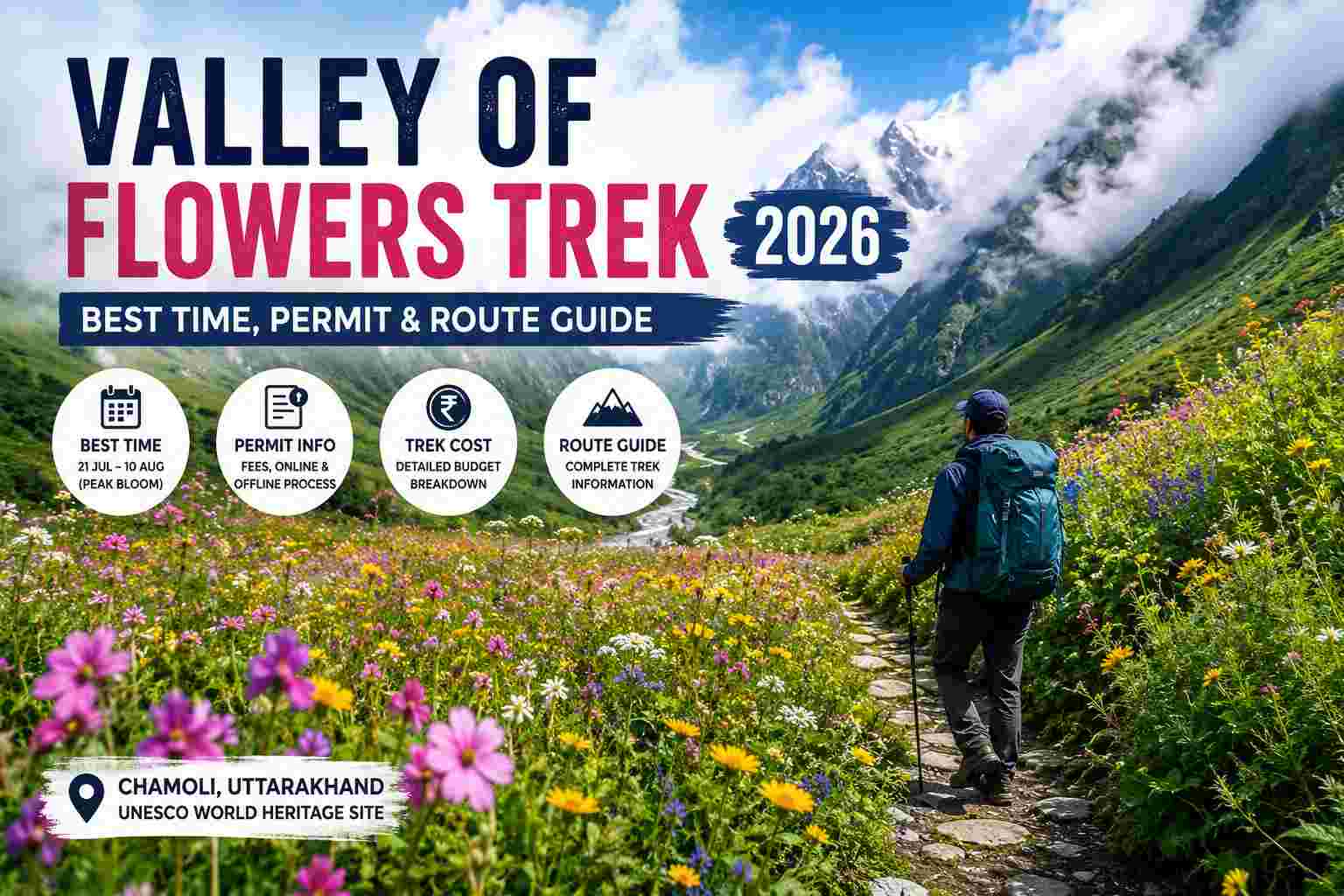
The Valley of Flowers Trek 2026 is a moderate Himalayan trek to a UNESCO World Heritage alpine meadow in Chamoli district, Uttarakhand, home to over 600 species of flowers. The national park is open from 1 June to 31 October 2026, with peak bloom between 21 July and 10 August. Every visitor needs a Forest Department entry permit, and overnight stays inside the valley are strictly prohibited — it’s a same-day entry and exit, every time.
Valley of Flowers 2026 Opening & Closing Dates
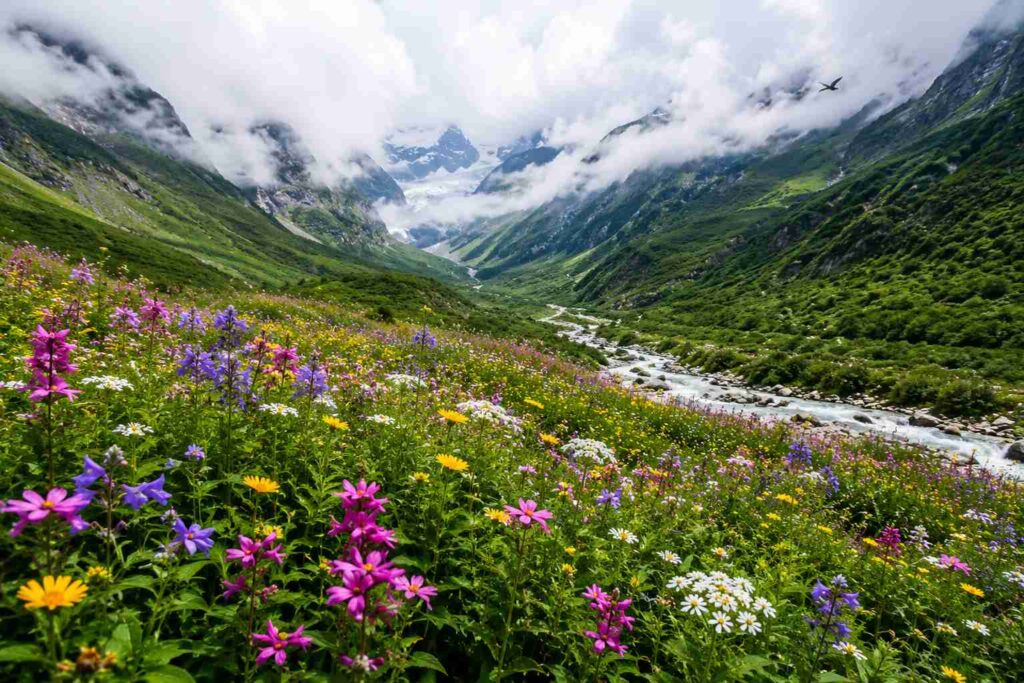
Following its annual winter closing, the park has re-opened for the summer on June 1, 2026, after its trails were cleared by the Forest Department. It will remain open to the public until October 31, 2026, but one or two of the sources mention the closing date to be October 4, a few weeks before the actual official closing – given weather closures can occur, so it’s a good idea to confirm with either the Forest Department or local tour operators for any Sep/Oct planned visit.
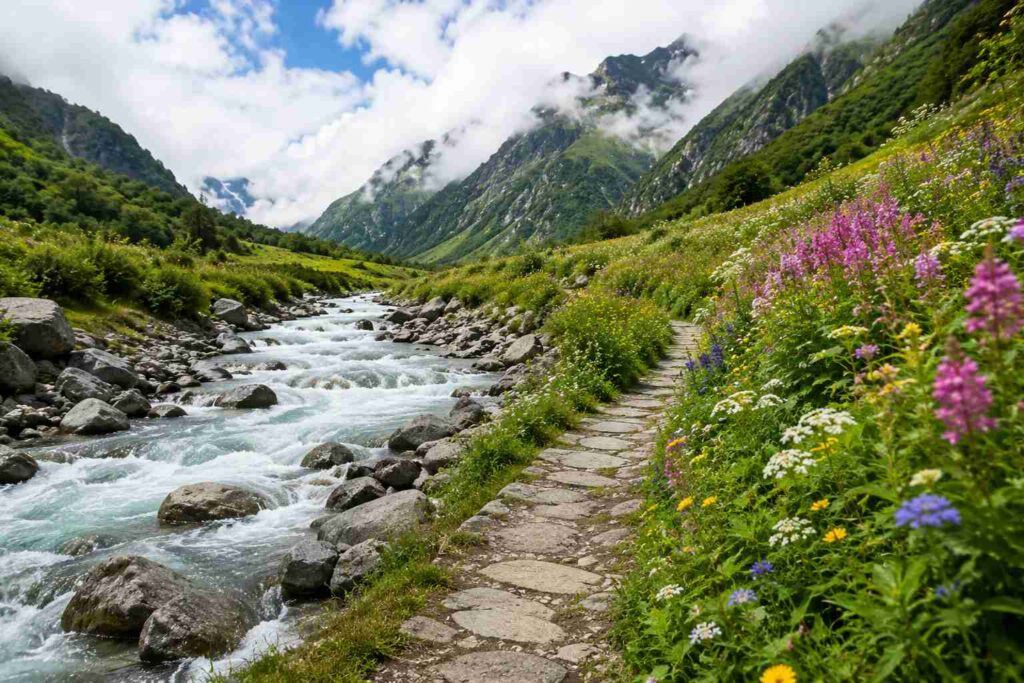
There’s just one date that trumps both of them, and that’s bloom window: July 21 to August 10. It’s the time when the meadow is absolutely carpeted – with yellows, blues and pinks taking over the entire hillside rather than just growing in clumps. You’ll visit in early June and see predominantly green and a few pioneering wildflowers; you’ll visit in September and see a faded bloom even when the park is still officially open. If your trip is all about getting the valley at the peak of its visual glory, the three weeks this bloom window falls in are when you should plan your dates.
How to Get the Valley of Flowers Permit 2026
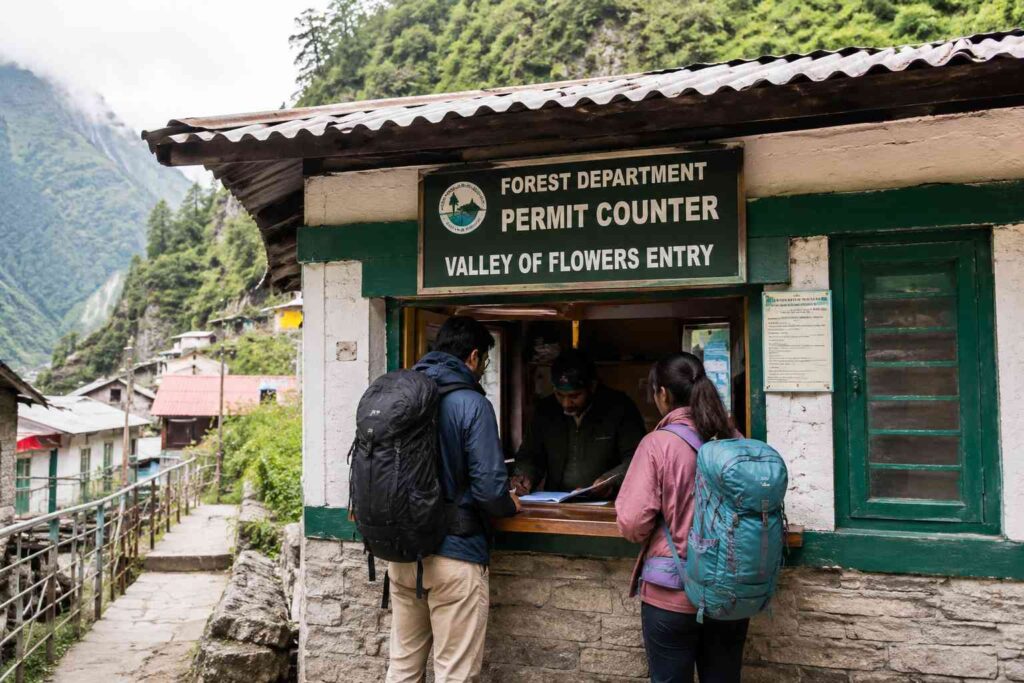
Every visitor — Indian or foreign, solo trekker or part of a group — needs a valid Forest Department permit.But kids over 12 are no exception and you need to stop at a counter to show permit, which you will come across around 1.5 kilometers from the entrance to the valley, where the real show begin. Otherwise it’s all the way back!
Two ways to get it:
- Online — Visit valleyofflower.uk.gov.in, pick your entry date, enter each traveller’s name and government ID number, pay the fee, and download the permit. This is the strongly recommended route for July–August visits, since the offline queue at Ghangaria can run 30–60 minutes during peak season.
- Offline —There is a Forest Department counter about 1.5 km before the check post, in Ghangaria village, not far from the main market. There’s an original identity proof document (Aadhaar, Voter Card, PAN, passport for foreign nationals) and cash. The counter usually opens at about 6:30-7:00 AM.
Valley of Flowers entry fee 2026:
- Indian adults: ₹200 (three-day validity)
- Students aged 18+: around ₹100
- Students aged 12–18: around ₹50
- Children under 12: free
- Foreign nationals: ₹600–₹800
Camera and filming equipment carry a separate fee on top of the entry ticket — this catches a lot of trekkers off guard at the gate, so budget for it if you’re bringing a proper camera setup rather than just a phone.
Valley of Flowers Trek Cost 2026
The total cost of the Valley of Flowers Trek depends on your travel style, accommodation, and transport. Budget travellers can complete the trip at a lower cost, while those choosing private taxis and premium hotels should expect to spend more.
| Expense | Approximate Cost |
| Forest Entry Permit | ₹200 (Indian Adult) |
| Govindghat to Pulna Shared Jeep | ₹50–₹100 |
| Hotel in Ghangaria | ₹800–₹3,000 per night |
| Food | ₹400–₹800 per day |
| Local Guide (Optional) | ₹1,000–₹2,500 |
| Porter/Pony (Optional) | ₹1,500–₹3,500 |
| Total Estimated Budget | ₹6,000–₹12,000 per person |
Note: Prices may vary depending on the season, accommodation type, and transportation choices.
Valley of Flowers Trek Route
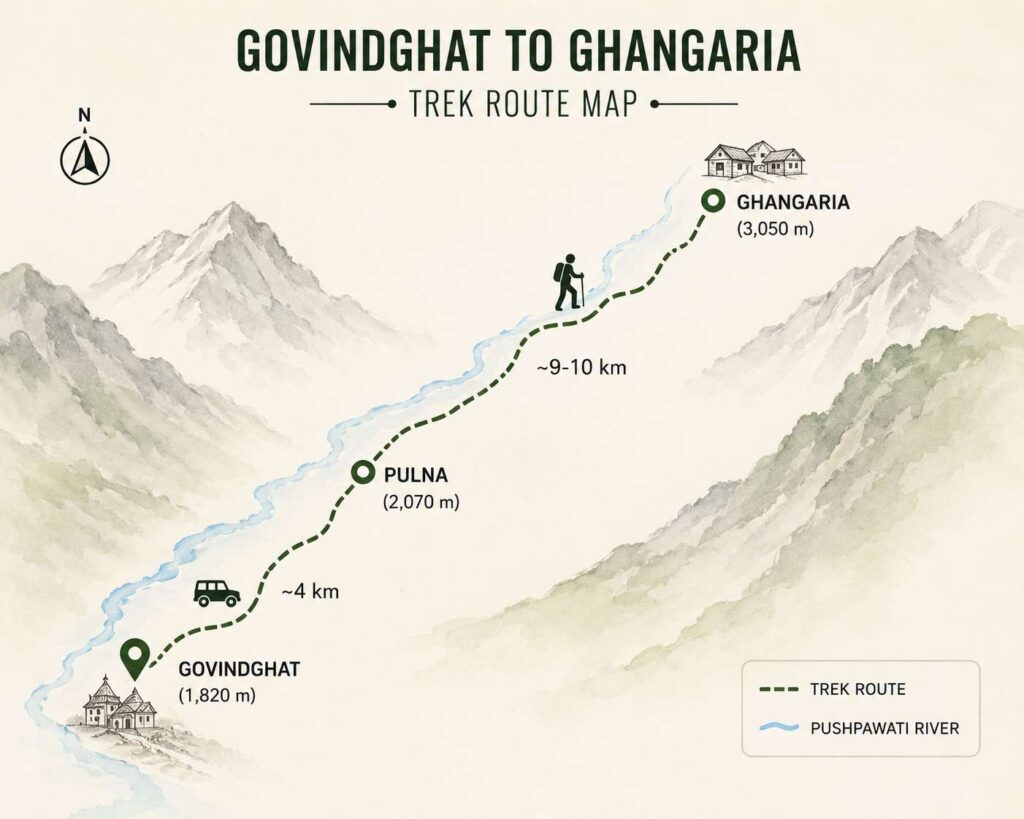
You can’t drive to the Valley of Flowers — the only way in is on foot, and the full route breaks down like this:
| Leg | Distance | Notes |
| Govindghat to Pulna | ~4 km | Shared jeep, road journey |
| Pulna to Ghangaria | ~9–10 km | On foot, the toughest climbing of the whole trip |
| Ghangaria to Valley of Flowers | ~4 km one way | Gentle gradient, the “easy” part |
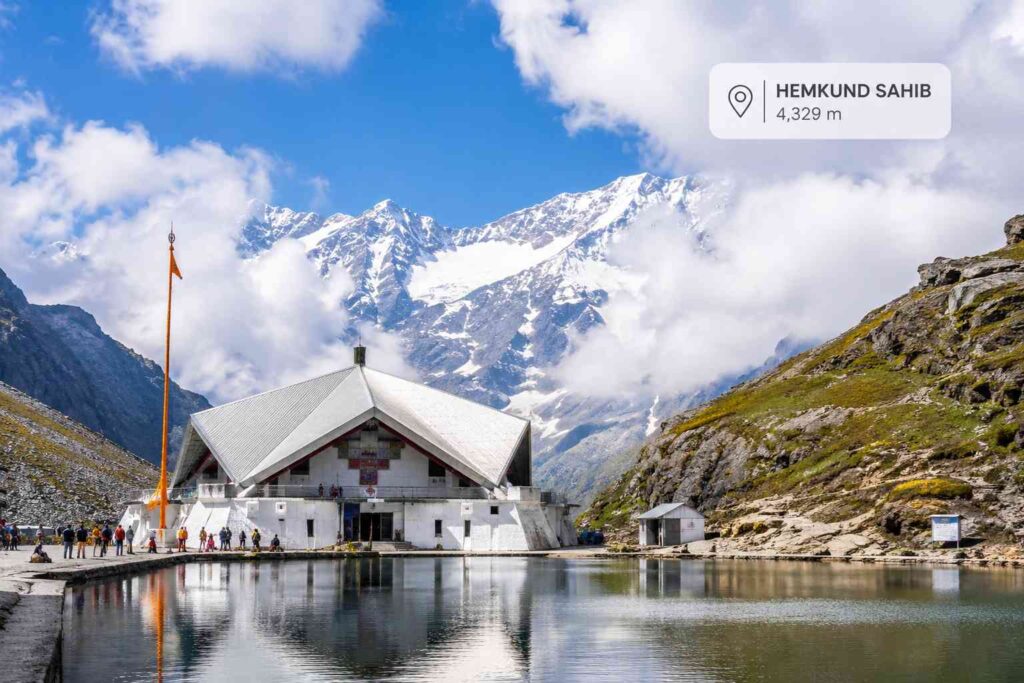
| Ghangaria to Hemkund Sahib (optional) | ~6 km one way | Steep ascent to 4,329 m |
Most trekkers base themselves in Ghangaria for two nights — one day for the valley, one for Hemkund Sahib — since both are accessed from the same village and there’s no accommodation permitted inside either site. The valley itself sits at roughly 3,500–3,658 metres, and while the walk within it is gentle, the climb up from Pulna is where most people actually feel the altitude.
Entry timing is strict: gates open at 7:00 AM, last entry is around 2:00 PM, and you need to be walking back well before the 5:00 PM close. Starting early isn’t just good practice here — it’s the only way to actually get a full day in the valley before the afternoon monsoon clouds roll in and visibility drops.
Best Time to Visit Valley of Flowers 2026
- June: Fresh greenery, cooler air, thinner crowds — but the bloom hasn’t really started.
- 21 July – 10 August: Peak bloom. This is what the photos you’ve seen online were taken during.
- Late August–September: Bloom fading, but clearer skies and better mountain visibility since the heaviest monsoon rain has usually passed.
If you only have one trip in you this year, the July–August window is the one worth planning around, monsoon conditions and all.
If you’re still deciding where to travel during the monsoon, explore our guide to the places to visit in July in India for more seasonal destinations.
Valley of Flowers 2026 Weather & What to Pack
Monsoon isn’t a drawback here, it’s the whole reason the flowers exist — the rain feeds the bloom cycle. But that means challenging conditions: clouds suddenly roll in and out in a matter of minutes, visibility can drop to zero and reemerge, and the valley floor is continually changing light. Be sure to have a good quality rain shell, waterproof boots, a drybag for your electronics and warm layers for Ghangaria’s chilly single digit July evenings.
Frequently Asked Questions
Is a permit really mandatory for the Valley of Flowers Trek 2026?
Yes, without exception. Valley of Flowers is a protected national park and UNESCO World Heritage Site, so every visitor needs a valid entry permit, checked at a counter before the valley itself.
What is the best time to visit the Valley of Flowers in 2026?
Peak bloom falls between 21 July and 10 August 2026. June offers greenery with fewer crowds, while September gives clearer skies but a fading bloom.
Can I stay overnight inside the Valley of Flowers?
No. Overnight camping and stays are strictly prohibited inside the park to protect its fragile ecosystem. All accommodation is at Ghangaria, the base village.
How difficult is the Valley of Flowers trek?
It’s rated moderate. The steep part is the 9–10 km climb from Pulna to Ghangaria; the valley walk itself is a gentler 4 km each way. Hemkund Sahib, if you add it on, is the more demanding optional leg.
Do I need a separate permit for Hemkund Sahib?
Hemkund Sahib is accessed via a different trail from Ghangaria and generally doesn’t require the same forest permit, though some operators handle a registration formality locally. Confirm with your trek operator before you go.
Valley of Flowers Trek 2026: Complete Guide to India’s Most Beautiful Monsoon Trek
Final Thoughts
The Valley of Flowers rewards timing more than fitness — get the July 21 to August 10 window right, book your permit online in advance instead of risking the Ghangaria queue, and give yourself two nights at Ghangaria so the valley and Hemkund Sahib don’t feel rushed into one exhausting day. Do that, and the rest — the Pushpawati river alongside the trail, the sudden bursts of colour through shifting cloud cover — takes care of itself.
If you’re already heading into this part of Uttarakhand, it’s worth building the trip around more than just the valley. Govindghat sits close to Badrinath, and a lot of trekkers combine both in one itinerary — our guide on the best time to visit Badrinath is worth a look if you want to add a temple visit to this route.
 Admin
Admin