 Admin
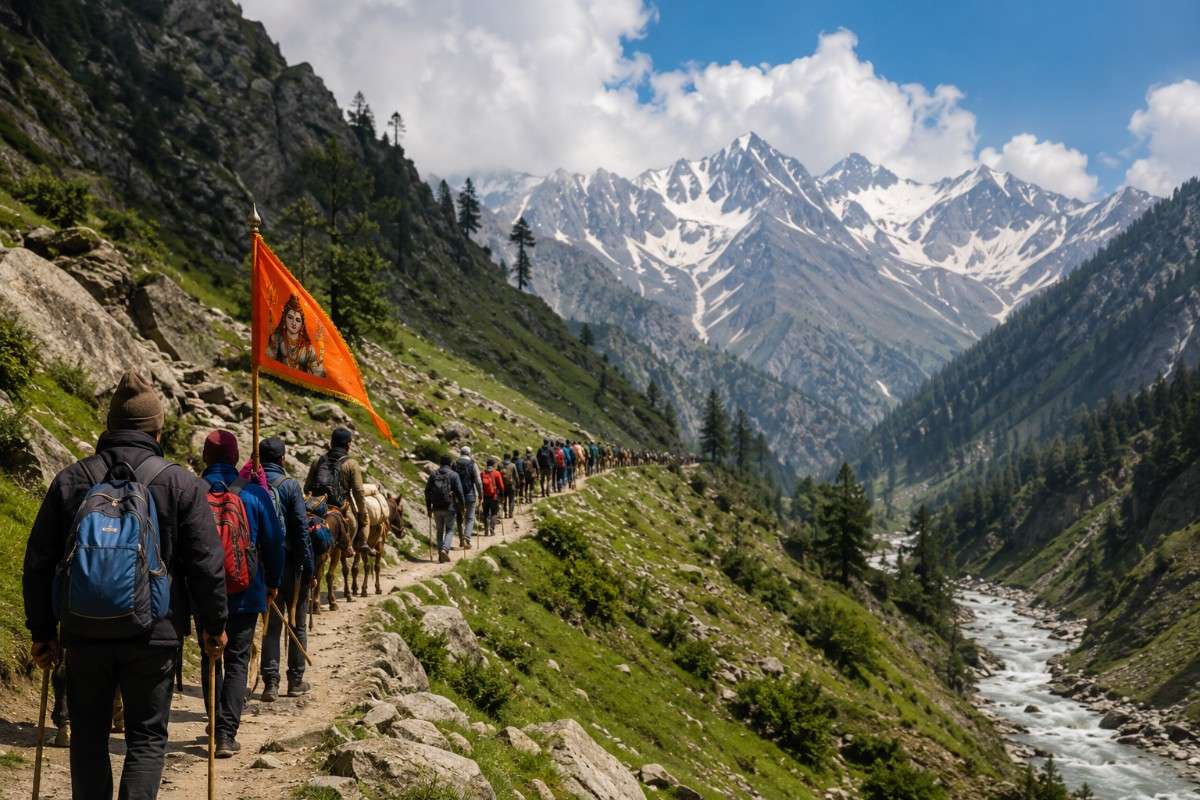
Admin There’s a particular kind of chaos that hits Kashmir every July — buses lined up at Jammu’s base camp, RFID counters running non-stop, and thousands of people checking the same weather app every hour hoping for a clear window at 3,888 metres. If you’re planning to be part of the Amarnath Yatra 2026, here’s everything you actually need — not the copy-paste version floating around most travel sites, but what’s genuinely changed this year and what still trips people up every season.
What is Amarnath Yatra 2026?
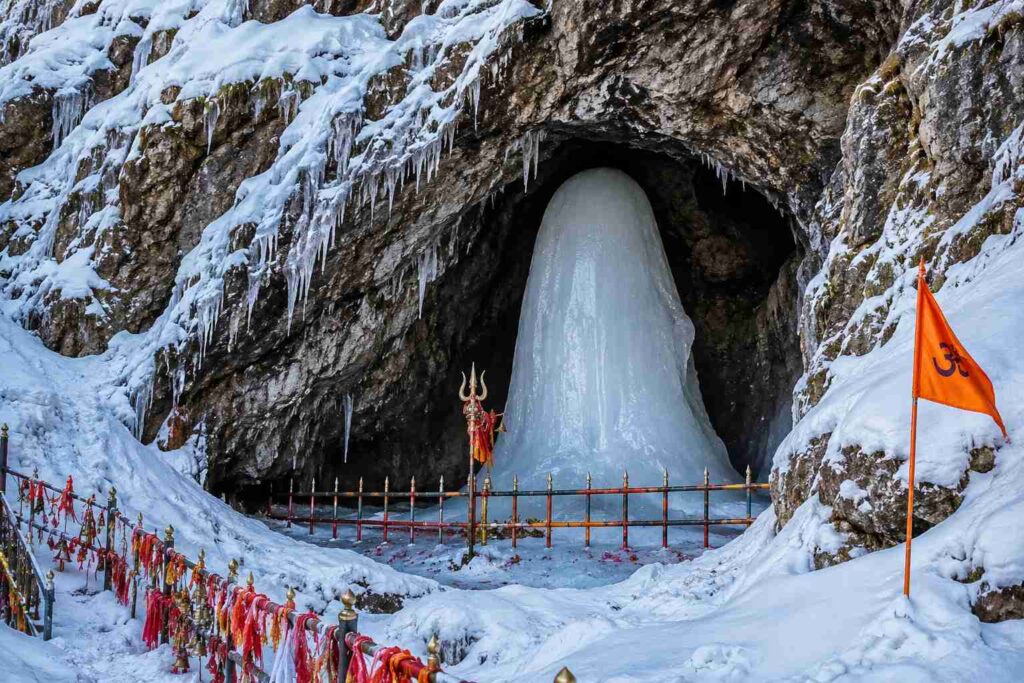
Amarnath Yatra 2026 is the annual Hindu pilgrimage to the holy Amarnath Cave Shrine in Jammu and Kashmir, where a naturally forming ice Shivling is worshipped as Lord Shiva. This year’s Yatra runs from 3 July to 28 August 2026, and every pilgrim needs advance registration, a Compulsory Health Certificate (CHC), and an RFID card before setting out on either route.
Amarnath Yatra 2026 Dates
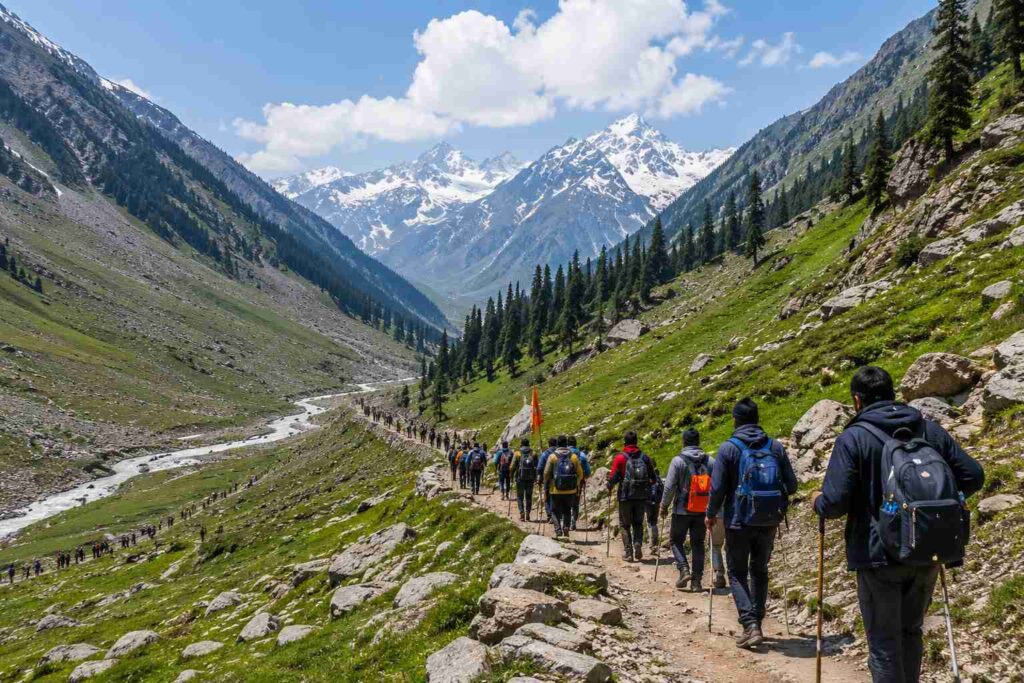
SASB has stated that Yatra is being organised between July 3rd and August 28th 2026 – which is a 57 day period ending on Raksha Bandhan (the day Chhari Mubarak enters cave). This is what the latest documents and articles report – just ignore old posts reporting 38-day or 62-day window in February earlier this year. You must consider the SASB portal as the authority on the dates especially as circumstances in the Himalayas like weather and safety might just require an amendment closer to the Yatra season.
Registration for Amarnath Yatra 2026 began well before the travel dates, since the first formal worship, the Pratham Puja (First Ceremonial Worship), was conducted as early as on June 19 to announce the beginning of the season.
How to Register for Amarnath Yatra 2026
Registration opened on 15 April 2026, and here’s the part people get wrong most often: it’s not a same-day walk-in process. You need to plan for it.
Steps for Amarnath Yatra registration:
- Go to the official SASB portal (jksasb.nic.in) or the “Shri Amarnathji Yatra” mobile app. Don’t use third-party sites — there’s no shortage of lookalike portals during peak season.
- Create your profile and fill in the registration form.
- Upload your Aadhaar (or another valid photo ID), a passport-size photo, and your Compulsory Health Certificate (CHC).
- Pick your Amarnath Yatra route — Baltal or Pahalgam — and your preferred date.
- Pay the ₹150 registration fee.
- Download and print your Yatra permit. Keep multiple copies; it gets checked at several points along the way.
If you’d rather register offline, over 550 designated bank branches across India — SBI, PNB, J&K Bank, and Yes Bank among them — handle this too. Genuinely useful if you’re in a smaller town without smooth internet access, or if you just don’t trust yourself to fill out government forms correctly on the first try (no judgment, most of us don’t).
Required Documents for Registration
One requirement that catches people off guard: the CHC has to be dated on or after 8 April 2026. An old certificate from last year’s medical checkup won’t be accepted, no matter how healthy you actually are. Get it from an SASB-approved doctor or hospital only — the board publishes a state-wise list, and it’s worth checking before you book an appointment.
You’ll need, in total: a valid photo ID (Aadhaar works fine), a passport-size photograph, and the CHC itself. After registering, you’ll also need to collect your RFID card from a designated centre in Jammu or Kashmir before you start walking. Wear it around your neck for the entire Yatra — it’s not optional, and security personnel check for it constantly.

Baltal vs Pahalgam Route Comparison
This is the question I get asked more than any other, and honestly, the answer depends less on fitness and more on how much time you have.
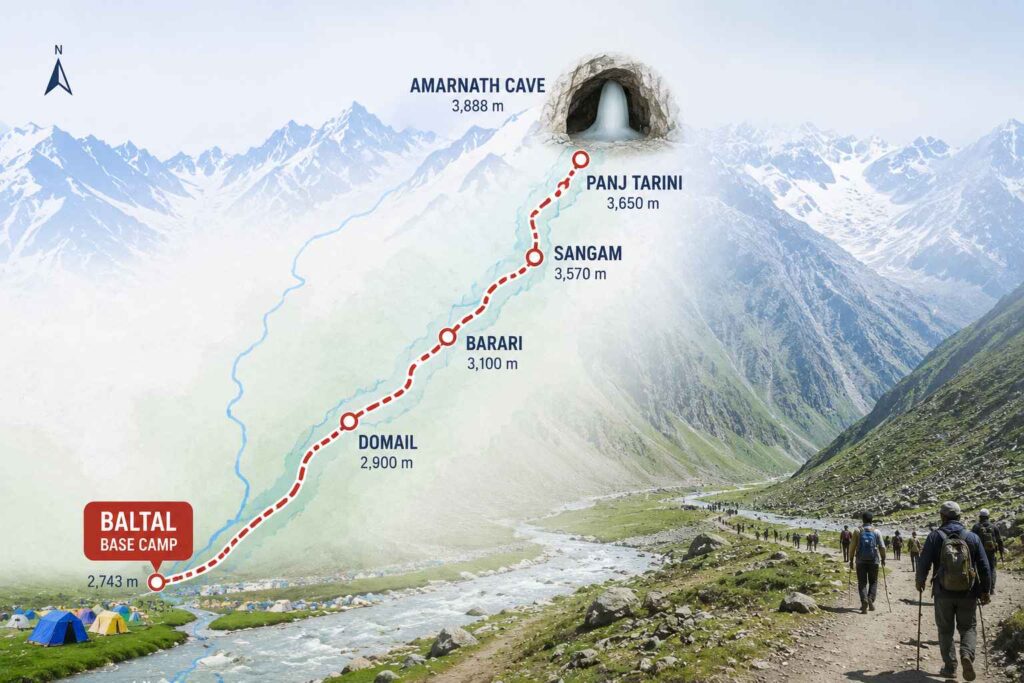
The Baltal route is roughly 14 km and can be done in a single day if you’re reasonably fit. It’s steep, though — genuinely steep, not “steep” in the way travel brochures use the word to sound adventurous. You gain altitude fast, which means less time to acclimatize.
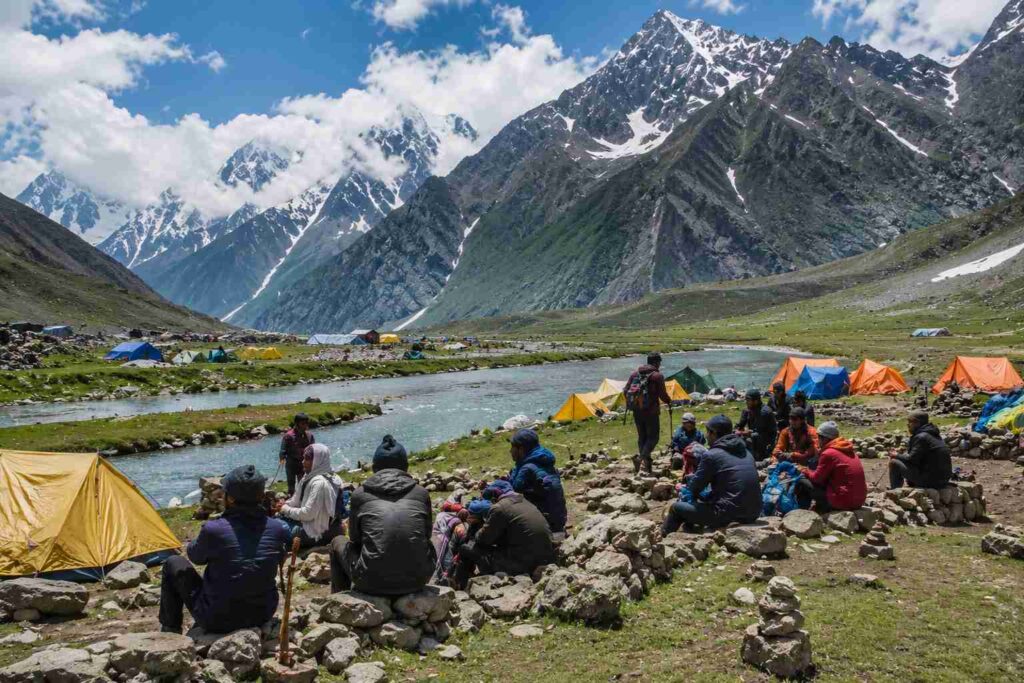
The Pahalgam route is the one with more kilometres in its length-somewhere around 46-48 km-which typically takes about three to five days with halts at Chandanwari, Sheshnag and Panchtarni. This is the classic route; the one most first-timers and families are directed towards as the ascent gradually allows your body to acclimatize to the altitude.
| Feature | Baltal Route | Pahalgam Route |
| Distance | ~14 km | ~46–48 km |
| Duration | 1 day | 3–5 days |
| Difficulty | High (steep gradient) | Moderate (gradual climb) |
| Best suited for | Pilgrims short on time, already acclimatized | First-timers, families, older pilgrims |
| Acclimatization | Limited | Better |
| Key stops | Domail, Barari | Chandanwari, Sheshnag, Panchtarni |
If this is your first high-altitude trek, I’d genuinely recommend Pahalgam over Baltal even if it costs you extra days — altitude sickness doesn’t care how motivated you are.
The Big Change for 2026: No Helicopter Service
This is the update that’s catching a lot of pilgrims off guard, and if you’re planning around a helicopter shortcut, you need to know this now. The SASB has declared all Yatra routes a “No Flying Zone” from 1 July 2026 onward. That means no Amarnath Yatra helicopter service on either the Baltal–Panchtarni or Pahalgam–Panchtarni stretch this year. Pony, palki, or your own two feet are the only options between Panchtarni and the cave, whichever route you take.
If originally, you and your party thought a helicopter transport would enable family with mobility issues or the elderly to join you, the game has now changed a little. Definitely having a very frank conversation with your companions about how this tour seems to fit everyone’s abilities is needed before setting registration dates.
Amarnath Yatra 2026 Weather Conditions
2026’s monsoon arrived early — Kerala saw onset on 24 May, the earliest since 2009 — and the IMD has forecast slightly below-normal rainfall for the season overall. For Kashmir specifically, that’s a mixed blessing. Fewer landslide-triggering downpours is good news, but J&K is still experiencing active monsoon conditions with intermittent heavy rain, flash flood alerts, and the real possibility of temporary halts along the route. Build buffer days into your itinerary. Don’t book onward travel for the day you expect to finish the Yatra — build in at least one extra day of slack.
Temperatures at altitude can drop below 5°C without warning, even in July and August. Pack proper woollens, a windcheater, waterproof shoes, and keep your belongings in a waterproof bag. This isn’t optional advice for comfort — it’s the difference between an uncomfortable day and a genuinely dangerous one at that altitude.
Amarnath Yatra Cost Breakdown
- Registration fee: ₹150 per person
- CHC (medical certificate): varies by doctor/hospital, usually ₹200–₹500
- Pony/palki hire (optional): several thousand rupees depending on route and distance, negotiate locally
- Langar (free community meals): available at multiple points along both routes, run by volunteer organizations
- Accommodation en route: government-notified rates apply this year for tents and basic stays — check the SASB website for the current rate card before you leave, since these get updated seasonally
FAQs
Is helicopter service available for the Amarnath Yatra 2026? No. The SASB has declared all Yatra routes a No Flying Zone from 1 July 2026, so pilgrims cannot use helicopter services this year. You’ll need to travel on foot, or by pony/palki.
Which Amarnath Yatra route is easier — Baltal or Pahalgam? Pahalgam is longer but gentler on the body, making it the better choice for first-time high-altitude trekkers. Baltal is shorter but steep, better suited to pilgrims who are already acclimatized or short on time.
Is the Compulsory Health Certificate really mandatory? Yes, without exception. It must be dated on or after 8 April 2026, carry your photograph, and come from an SASB-approved doctor. No CHC means no registration, and no registration means you won’t be allowed onto either route.
Can senior citizens or people with health conditions do the Amarnath Yatra? The SASB advises against the Yatra for anyone with serious cardiac, respiratory, or orthopedic conditions, uncontrolled hypertension, or for pregnant women. Given that helicopter service is unavailable in 2026, this advice matters even more this year — talk to a doctor honestly before registering.
How do I register for Amarnath Yatra 2026? Register online at jksasb.nic.in or through the SASB mobile app, or offline at any of the 550+ designated bank branches across India. You’ll need Aadhaar, a passport photo, and your CHC, plus the ₹150 fee.
Amarnath Yatra 2026 – Route, Dates and All You Need to Know
Final Thoughts
The Amarnath Yatra 2026 rewards preparation more than fitness — the pilgrims who struggle are rarely the unfit ones, they’re the ones who skipped the CHC deadline, assumed a helicopter would be available, or didn’t build weather buffer days into their schedule. Register early, pick Pahalgam if you’re new to high-altitude treks, and keep an eye on the SASB portal right up to your travel date since conditions in the Himalayas change fast. Do that, and the rest of the Yatra — the walk itself, the langars, the first glimpse of the ice Shivling — takes care of the meaning on its own.
If pilgrimage travel is what you’re planning around this year, it rarely stops at one destination. Once the Kashmir leg is behind you, a lot of pilgrims start looking at central India next — and our guide on the Omkareshwar Temple to Mahakaleshwar distance is worth bookmarking if a Jyotirlinga circuit is anywhere on your list.

 Admin
Admin