 Admin
Admin Ask anyone in Odisha about Puri and the conversation ends up in one place: the Jagannath Temple, or Sri Mandir, as locals call it. It’s one of the four Char Dham sites, and it’s a place where written history and inherited belief sit so close together that it’s hard to tell where one stops.
If you’re reading up on jagannath temple history before a trip, this guide keeps the two apart. Where something is documented, I say so. Where it comes from tradition, I say that too. Both are worth knowing, and the visit feels richer when you know which story you’re standing inside.
1. What Historians Can Say About Jagannath Temple History
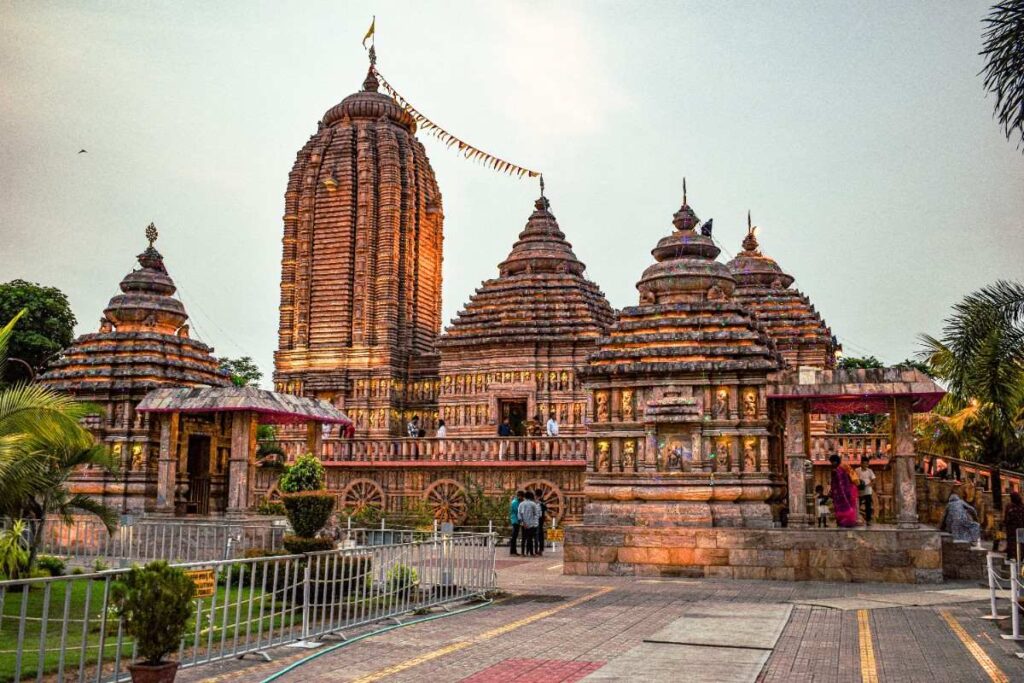
The present temple is generally linked to Anantavarman Chodaganga Deva of the Eastern Ganga dynasty and dates to the 12th century. Historians don’t fully agree on who completed which parts, so the details change a little depending on the source you pick up. The main tower is commonly cited at around 65 metres (roughly 214 feet) and follows the Kalinga style of temple architecture.
That’s about as far as the firm ground goes. Everything else you’ll hear on the street, however lovingly told, falls under tradition.
2. The Idols: Why They Look “Unfinished”
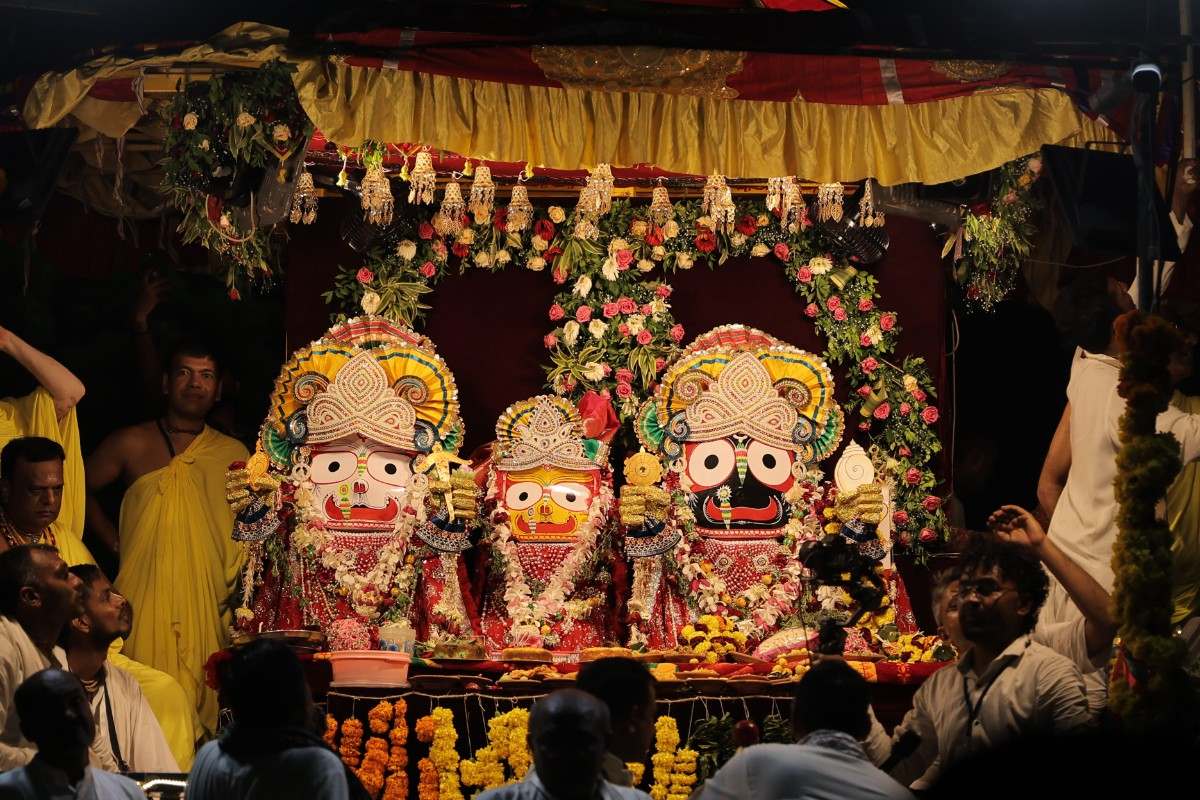
Jagannath, Balabhadra and Subhadra are made of wood, neem in particular. They have large round eyes and no visible arms or legs. If you’ve only seen polished stone idols in other temples, this is a surprise.
The wooden form is something you can see. The story behind it is tradition. According to Jagannath tradition, King Indradyumna was told in a dream to make the idols from a sacred log that reached the shore. A stranger, whom devotees identify as Vishwakarma, agreed to carve it behind a closed door. When the queen had the door opened early, he was gone and the figures were left as you see them today. Devotees don’t call them incomplete at all. To them this is the complete form.
That’s a religious account, not a recorded event. Some scholars also link the deity’s form to older tribal and folk worship traditions, which is a separate line of thinking you may come across.
3. The Brahma Padartha: A Matter of Belief
According to Jagannath tradition, a sacred substance called the Brahma Padartha is kept inside the idols. Some retellings connect it to Lord Krishna and describe it as his heart. Temple sources keep its nature confidential, and nothing about it has been publicly verified. So it’s best read as faith, and the temple itself asks you to leave it that way.

4. Nabakalebara: When the Idols Are Replaced
This part is a documented temple practice. In certain years of the lunar calendar, roughly every 12 to 19 years, the wooden idols are replaced with new ones carved from specially selected neem trees. Servitors search for trees with traditional markings, and the carving happens in seclusion inside the temple complex. The most recent Nabakalebara was in 2015.
Widely reported accounts add that the transfer of the Brahma Padartha happens at midnight, with the priest blindfolded and his hands covered, and that the city’s lights are switched off. The temple administration doesn’t publish the details of this rite, so treat those descriptions as reports rather than official record. According to temple tradition, the old idols are buried in an enclosure called Koili Baikuntha inside the premises.
5. Jagannath Temple History and the 1568 Invasion
This chapter gets told in very dramatic ways online, so it helps to split it in two.
What historians generally accept: In 1568 an Afghan commander known as Kalapahad, serving the Bengal Sultanate, led a campaign into Odisha, and the region came under Sultanate rule afterwards.
What tradition adds:According to temple tradition, the idols were hidden near Chilika Lake, and later found and burned; a devotee saved the sacred substance and worship was resumed after some years under Ramachandra Deva of Khurda in the 1570s. These details vary in different accounts and I wouldn’t consider any of them settled history. The temple has certainly been attacked and disrupted at various points in its history, but you’ll find wildly varying numbers cited online, so I’d dismiss any specific number that is not backed up by a source.
6. Rath Yatra: The Festival You Can Actually See
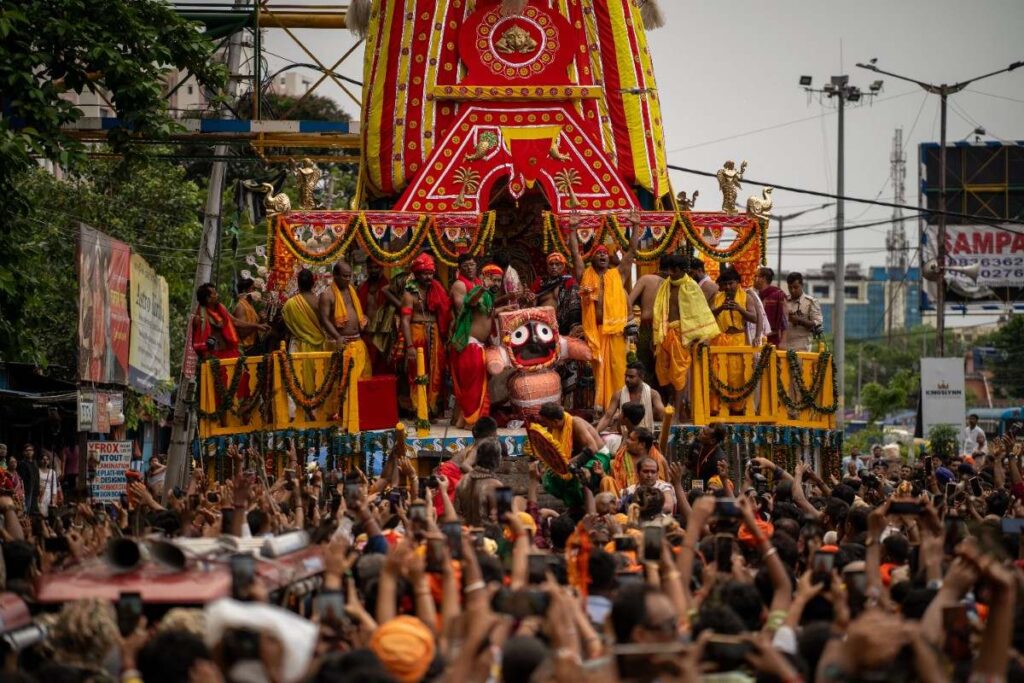
Every year in the month of Ashadha (usually June or July), the three deities leave the temple on giant wooden chariots: Nandighosa for Jagannath, Taladhwaja for Balabhadra and Darpadalana for Subhadra. They’re pulled along the Bada Danda to the Gundicha Temple.
New chariots are built every year by hereditary carpenters who work from traditional measurements passed down through families. It’s often described as one of the few times people outside the temple, including those who can’t enter it, get to see the deities up close.
7. The Temple Kitchen and Mahaprasad
The kitchen is often described as one of the largest temple kitchens in India. Food is cooked in earthen pots over wood fires, offered to the deities, and then distributed as Mahaprasad.
There’s a popular belief that when pots are stacked in a tower of seven, the one at the top cooks first. According to temple tradition that’s simply how it goes. I couldn’t find any formal test of it, so I’d call it a much-repeated claim, and a lovely thing to ask the cooks about if you get the chance.
8. The Traditions Everyone Brings Up
Every guide to this temple mentions the same handful of stories. None of them come with formal studies that I could find, so read them as tradition and personal experience.
- The flag: A servitor climbs the tower daily to change it, and that part is well documented. The belief is that it flutters against the wind.
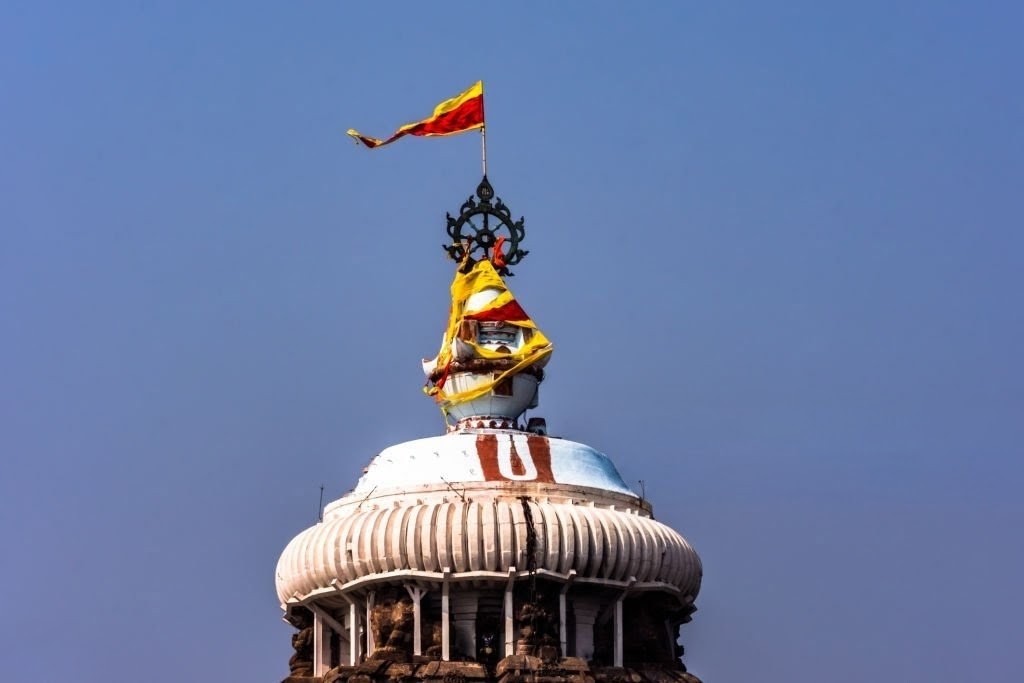
- The Nilachakra: The metal wheel at the top is said to look as if it faces you from wherever you stand. You can test that from a few different spots in town.
- The shadow: A long-standing tradition says the main tower’s shadow isn’t normally visible on the ground.
- Birds: A popular claim is that birds rarely fly directly over the temple. Look up and decide for yourself.
- The sea: Many visitors say the sound of the waves fades after Singhadwara, the main gate.
These are the things guides love to sell as unsolved mysteries. I’d rather you check some of them yourself and enjoy that.
9. Ratna Bhandar: The Treasury and What’s Happening There Now
The Ratna Bhandar is the temple’s treasury, holding ornaments and valuables offered over the centuries. The last full counting was in 1978 and took 72 days. The inner chamber was opened again in 2024 after decades.
A fresh inventory began on 25 March 2026, the first in 48 years, under a government-approved procedure and a high-level committee, with videography, photography and 3D mapping, and with RBI officials taking part. Reports say the outer chambers were completed first, and work in the inner chamber has continued in phases, most recently on 31 August and 1 September 2026. Officials describe it as counting and documentation, with the records being cross-checked against the 1978 list.
It’s an ongoing exercise, so check current news before you go. On inventory days, darshan arrangements have been changed (for example, viewing from the outer barricade), which can affect how your visit feels.
10. Important Things to Know Before Visiting
- Entry: There is no entry for non-Hindus into the sanctum of the temple. This restriction extends to the entire complex, not just into the innermost shrine. Non-Hindu visitors tend to look at the temple from outside and several people do use the close observation points.
- Dress: I couldn’t find a published official dress code. Modest clothing that covers shoulders and knees is the sensible choice at any temple.
- What to carry: Phones, cameras and leather items are commonly not allowed inside, so check at the gate and use a cloakroom.
- Timings:Timings are as per Rituals and can vary on the day of the festival. Please check with Temple administration for latest timings before you plan your day.
- Best time: October to February is generally more comfortable because it’s cooler and less humid than Odisha’s summer. Rath Yatra is a completely different trip, with huge crowds, so book early and go in with patience.
- Getting there: The nearest airport is Biju Patnaik International Airport in Bhubaneswar, roughly 60 km away, and Puri has its own railway station.
If you’re building a bigger pilgrimage plan around India, you might also find our guides on the Omkareshwar to Mahakaleshwar Distance and Shiva Temple Uttarakhand useful for your next trip.
Lord Jagannath: Story
FAQs on Jagannath Temple History
Who built the Jagannath Temple in Puri?
The present temple is generally associated with Anantavarman Chodaganga Deva of the Eastern Ganga dynasty and dates to the 12th century, though historians differ on some construction details.
Is the Indradyumna story historical?
No. It’s a traditional origin story from Jagannath tradition, not a documented historical event.
What is the Brahma Padartha?
According to Jagannath tradition, it’s a sacred substance kept inside the idols. Its nature is confidential and hasn’t been publicly verified.
What is Nabakalebara?
It is the ritual replacement of the wooden idols with new ones It is held in certain years roughly every 12 to 19 years. The last was 2015.
Can non-Hindus enter the Jagannath Temple?
No. Non-Hindus are not permitted to enter the temple premises, and it’s a long-standing rule.
When is the best time to visit Puri?
October to February is generally more comfortable. Rath Yatra season is a different experience, with very large crowds.
Is the Ratna Bhandar open to visitors?
No, the treasury isn’t open to the public. A documented inventory of its valuables is in progress, so check the latest official updates.

 Admin
Admin