 Admin
Admin Okay so let’s talk about something nobody tells you until you’re already standing on the ghat, confused, watching three different rafting groups leave at three different times. River rafting in Rishikesh timing sounds like a boring logistical detail, but trust me — it’s the one thing that decides whether your trip feels epic or rushed.
I’ve seen people land in Rishikesh at noon, expecting to just “walk in and raft,” only to be told the good slots were gone by 9 AM. Don’t be that person. Here’s the real, no-nonsense breakdown — timings, seasons, prices, everything.
1. When the Season Actually Runs
Rafting in Rishikesh isn’t a 365-day thing, and a lot of first-timers get caught off guard by that. The season generally opens around September and stretches till mid-June, with a forced break through the peak monsoon months — roughly July to early September — because the Ganga gets way too wild and murky to raft safely. The Uttarakhand Tourism Department confirms this window officially, and honestly, it’s not a rule anyone bends. So if your dates fall in July or August, skip the rafting plan altogether and do a Char Dham Yatra instead. Save the river for later.
2. River Rafting in Rishikesh Timing: The Daily Schedule
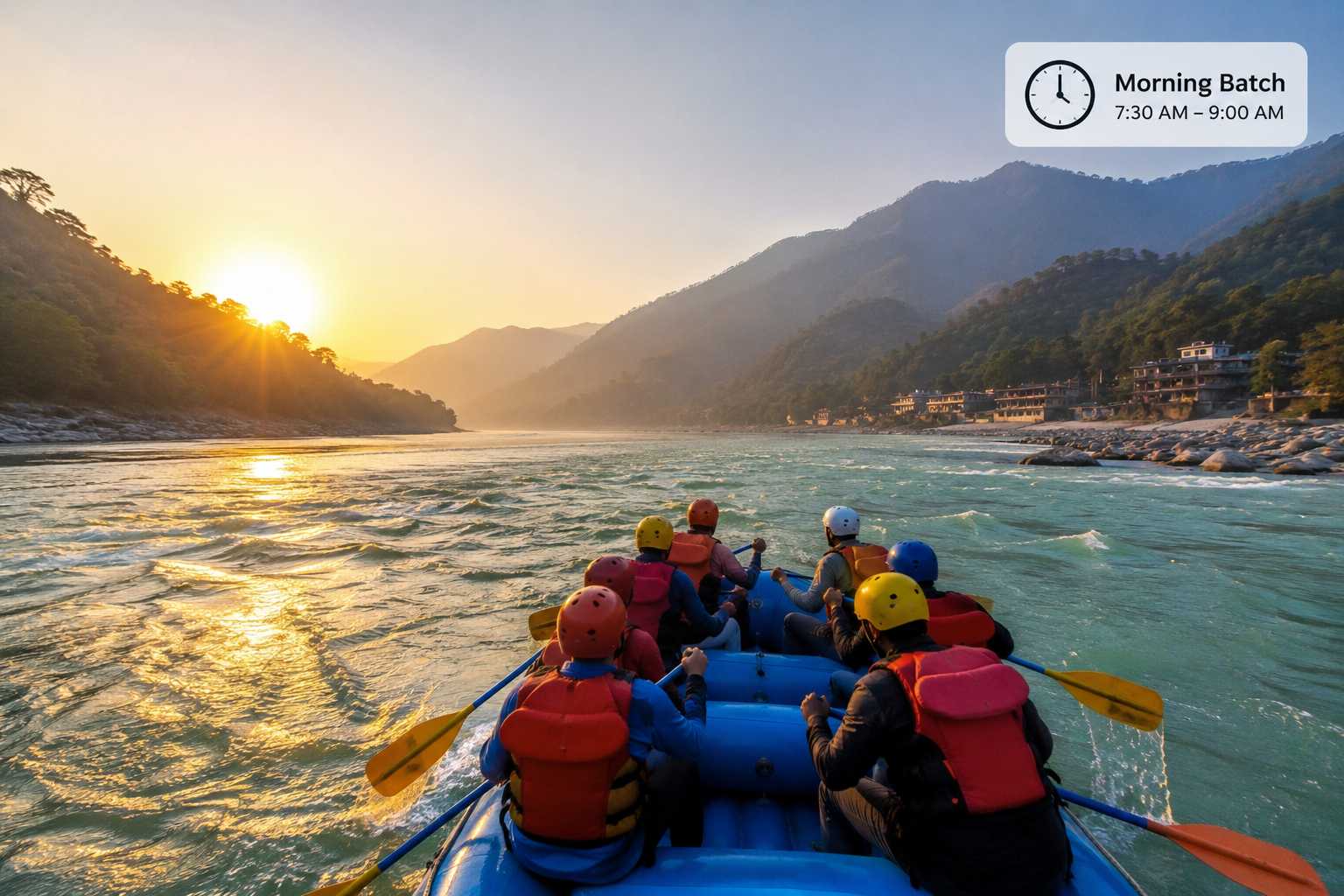
This is really what you came here for, right? On a normal operational day, river rafting in Rishikesh timing kicks off early — the first batch usually pushes out somewhere between 7:30 AM and 9:00 AM. There are more slots through the late morning and into early afternoon depending on which stretch you’ve picked, but almost every operator wraps up the last trip by 3:00 PM. After that, river authorities just don’t allow it — daylight safety rules, and fair enough.
If you ask me, the early slot wins every single time. Fewer rafts on the water, calmer stretch, and the light hitting the Himalayan foothills at that hour is honestly worth waking up for.
3. Morning or Afternoon — Which One’s Better?
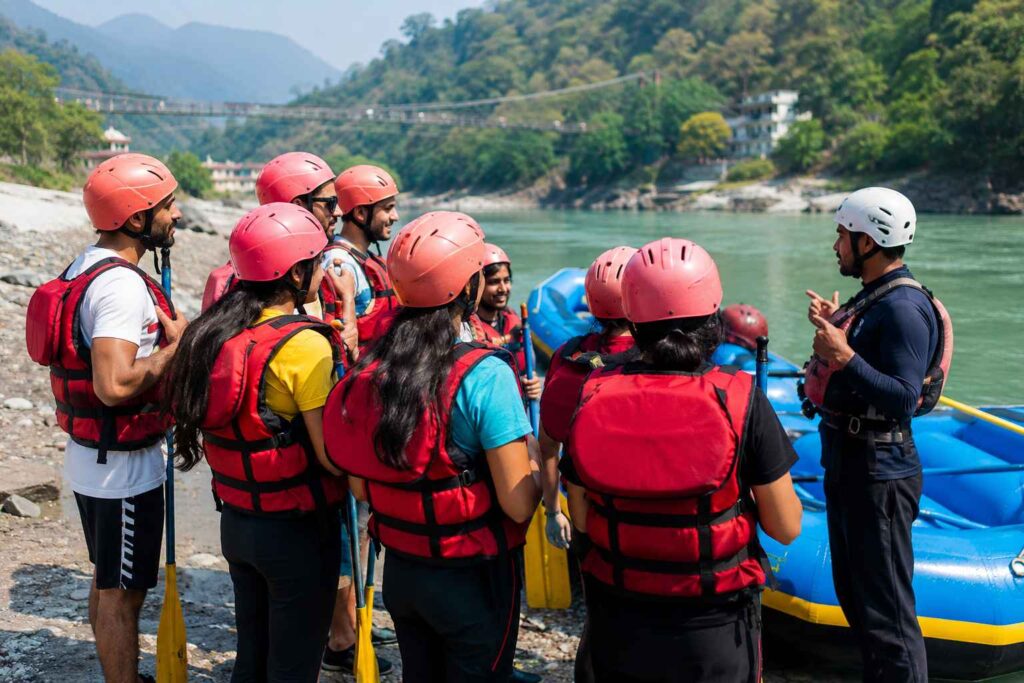
Depends what you’re optimizing for, really. Morning batches (7:30–9 AM) are cooler and quieter — great if you want photos without twenty other rafts photobombing you. Afternoon slots warm up nicely, which matters a LOT more than people expect once winter hits. Rafted in December once at 8 AM and honestly, my hands went numb within minutes. Booked an afternoon slot the next time and it made all the difference.
4. Best Months to Match With Your Timing
Timing isn’t just the clock — the calendar plays its own game here.
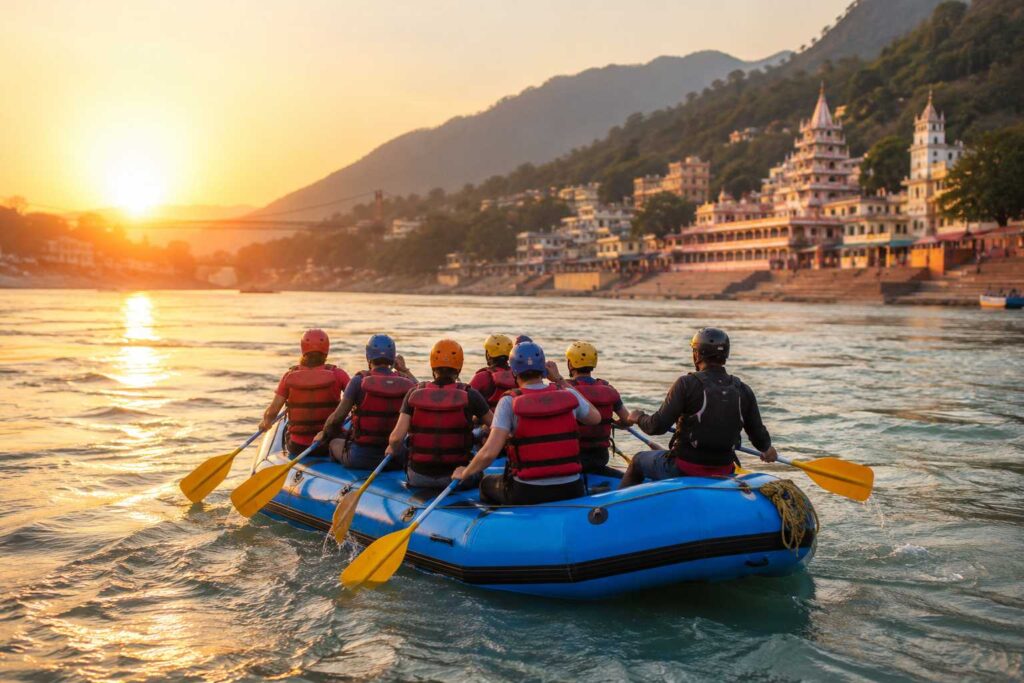
September to November brings that post-monsoon rush, strong current, a little chilly in the mornings but thrilling as hell. March through May is the sweet spot for most people — warm, manageable rapids, good for families and first-time rafters who don’t want to feel like they’re in a washing machine. December to February works too, but it’s not for everyone; carry dry clothes and stick to afternoon slots if you go this route.
If you corner me and ask for one golden window for river rafting in Rishikesh timing, I’ll say March-April or September-October without blinking.
5. Why Route Length Changes Your Slot
Not every stretch takes the same time, and this quietly decides which slot actually fits your day.
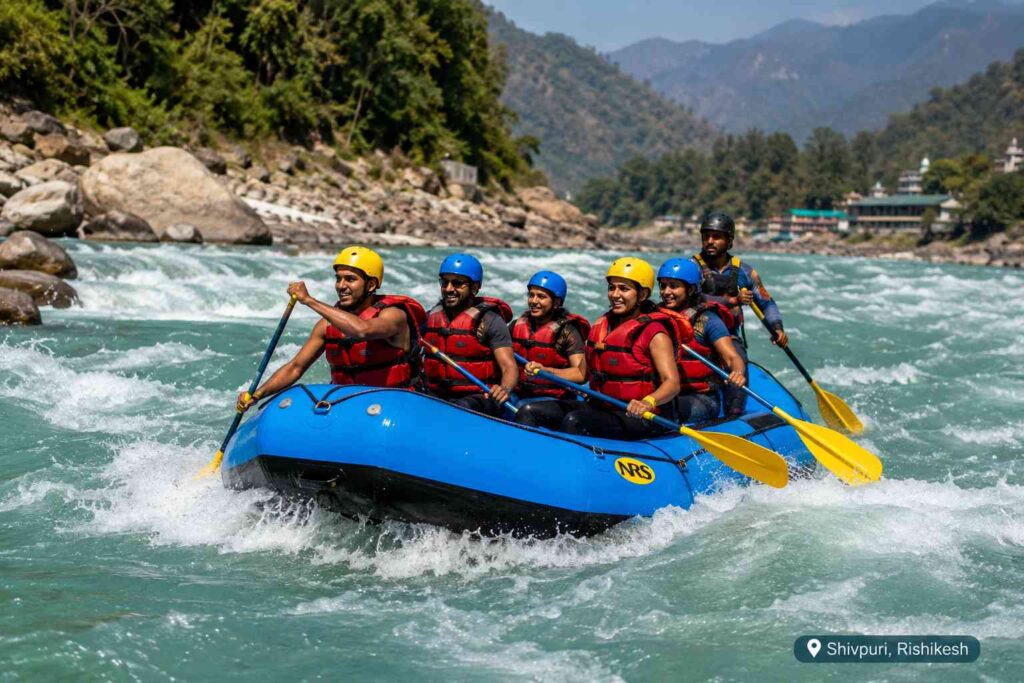
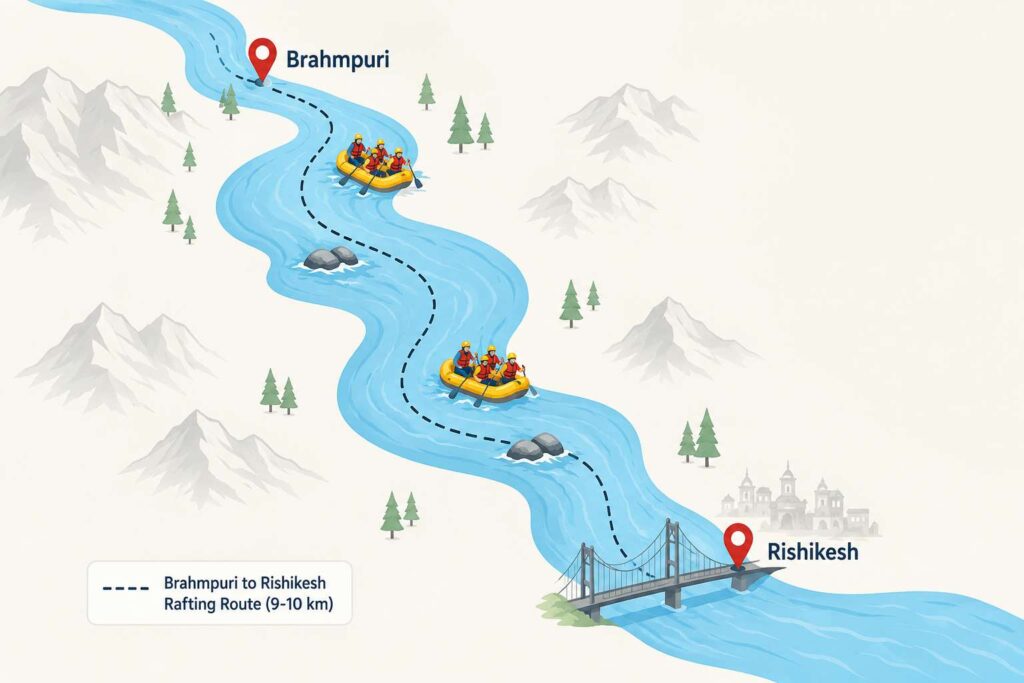
Brahmpuri to Rishikesh run is too short to make it feel worthwhile (9-10 km, approx. 1 to 1.5 hours, so okay as an afterthought, say, afternoon added on). Shivpuri to Rishikesh (16 km, around 2 to 2.5 hours) is the “standard” run and the most popular choice. Marine Drive to Rishikesh (24-26 km, taking half a day to do, so schedule this day ahead and then decide, or better not do it).And Kaudiyala to Rishikesh (36 km)? That’s a full-day commitment — morning slot only, no exceptions.
6. River Rafting in Rishikesh Price 2026
People always ask timing and price together, so here’s a rough table to save you some back-and-forth with agents:
| Route | Duration | Price (per person, approx.) |
| Brahmpuri (9–10 km) | 1–1.5 hrs | ₹500–₹700 |
| Shivpuri (16 km) | 2–2.5 hrs | ₹900–₹1,200 |
| Marine Drive (24–26 km) | 3–4 hrs | ₹1,400–₹1,800 |
| Kaudiyala (36 km) | 5–6 hrs | ₹2,000–₹2,500 |
These shift a bit season to season, and weekday bookings are almost always a little cheaper. Worth keeping in mind if you’re traveling on a budget, which — let’s be real — most of us are.
7. Permits Aren’t Unlimited (Seriously)
Something most blogs conveniently leave out: daily rafting permits are capped by local authorities. It’s not an open-all-day free-for-all. On peak weekends, morning slots can vanish by the evening before — vendors on the ghat sell out that fast. If your trip lands on a Saturday, Sunday, or any long weekend, book at least 2-3 days ahead. Don’t wing this one.

8. A Weekday Hack Budget Travelers Should Know
Tuesdays to Thursday are certainly the least busy mornings of the week. There are less people in queues, often a better rate, and your guide has time to actually give you a briefing and tell you stuff, instead of hustling you along. It’s a little thing, but it makes a huge difference to the feel of the experience.
9. Missed Your Slot? Here’s What Happens
Traffic on the Rishikesh-Haridwar stretch is brutal on a bad day, and yes, it can make you miss your booked timing. Most operators will shift you to the next available batch if you call ahead — they’re usually reasonable about it. But during peak season this flexibility isn’t guaranteed, so build in a 45-minute buffer before your scheduled slot. It’s saved my plans more than once.
10. Other Rivers Worth Chasing After This One
If Rishikesh gets your adrenaline going, it probably won’t stop there. A lot of travelers extend north toward White Water Rafting in Kashmir for a completely different vibe — colder water, snow-fed valleys, a whole different energy. Others head to Himachal and check River Rafting in Kullu Price before deciding their next river. And while you’re mapping the trip, our guides on Bungee Jumping in Rishikesh ,Shiva Temples in Uttarakhand fit right into the same itinerary.
Quick Recap Table
| Detail | Info |
| Season | September to mid-June |
| Daily slots | 7:30 AM to ~3:00 PM |
| Best months | March–May, September–November |
| Shortest route | 9–10 km (~1.5 hrs) |
| Longest route | 36 km (full day) |
| Starting price | ₹500 onward |
Best Time for River Rafting in Rishikesh
FAQs on River Rafting in Rishikesh Timing
Q1. What is the best time of day for river rafting in Rishikesh?
Honestly, early morning wins almost every time — somewhere between 7:30 and 9 AM. The water’s calmer before too many rafts have churned through it, the crowds haven’t built up yet, and the light on the hills at that hour is genuinely worth the early alarm. If you’re someone who hates rushing, the first slot also gives you breathing room in case anything runs late.
Q2. What is the best month for river rafting in Rishikesh?
If I had to pick, I’d say March to May or September to November. Both windows give you decent water flow without it being dangerously high, plus weather that doesn’t punish you either way — not too cold, not scorching. October specifically tends to be a favorite because the post-monsoon river still has some punch to it but the days are pleasant.
Q3. Is rafting available in Rishikesh during monsoon?
No, and this trips up a surprising number of travelers every year. Rafting is usually shut down from around July to early September because the Ganga swells up and gets genuinely unsafe — strong undercurrents, low visibility, the works. If your travel dates land in this window, don’t count on rafting happening; keep a backup plan like a Char Dham trip or just enjoy Rishikesh’s cafes and yoga scene instead.
Q4. How long does Rishikesh rafting usually take?
Depends entirely on which stretch you book. The short Brahmpuri route wraps up in about an hour to 90 minutes, perfect if you’re short on time or traveling with kids. The popular Shivpuri stretch runs closer to 2-2.5 hours. And if you go all the way from Kaudiyala, block out most of your day — it’s a 5 to 6 hour commitment, but one of the most memorable stretches if you have the time.
Q5. Do I need to book my rafting slot in advance?
Yes, and this matters more than people think, especially on weekends when half of Delhi and Chandigarh seem to show up at once. Permits per day are limited, and early morning slots usually disappear first — sometimes booked out by the previous evening. A quick call or online booking 2-3 days ahead saves you the stress of standing on the ghat with no slot left.
Q6. Can I raft in Rishikesh in winter (December to February)?
You can, but go in knowing it’s a different experience. The water is cold — properly cold — so most people prefer afternoon slots once the sun’s had a chance to warm things up. Wear something you don’t mind getting soaked in, and carry a dry towel and spare clothes for after. It’s less crowded though, which some travelers actually prefer.
Q7. What happens if I reach late for my rafting slot?
As is often the case with local providers this can be caused by the traffic delays along the Rishikesh-Haridwar road. The best tour operators in the region will usually try to shuffle you into the next trip if you can inform them prior to arriving at your scheduled time, however during the busy seasons it may not be possible so build a 30-45 minute buffer to your schedule just in case.
Q8. Does rafting timing change on weekends compared to weekdays?
Official timing slots stay roughly the same, but weekends get a lot busier — more rafts on the water, longer waits at the starting point, permits running out faster. If your schedule allows it, a Tuesday or Wednesday morning slot is a much calmer experience for pretty much the same price.
At the end of the day, rafting in Rishikesh isn’t just about picking a date. It’s about getting your river rafting in Rishikesh timing right — and once you do, the Ganga takes care of the rest.

 Admin
Admin