
 Admin
Admin Every July, the same debate happens in every travel group.
“Should we go somewhere or just wait for October?”
Best Places to Go in July in India is a topic that comes up every monsoon season. And honestly, most people wait. They sit at home, watch the rain from their window, and convince themselves that monsoon travel is either dangerous or depressing. Meanwhile, a small group of people — the slightly stubborn ones, the ones who actually packed a rain jacket last year — are having some of the best trips of their lives.
July in India is genuinely special. Not in the “it looks nice in photos” way, but in the way where waterfalls are actually running, hillsides are dripping green, and the tourist crowds that make Shimla and Manali unbearable in May have quietly gone home.
If you have been looking for the best place to go in July in India and keep landing on the same recycled articles, this one is different. These are real picks, with real context — not just a list of names pasted onto a page.
1. Valley of Flowers, Uttarakhand
There is a reason serious trekkers plan this one months in advance.
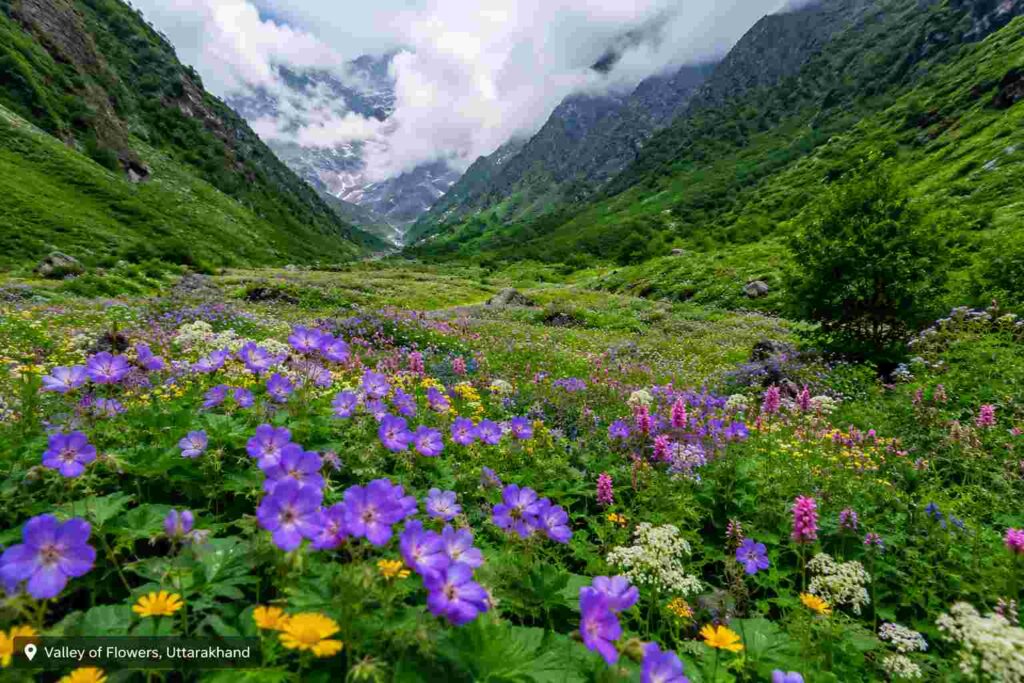
This valley, located at an altitude of just below 13,000 ft in the Chamoli district of Uttarakhand, is buried under snow and thus completely inaccessible for more than half the year. But somewhere in the first or second week of July, something changes. The snow retreats, the first rains hit, and the entire valley floor starts filling up with wildflowers — hundreds of species, blooming in overlapping waves of colour.Blue poppies, Brahmakamal, Cobra lilies, Geraniums. You really cant take a photograph of it and have it not look surreal and yet it’s quite real.
The colours peak in mid-July. No later than mid-July, no earlier than mid-July and certainly no later than late July. No August and it’s just past. Mid-July to late July-that is the optimum when the blooms are most dense.
The trek commences from Govindghat a place near Joshimath. It is 38 kilometers and is spread across 4 days. This is rated a fairly doable trek, even for a non-hardcore trekking person. For Indian citizens the entry fee is 150 for a 3 day pass, which can probably be called the biggest bargain of traveling in India.
How to reach: Fly to Dehradun (Jolly Grant Airport), and then hire a share cab or taxi to Joshimath (~10 hrs). Govindghat is approximately 20 km from Joshimath.
One honest warning: The path can get slippery and muddy after rain. Waterproof shoes are not optional here — they are the difference between a good trip and a miserable one.
This is one of the most worthwhile Places to Visit in July in the entire country. Full stop.
2. Leh-Ladakh
July is probably the most popular time to visit Ladakh, and there is a very logical reason for that.
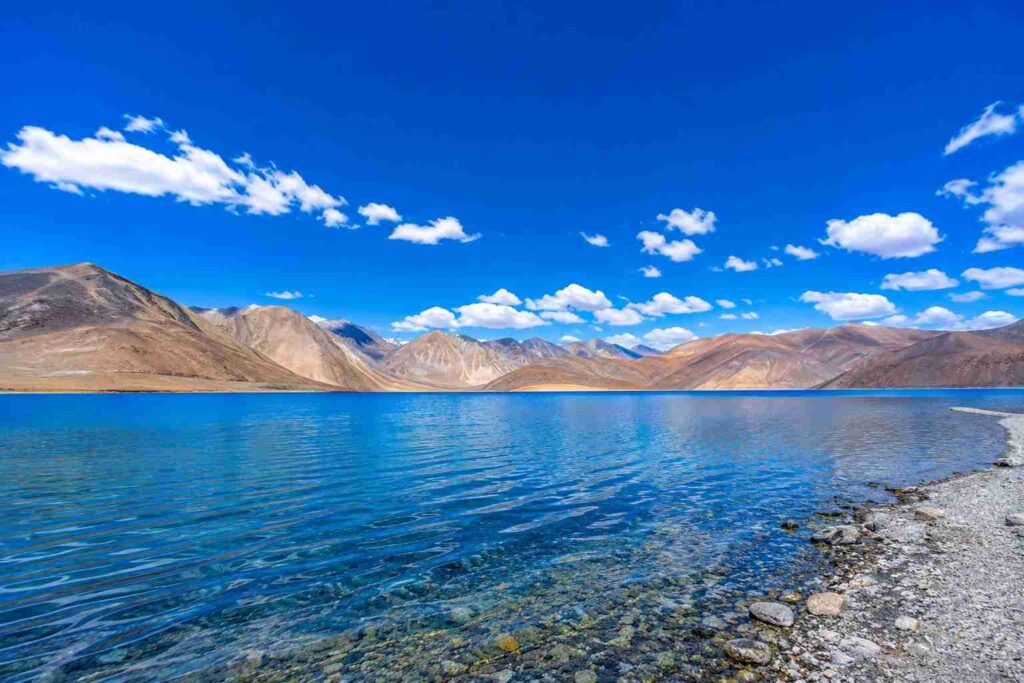
On the other side of the Himalayas, where the monsoon is turned back, is Ladakh. Where Kerala and Karnataka are battling the downpour, Ladakh is sun-drenched, arid, and entirely passable. The high altitude passes of Khardung La, Chang La, Wari La are completely clear of snow; the roads will not be in a better condition, and the much awaited lakes like Pangong Tso and Tso Moriri are stunning under the crisp blue sky.
This is the best Monsoon Trip in India if you specifically want to escape the rain. You get dramatic Himalayan landscapes, Buddhist monasteries with monks going about their day, night skies at Nubra Valley that will make you feel very small in a good way — and zero chance of getting rained on.
A few things worth knowing before you go: You need Inner Line Permits for Nubra Valley, Pangong, and some other sectors — apply for these in advance online. And allocate a minimum of two full days in Leh prior to undertaking any high-altitude driving or trekking. Altitude sickness is genuine and your fitness is of no consequence.
Fly into: Kushok Bakula Rimpochhe Airport, Leh — direct flights from Delhi, Mumbai, and Chandigarh.
3. Coorg, Karnataka
Nobody warns you about how good Coorg smells in July.
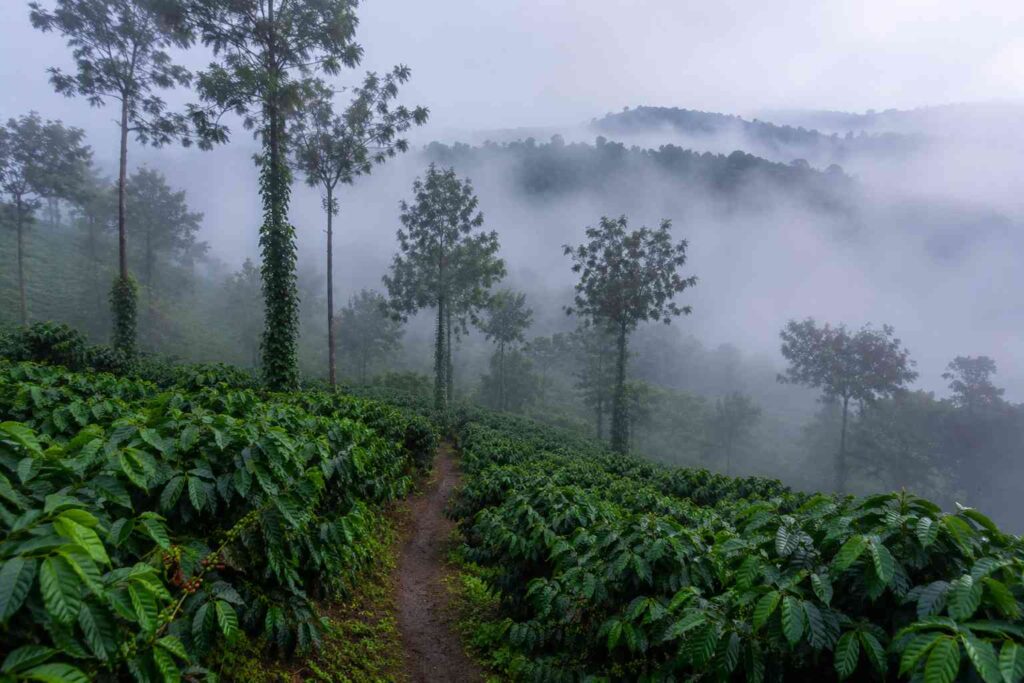
It is a very specific smell — wet soil, cardamom, and coffee all at once. You see it from the moment you get out of the car just outside of Madikeri and the feeling doesn’t leave you all journey. The coffee plantations are fogged out, the falls (particularly Abbey falls) are at their most deafening, the roads carving through the hills are the meandering, overhanging trees types that make you involuntarily decelerate; you don’t want to get anywhere anyway.
Temperatures sit between 15 and 22°C through July. It rains, but not in a punishing way — more in a consistent, soft drizzle that actually enhances everything.
Coorg is perfect for couples who want privacy and silence, and for solo travellers who want to eat well, sleep well, and spend most of the day doing nothing in particular. Homestay culture is brilliant here. Most people make you feel welcome as a guest rather than a booking reference.
Getting there: About 5 hours from Bengaluru by road. Mangalore and Mysore are the nearest airports.
4. Spiti Valley, Himachal Pradesh
Here is a destination that surprises most people when they realise it belongs on a July list.
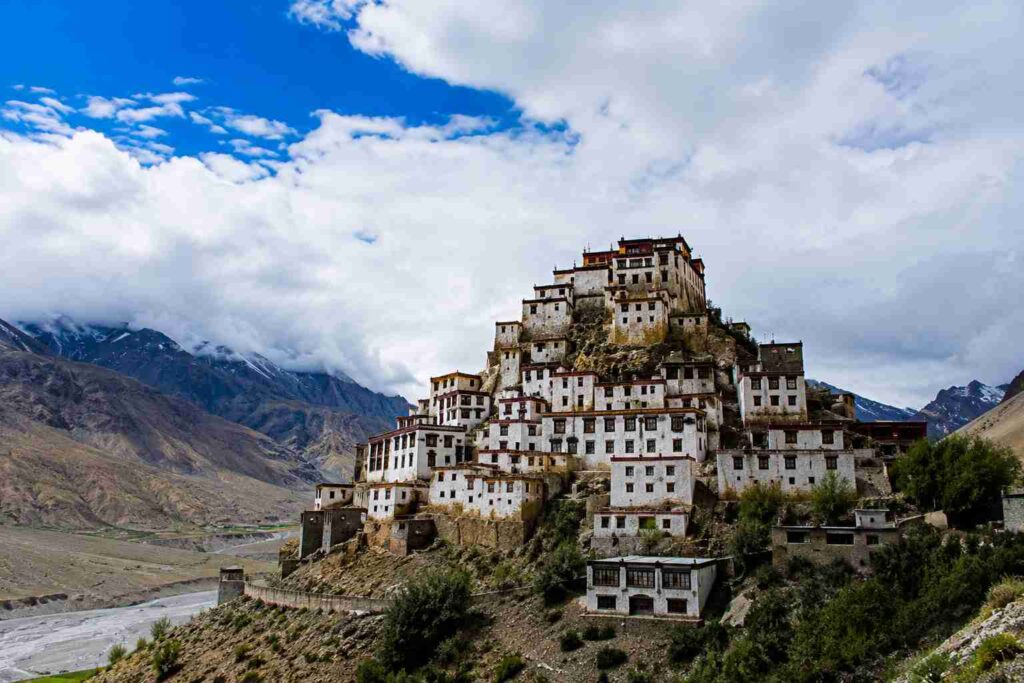
Spiti is a cold desert located in the trans-Himalayan range. It doesn’t receive much rain, even during peak monsoon season, since the Himalayas impede all the moisture before it even reaches Spiti. In Kaza, in mid July, the skies are clear and bright and you will feel pleasant when out in the bright sun between 15 and 22 degrees centigrade during the day. Everything feels stark, almost surreal… the brown mountains, turquoise river, whitewashed old monasteries, etc.
Key Monastery on its hilltop perch, Hikkim’s tiny post office at over 14,500 feet, the fossil village of Langza, Chandratal Lake — all of these are fully accessible in July.
The drive itself is half the experience. The Shimla–Kinnaur–Spiti route passes through some of the most dramatic road scenery in India — the Sutlej River gorge through Kinnaur, the slow transition from forested slopes to high-altitude desert, the first sight of the flat Spiti valley floor after hours of mountain driving.
Practical note: Take the Shimla route in July rather than Manali. The Manali route via Kunzum Pass can have rough patches and water crossings. The Shimla route is longer but more predictable.
Cash is king in Spiti. ATMs exist in Kaza but are unreliable. Take enough before you leave Shimla.
5. Munnar, Kerala
Munnar does something to people. They come for a weekend and start quietly looking up land prices.
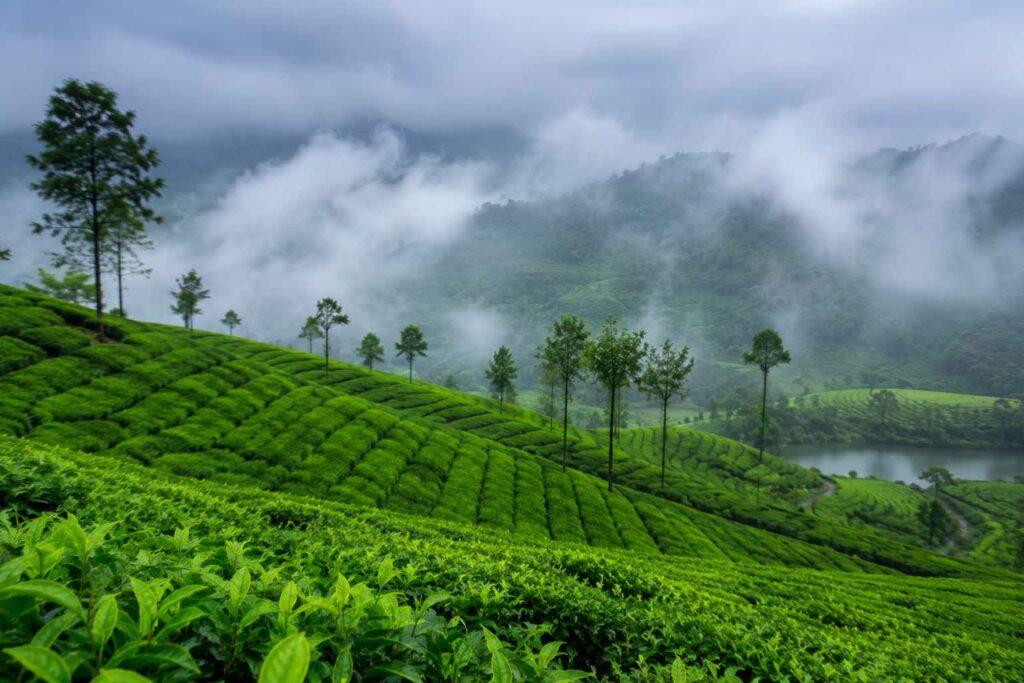
In July Munnar is covered with a steady haze at between 5,000 and 8,000 feet in the Western Ghats. The tea plantations seem quite otherworldly – rows and rows of dark green bushes climbing up the curves of hillsides with clouds drifting through the space in between. Temperatures barely cross 22°C even during the day. It is the kind of cold that makes you want chai every 40 minutes, which is not a bad thing because the chai here is excellent.
The rains aren’t so vicious here. They come and go, and in the gaps are these silent, golden streams of light that catch the wet hills so inaccessibly.
Homestay rather than huge hotel, if you can; the welcome is warmer, the food more honest (a proper Kerala breakfast with appam and stew is worth the trip) and you have an actual conversation with someone who knows the region.
Nearest airport: Cochin International, about 110 kilometres away.
6. Cherrapunji and Mawsynram, Meghalaya
Both villages contend for the distinction of wettest place on earth, and in July the competition is tight.
Which means: if you go to Cherrapunji in July, you will get wet. Extremely wet. This is not a warning, it is the whole point.
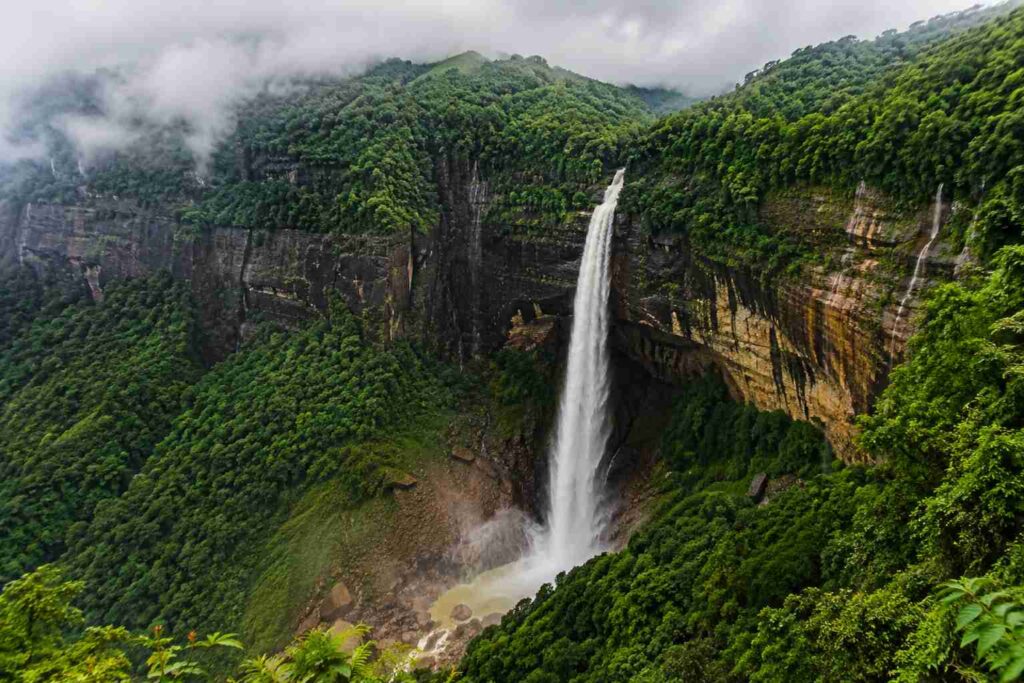
Nohkalikai falls (India’s tallest plunge waterfall – 340 meters) is in so full flood in July that the spray from the bottom can be felt on your skin, long before you reach the falls. These Living Root Bridges are grown by the Khasi people over many generations using the roots of a rubber tree and possess an ancient, tranquil feel that has no comparison in the rest of India. Mawsmai Caves are atmospheric and surprisingly accessible.
The entire landscape of the East Khasi Hills during peak monsoon is otherworldly — green cliffs, low clouds, waterfalls appearing from every hillside. It genuinely looks like a different country.
Getting there: Fly to Guwahati, then 4–5 hours by road to Shillong, then another hour to Cherrapunji.
7. Wayanad, Kerala
Wayanad during monsoon is lush in a way that even other parts of Kerala are not.
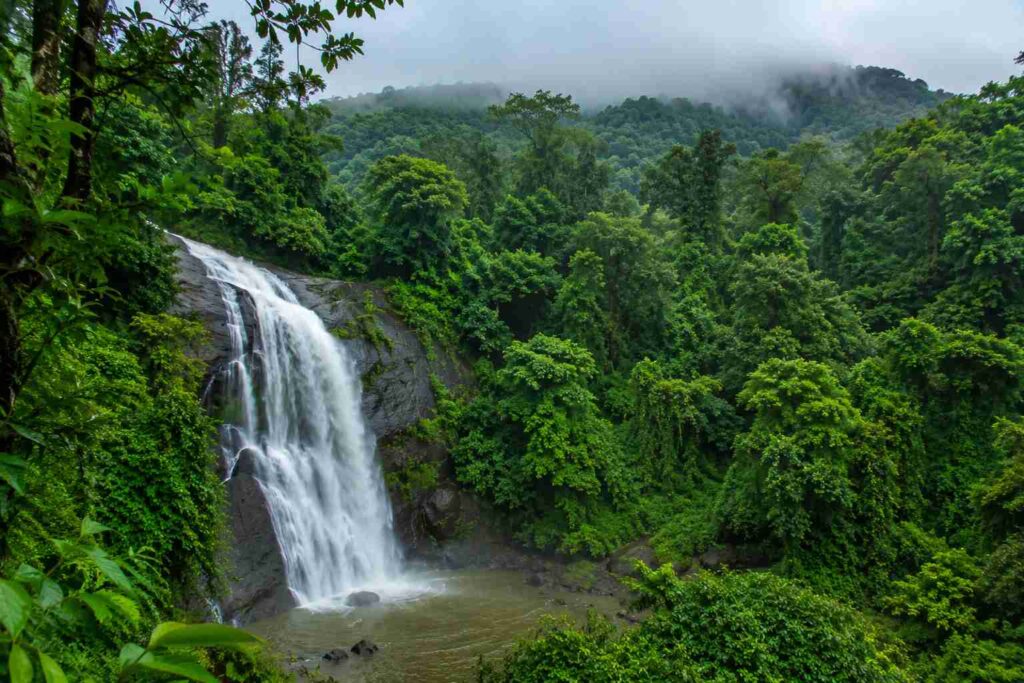
The woods are thick, the waterfalls are roaring (specifically, Soochipara and Meenmutty) and near the water sources, that the animals actually frequent more in the Wayanad Wildlife Sanctuary during July and August-tells us that the treehouses and the jungle resorts here get booked up well in advance during the monsoon season.
Budget for 3-6000 a night for a nice forest place. It seems a lot but you wont want to leave the place so you won’t have to spend a penny on anything else.
One practical note: carry leech socks if you are planning forest walks. July is leech season in the Western Ghats and they are enthusiastic.
8. Darjeeling, West Bengal
Darjeeling in July is grey-skied, cool, and completely itself.
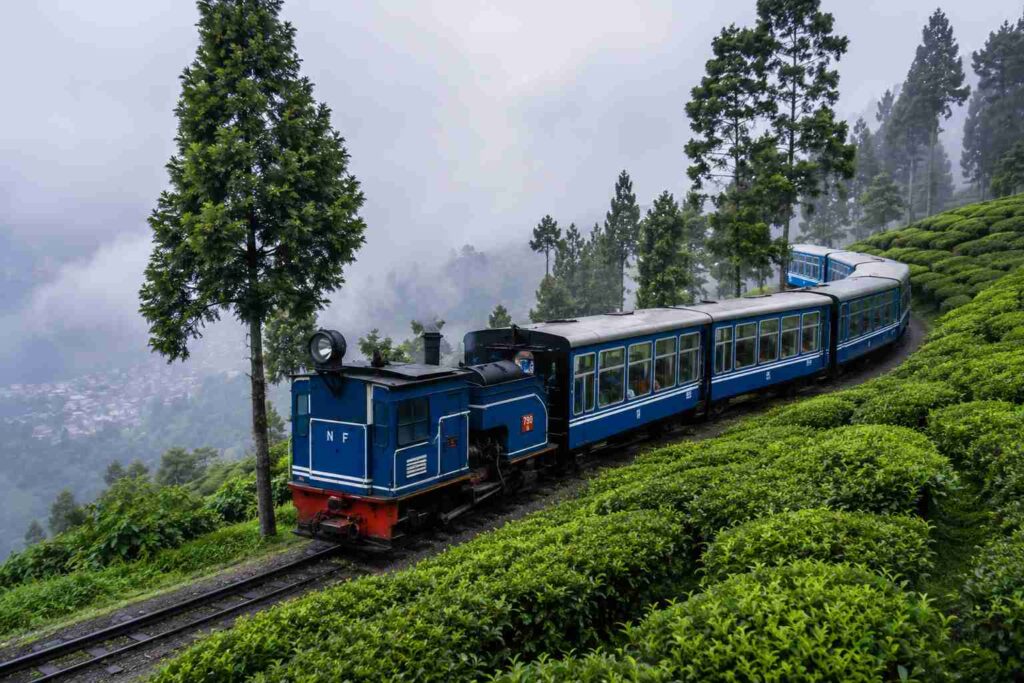
There is something about a Darjeeling morning in monsoon — walking to a tea stall before 7am, fog sitting heavy on the hill, the Toy Train somewhere nearby announcing itself with a whistle — that feels like a scene from a different era. Temperatures stay between 12 and 18°C, which means every meal is slightly more enjoyable and every blanket is necessary.
The second flush of Darjeeling tea — considered by most tea experts to be the finest expression of the plant — happens right around July. If you visit a garden during this period, you can sometimes walk with the pluckers during light rain, which is one of those quiet travel experiences you remember for no obvious reason.
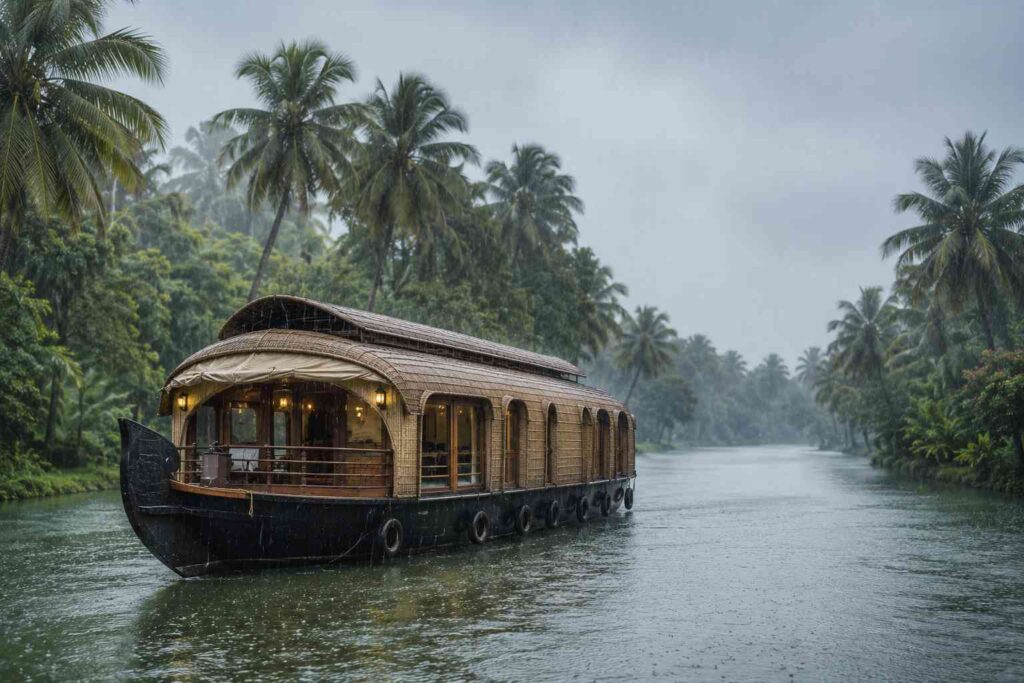
9. Alleppey, Kerala — Backwaters in the Rain
For those who are curious about Alleppey (Alappuzha) in July, it is considered to be a very exciting place to visit. This is because majority of tourist leave from here and there is a great chance of House Boat prices dropping and being more peaceful with the canals.
A night on a house boat in Vembanad Lake during light monsoon rain, with palm trees in coconut being swayed by the wind and nothing as far as the eye can see but water, is truly one of the only few things that is genuinely relaxing to do in India. The rain softened all sounds, light, the flow of time.
It’s worth haggling prices of houseboats face-to-face at the boat jetty in Alleppey-you will almost always come off better in July than with an online booking.
10. Mahabaleshwar, Maharashtra
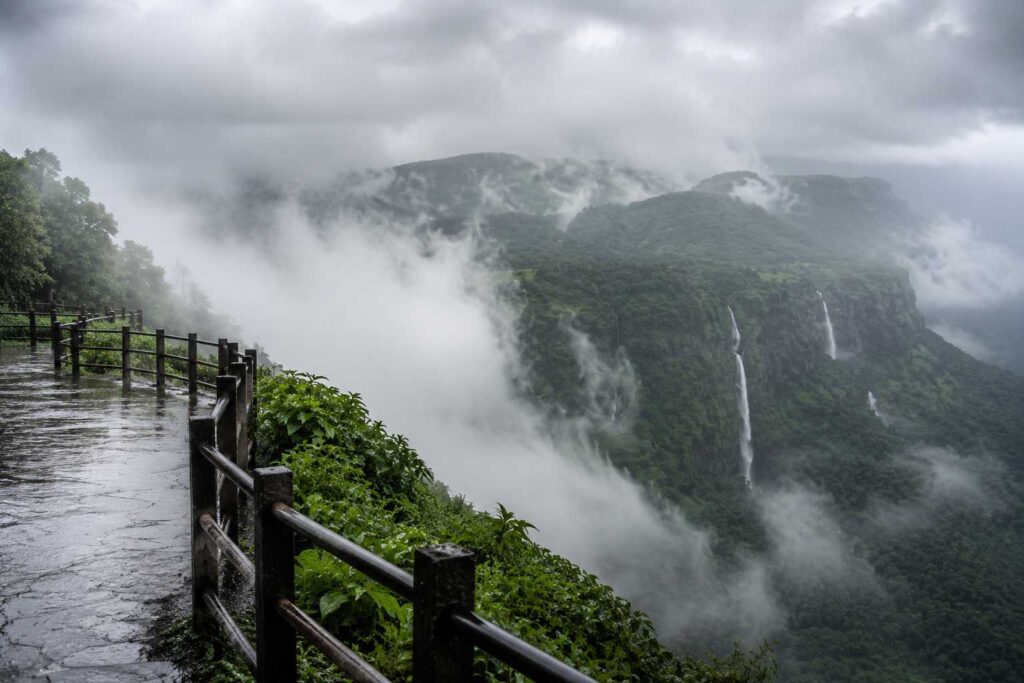
If you are based out in Mumbai or Pune and just need a weekend/two-three days trip away, Mahabaleshwar in July fits the bill perfectly.
At 4,500 feet in the Sahyadri range, it is reliably cool and reliably rainy through July. The viewpoints — Wilson Point, Arthur’s Seat, Elephant’s Head — are usually lost in cloud, which sounds like a problem but is actually the appeal. There is something satisfying about standing at the edge of a cliff and watching clouds move around you at eye level.
Strawberry farms are still operational, the corn stalls are in every nook and corner and there is a refreshing laziness in the old part of the town, quite unheard of in the vicinity of Mumbai.
Road trip distance: About 4.5 hours from Mumbai, 4 hours from Pune.
11. Chopta, Uttarakhand
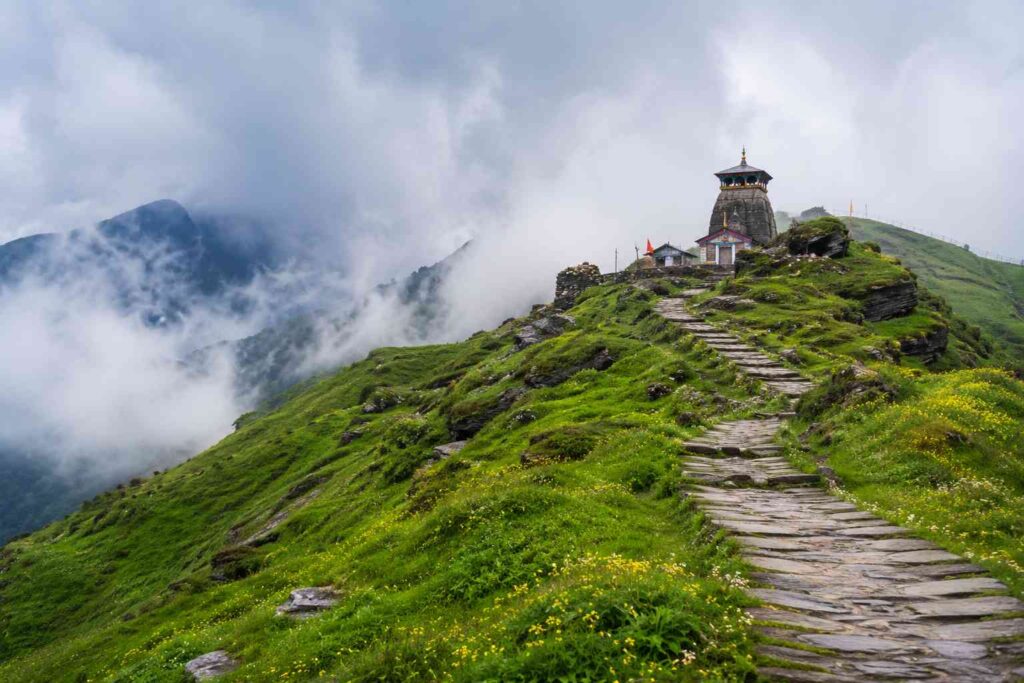
Most people have not heard of Chopta, and that is almost entirely the reason to go.
The meadow is a relatively small alpine meadow located in Rudraprayag district, about 8,790ft high. The meadow is entirely lush, deep green in July, rhododendron forests dripping and the path to Tungnath (the highest Shiva temple in the world) remarkably silent-unlike Badrinath or Kedarnath that almost never are. No useful cell phone reception, no crowds and certainly no selfie-queue.
This is a place that you visit when you really want to be on your own in the mountains for a few days.
12. Kinnaur, Himachal Pradesh
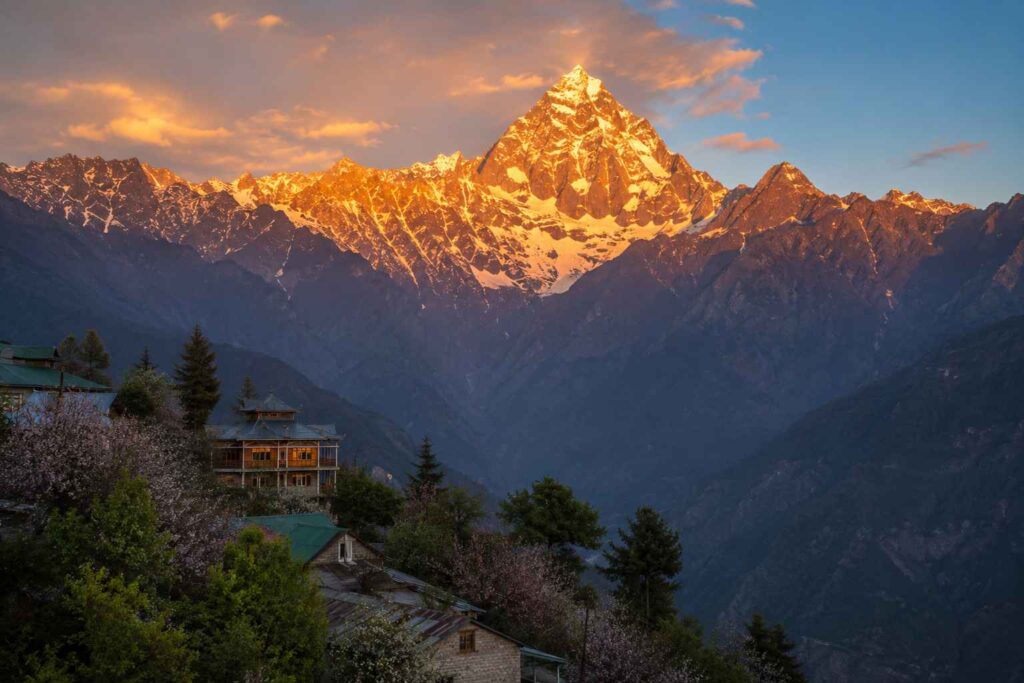
But any serious July list must also make time for Kinnaur- that truly captivating zone of ‘half Himachal, half Tibet’, of neither, and of both.
The Sutlej River gorge through Kinnaur is dramatic in July, the apple orchards are full and heavy, and the local culture — a blend of Himachali and Tibetan traditions — feels entirely its own. From the village of Kalpa, on a clear evening, you get direct views of the Kinnaur Kailash peak, which stands at an awe-inspiring Kinnaur Kailash Height in Feet of approximately 19,882 feet. It is considered sacred in both Hindu and Buddhist traditions, and watching the alpenglow hit that rock face at sunset is quietly magnificent.
Road note: The stretch near Malling Nallah can be landslide-prone in July. Always check road conditions that morning before driving through.
Where Should You Actually Go?
Here is a quick way to think about it depending on what you want:
- You want no rain at all → Leh-Ladakh or Spiti Valley
- You want dramatic waterfalls and green hills → Coorg, Munnar, or Wayanad
- You want a serious trek → Valley of Flowers or Chopta
- You want the most extreme monsoon experience → Cherrapunji
- You want a quick weekend escape → Mahabaleshwar from Mumbai/Pune, or Darjeeling from Kolkata
- You want culture + mountains + silence → Kinnaur
Best Places to Go in July in India: Travel Tips Before You Book
July travel in India requires a bit more preparation than other months. Not a lot — but enough to make a difference between a smooth trip and a stressful one.
Check road status before driving into any mountain region. Due to the frequency of landslides roads can be closed for hours or even days in the Himachal & Uttarakhand regions. Both the BRO & Himachal Tourism websites are updated with daily road closure updates.Use them.
Book accommodations slightly in advance for popular spots like Munnar, Coorg, and Ladakh — July is peak season in those places.Because anywhere else you can be spontaneous.
Light, waterproof and layered. Even in dry zones like Spiti and Ladakh, nights are chilly. In wet zone places what you wear is more important then what you carry.
Frequently Asked Questions
Is July a good time to visit India for travel?
Yes — if you pick the right destination. Hill stations, Himalayan valleys, and the Western Ghats are at their most beautiful in July. The key is knowing where the rain enhances the experience and where it creates problems.
Which part of India is dry in July?
Leh-Ladakh and Spiti Valley receive almost no rainfall in July due to their position in the trans-Himalayan rain shadow. Both are excellent choices for a dry-weather Monsoon Trip in India.
Is Valley of Flowers good to visit in July?
Mid-July is actually the best time — flowers are blooming abundantly by the second week of July and continue through August. It is arguably better than August because the crowds are thinner.
What should I pack for a July trip in India?
Waterproof shoes, a light rain jacket, quick-dry clothes, and a small dry bag for electronics. If you are going to any Himalayan destination, add a proper warm layer for evenings regardless of how warm the days seem.
Are Places to Visit in July more affordable than peak season?
In most cases, yes. July is off-season for many destinations, which means lower hotel rates, better availability, and fewer crowds. Ladakh is the exception — it is peak season there.
12 Best Places to Go in July in India That Are Actually Worth the Trip
July is one of those months that rewards people who actually show up. The places are greener, the air is cleaner, the prices are lower, and the experience of being somewhere that most tourists have skipped feels like a quiet privilege.
You just have to be willing to bring a rain jacket and trust the weather a little.

 Admin
Admin