 Admin
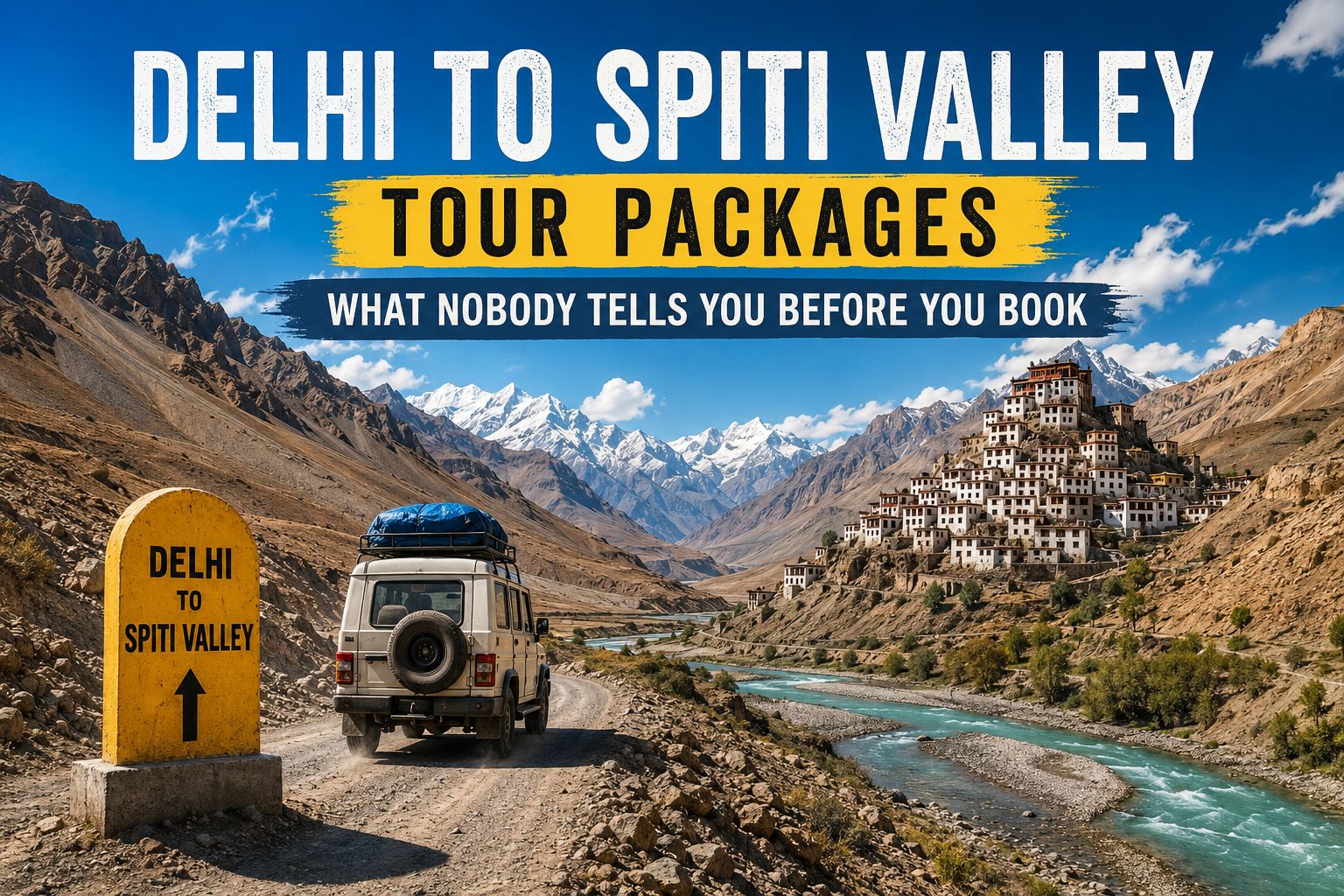
Admin Delhi to Spiti Valley Tour Packages are not like regular hill station trips. Most people who visit Spiti Valley say the same thing after returning: “I wasn’t prepared for how different it actually feels.” It’s not the altitude that surprises them — most already expect that. It’s the silence, the emptiness, and the feeling of driving for hours without seeing another car, shop, or even a tree that truly makes Spiti unforgettable.
Spiti is not a hill station. It is not a weekend break. It is not a cosy holiday for the family. It is a far-flung cold desert sitting 12,000+ ft high in the back end of Himachal, right on the Tibetan border. And getting there from Delhi — by road, the only way in — takes commitment. But for the travellers who make that commitment, it becomes the trip they measure every other trip against.
This guide is written for people who are seriously planning a Delhi to Spiti Valley tour and want straight answers, not a recycled list of “top things to do.”
Delhi to Spiti Valley Tour Packages: Best Time to Visit
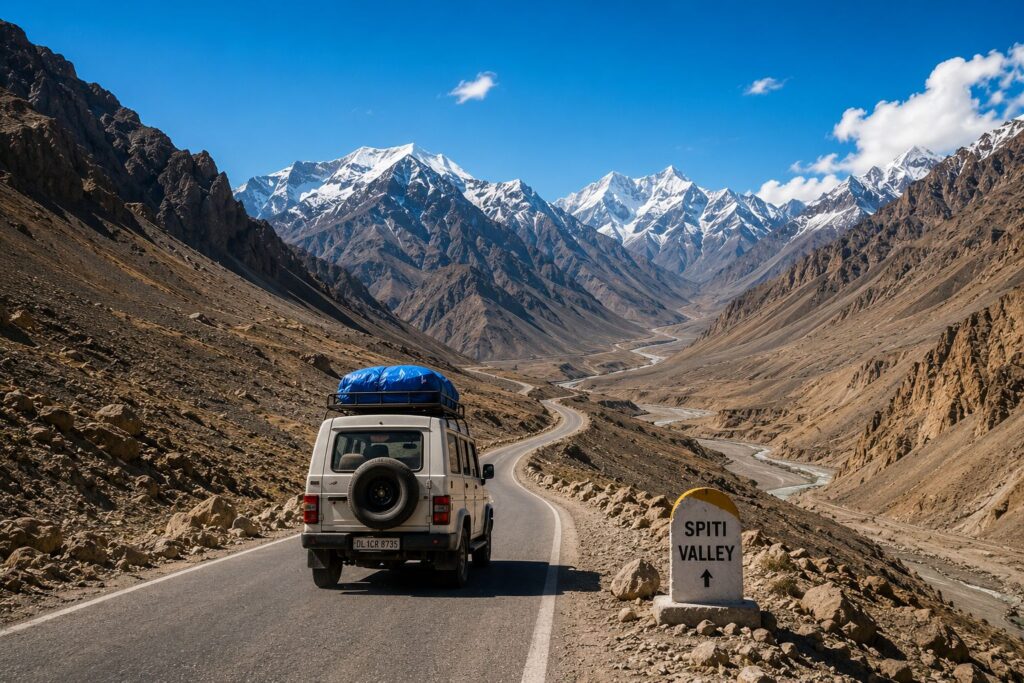
Both roads into Spiti Valley close after mid-October.Snow closes all the passes – and that is that, end of story, no alternatives allowed. The period runs for approximately end of May to mid-October.That is five months, and within those five months, July and August are peak season when group tour departures fill up fast.
If you are reading this in January thinking you will book a July slot “closer to the time,” you will find yourself with limited options. Good operators confirm their batches months in advance. Book in advance, particularly if you wish for a specific travel day.
check previous blog: Dharamshala Paragliding Cost 2026
How People Actually Get There From Delhi
There is no train to Spiti. No flight either. The journey from Delhi is entirely by road, and it takes a minimum of two full driving days each way.
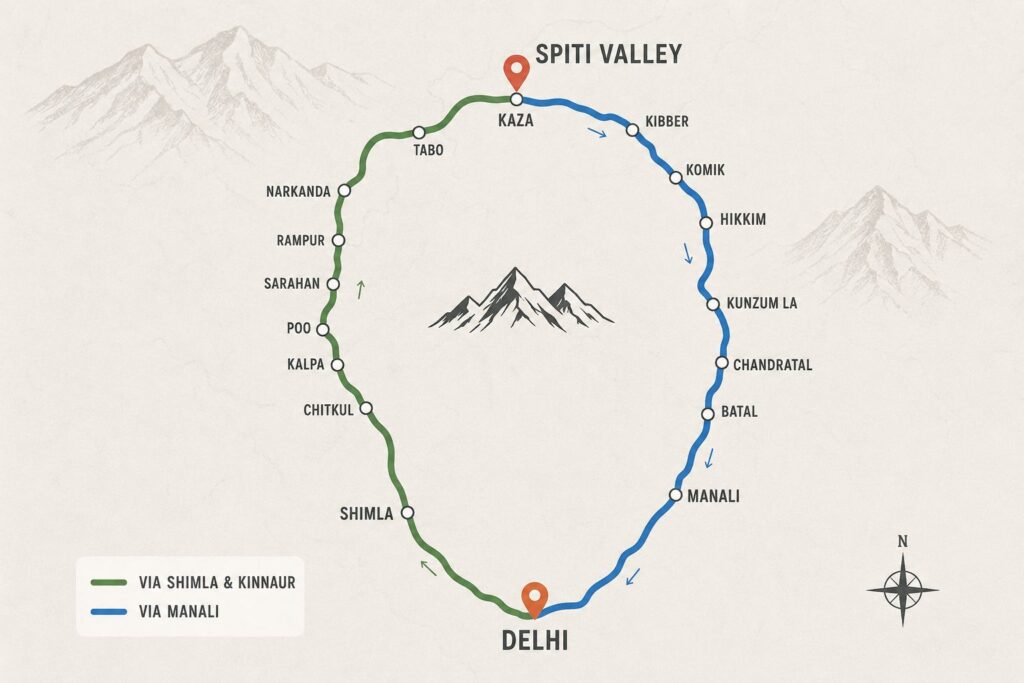
Nearly all the tour packages begin with an overnight bus ride or drive directly from Delhi to Shimla or Chandigarh, and then there is a bifurcation in the itinerary into two different choices which will determine the entire ambiance of your trip.
The journey of Shimla to Kinnaur is via Baspa Valley, and Indian border village of Chitkul. It slowly ascends gradually into Spiti at Nako & Tabo, this slow pace allows your body adjust to the surroundings. The scenery through Kinnaur – the apple orchards, the hanging villages, the turquoise Baspa river – is worth the extra day on the road. This is the way most first time visitors and families should go.
Technically the Manali-Kunzum route is quicker but it involves 2 high mountain passes consecutively, one of which is Kunzeu La and it is over 15,000 feet above sea level. It is closed again during late May and can unexpectedly even after a heavy snow or a lot of rainfall so be ready for surprises. This route is popular among bikers as well as adventure lovers who love to take risky routes. Most tour packages use it as the exit route after the Shimla entry, creating a proper circuit so you are not doubling back on the same road.
check previous blog: Zipline in Rishikesh
That circuit – through Shimla, out through Manali – is the best way to plan a Spiti trip. On one trip you get two completely different Himalayan landscapes.
How Many Days and What It Actually Costs
7 days is minimal.At least 7 nights will allow you to do the circuit comfortably: 2 days each way for the journey and 3 or 4 days in the valley to enjoy Kaza, Key Monastery, Chandratal and the high villages. You’re not going to be chasing the clock, but you’re not going to have a lot of time in reserve for screwups either-and screwups happen.
Nine or ten days is just right. A day and a half to rest up before a big morning at Tabo Monastery, a lightening fast 90 minute hike up to Dhankar Lake, and a third very flexible layover day if you find yourself hammered by the altitude more than you imagined. Plus it allows you to visit the Pin Valley-something most itineraries fail to mention-one of the more peaceful, beautiful areas around.
On price: budget group packages– shared vehicle, simple homestay or dormitory, breakfast only start around ₹12,999 to ₹16,499 per person per person for 7 nights and you can extend individual packages by a minimum of a day according to the type of service. Mid-range packages having a proper double room, all meals, and a dedicated trip leader cost from ₹19,500 to ₹25,500 for a duration of 7 to 9 days. Individual packages having your own car and guide costs from ₹28,000+ depending on the number of people in the group.
In addition to whatever will be covered by your package make sure to keep 3,000 – 5,000 aside for entrance fees to the monasteries, camping costs at Chandratal, your own personal costs and emergencies. Take cash out in either Shimla or Manali, Kaza has an ATM but this always runs out.
check previous blog Bir Billing Paragliding Price 2026
The Places Worth Going Out of Your Way For
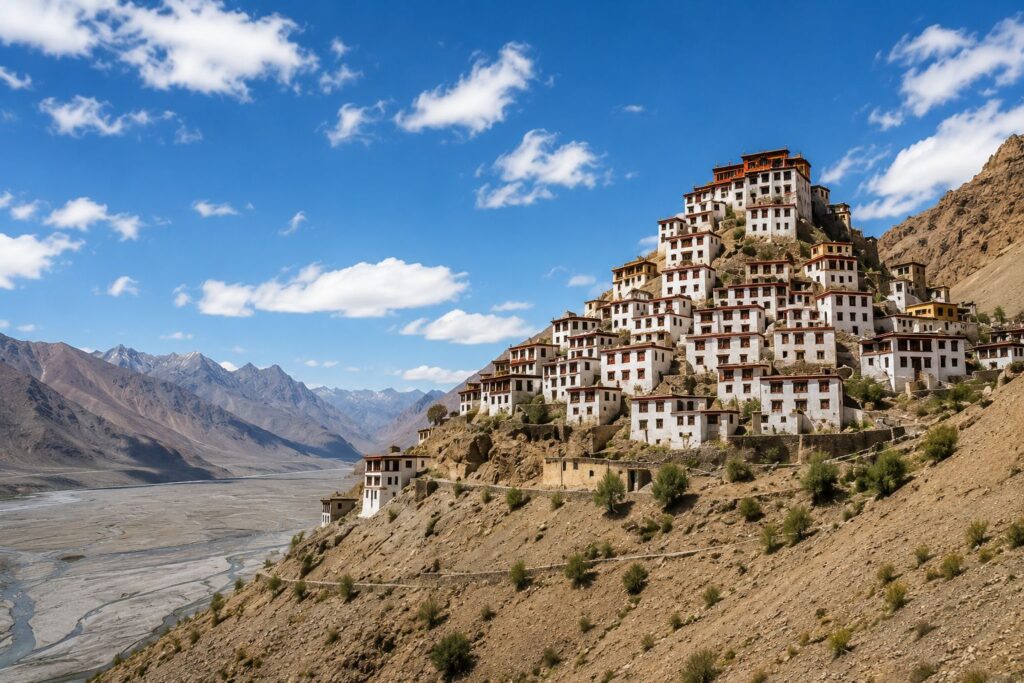
Key Monastery is the landmark most people picture when they think of Spiti. It sits on a slope and commands a view of the valley below and is the shape of a giant Wedding cake with all the white-wash rooms on one level. It is more than a millennium old, has been rebuilt several times following earthquakes and raids and even now has an active monastic community of approximately 300 monks. Visit first thing in the morning. The light on the building against the brown mountains behind it is something you will not forget.
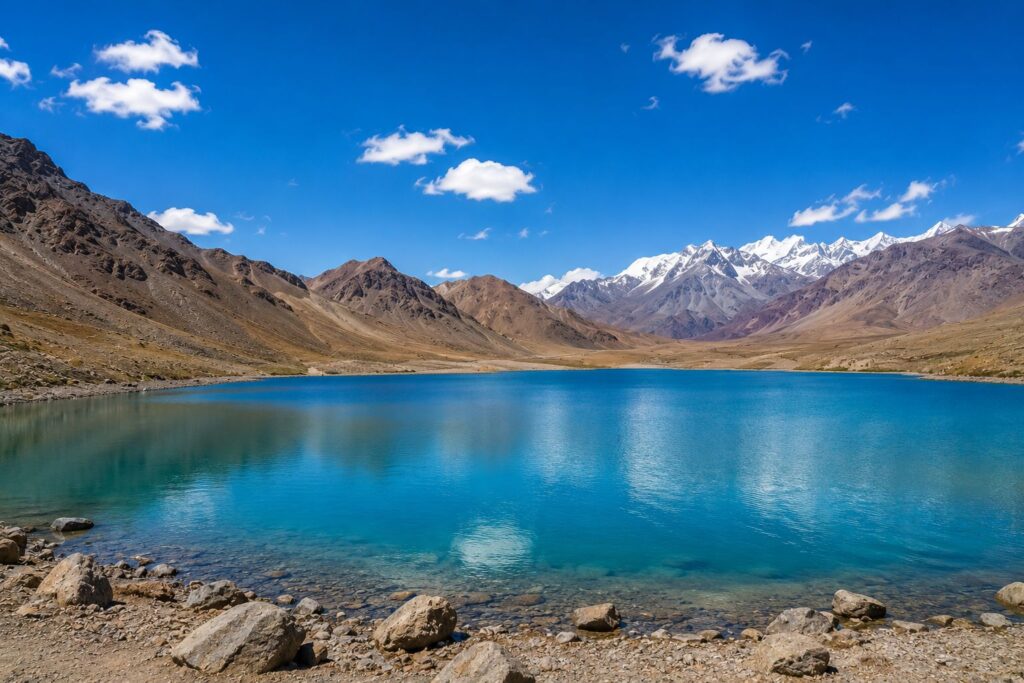
Chandratal Lake is a different kind of experience.There are no monasteries here, no villages, nothing of man around.It is a crescent-shaped lake fed by glaciers at 14,100 ft, shifting from deep indigo to bright aqua as the light changes through the day. Sleeping at Chandratal and then waking before dawn to walk around the lake in silence; such seems to be the sort of travel memory that stays.
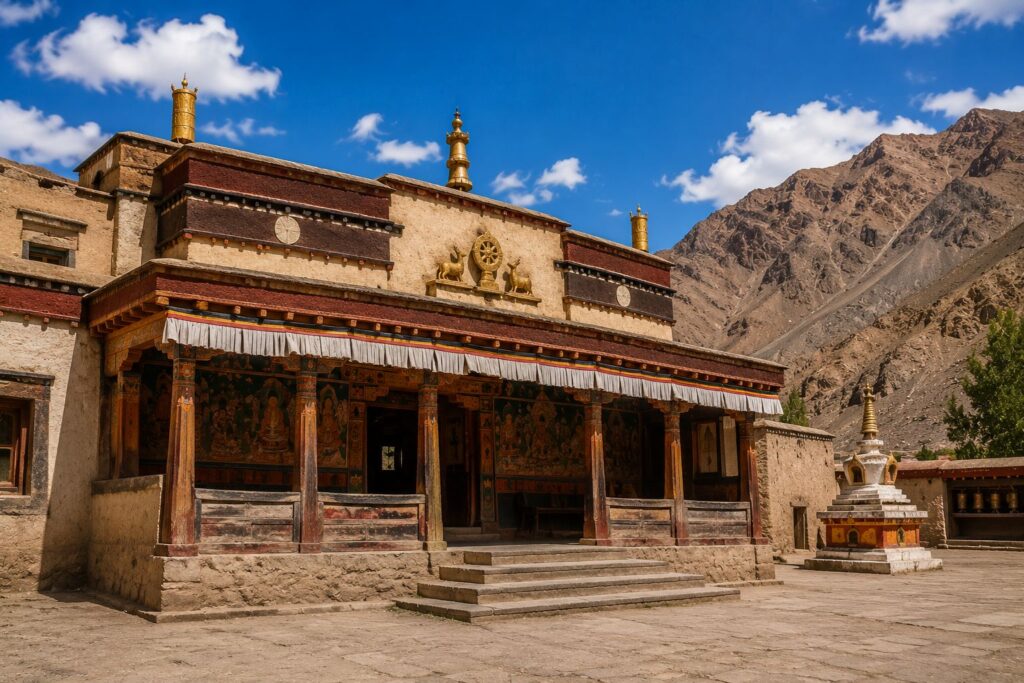
Tabo Monastery gets less attention than Key but arguably deserves more. Founded in 996 AD, its murals and clay sculptures are genuinely ancient in a way that most “ancient” things in India are not. The walls have barely been restored. The building is constructed with clay and straw. Wandering through the misty interiors of the temples makes one feel like they are in the previous century.Apparently he is also believed to have expressed an desire to retire here in the future.
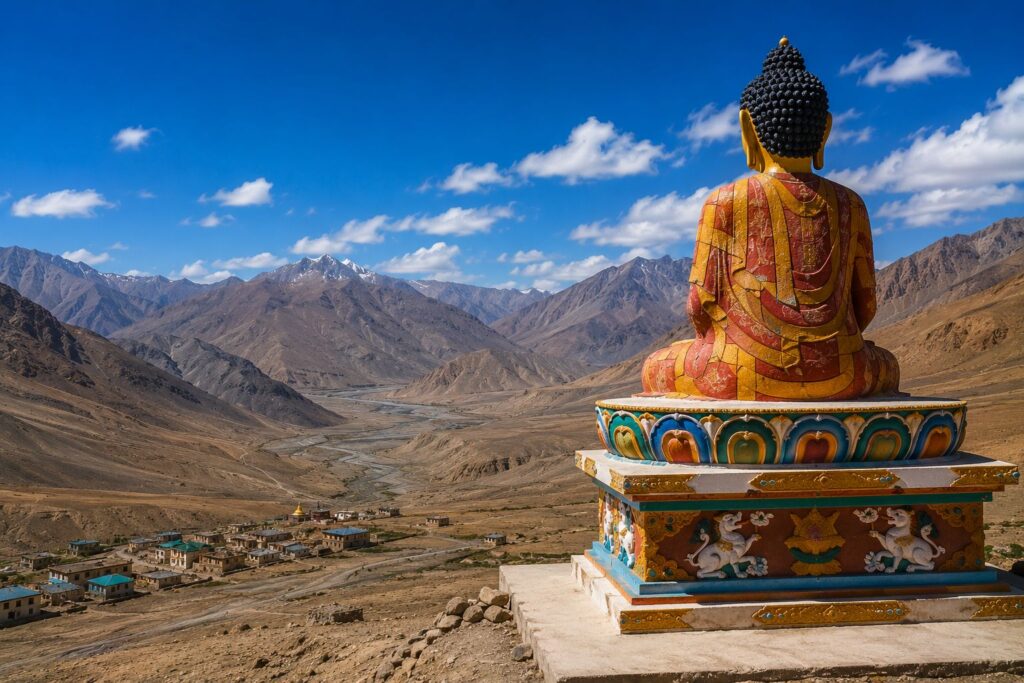
Langza is a high-altitude village known for two things:which is big Buddha looking down on the valley, and a couple of miles worth of marine fossils tucked away in the fields. The second thing that takes you by surprise is the fact that these fossils are those of the sea bed, found in rocks at 14,500 ft on top of the Himalayas because these mountain chains used to be deep under the ocean. Local kids occasionally sell well polished ammonites for a few hundred rupees.Whether you buy one or not, just standing in a field at that altitude holding a 50-million-year-old sea fossil puts the trip into a different perspective.
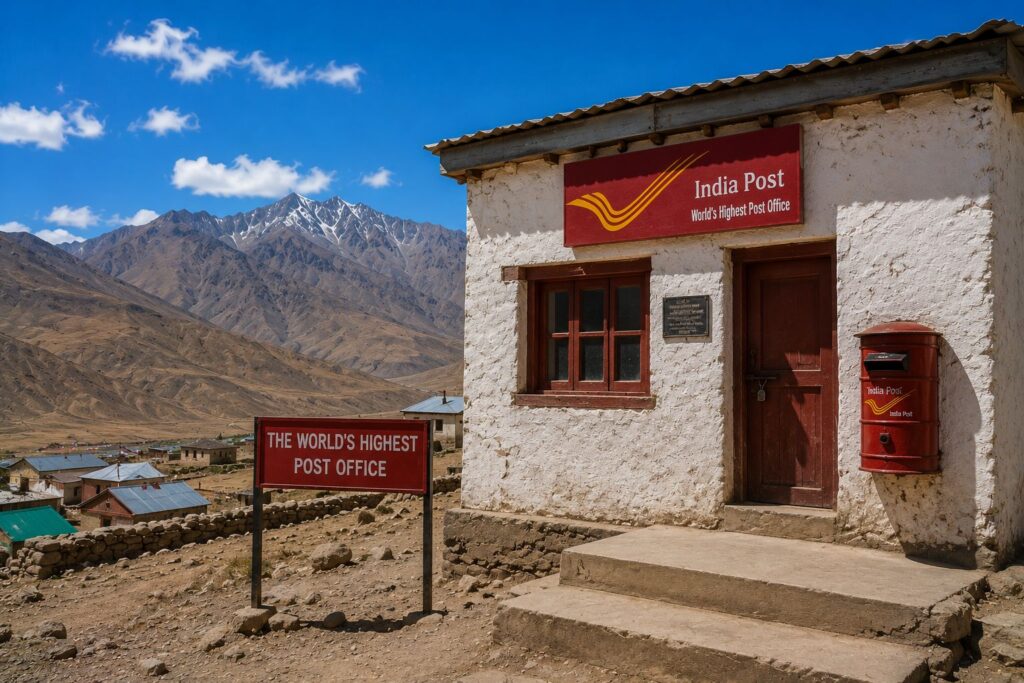
Hikkim is where the world’s highest post office operates, at 14,567 feet. It is a genuine post office — they sell stamps, they have a postmaster, and letters posted here actually get delivered. Buy a postcard, write something on it, post it to someone who matters. It is a small, specific, memorable thing to do.
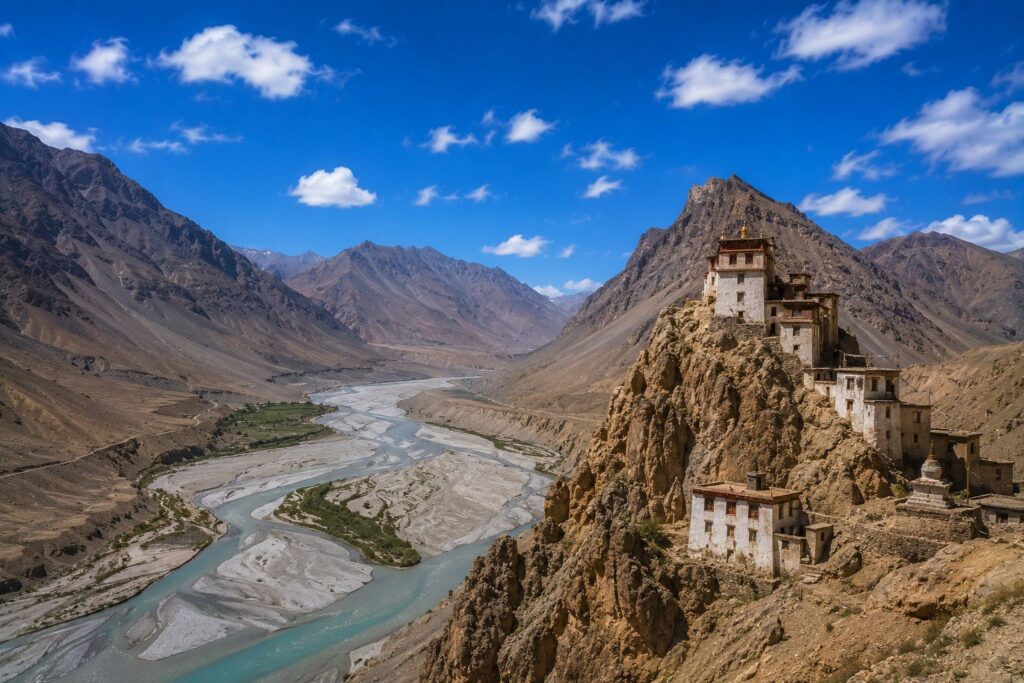
Dhankar is a monastery perched on a narrow cliff spur above the confluence of the Pin and Spiti rivers.The best view in the whole of Himachal Pradesh is the view from the top, looking down at the wide grey valley where the two rivers come together. There’s a lake above the monastery, a 45 minute walk up the hill, and that lake, nestled amongst the most barren of hills with the valley below several thousand feet away, is worth every inch.
Altitude Sickness Is Real — Take It Seriously
Kaza is at 3,800 metres above sea level. This is 1,600 metres above the elevation of Shimla, and way above the level any of the Delhi experienced visitors will have traveled before. All of the symptoms of AMS-headache, nausea, shortness of breath, dizziness-are suffered by more or less all of the people who are climbing
The rule that actually works: go slow. Do not schedule anything exerting on your first day in Kaza. Drink plenty of fluids. Abstain from alcohol for 48 hours.Sleep does become more difficult, that’s normal at altitude.
If symptoms get worse rather than better after resting, descend. That is the only real treatment. Talk to your doctor before the trip about whether Diamox is appropriate for you. Many regular Spiti visitors take it as a precaution.
check previous blog: Best Time to Visit Badrinath
Mobile Network and Other Practical Realities
Jio has coverage in Kaza and a few other spots. BSNL works marginally better in remote areas. Outside of Kaza, expect nothing. Download your maps offline before leaving Shimla or Manali. Let your family know in advance that you will be unreachable for days at a stretch — not as a warning, just as a practical heads-up.
Pack warm layers no matter when you visit. August nights in Spiti drop close to zero. A windproof jacket, thermal innerwear, and a decent sleeping bag liner are not extras — they are basics. The sun during the day is intense at this altitude; SPF 50 sunscreen matters more here than almost anywhere else in India.
Spiti Valley Trip from Delhi Complete Travel Guide
Who Should Book a Package and Who Should Go Independent
Just if this is your first time in Spiti, or if you have never ever driven in real mountain environment, opt for a pre-arranged package.The road conditions from Kaza to Kye are really crappy, knowledge of this region actually matters when looking for fuel stations and homestay opportunities and having a regular driver who has been on this route 29 times will be worth it!
If you’ve done Leh-Ladakh already, experience what high altitude does to you and prefer three days in Tabo instead of one, go independent. Hire a local driver (preferably with a genuine 4WD), find your lodging two or three days in advance and take your time.
Spiti does not punish independent travellers. It just requires honest preparation either way.
September is the most serene and cloudless time of the year for the valley. Summer vacationers move on, light after monsoon is crisp, mornings provide perfect conditions for a photographer. If you have time, consider second or third week of September. You will have more of Spiti to yourself than at any other point in the season — and that, more than any specific monastery or lake or fossil field, is what people come here for.
 Admin
Admin 
[…] check previous blog : Delhi to Spiti Valley Tour Packages […]
[…] check previous blog : Delhi to Spiti Valley Tour Packages […]
[…] check previous blog : Delhi to Spiti Valley Tour Packages […]